

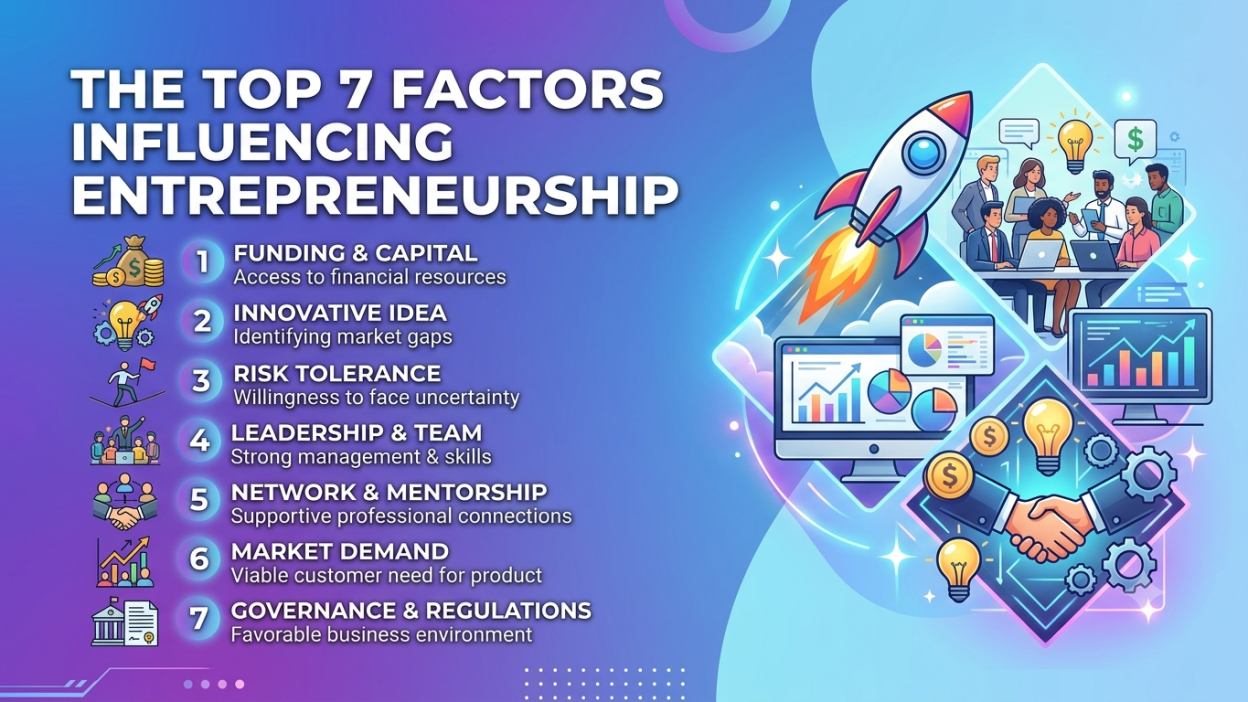
The Top 7 Factors Influencing Entrepreneurship is one of the first things I wish I had understood before learning about startups and businesses.
When I first heard the word entrepreneurship, I thought it was simply about starting a company and making money. But the more I learned, the more I realized that success depends on many different factors. A brilliant idea alone isn’t enough. I’ve seen people with amazing ideas fail, while others with ordinary ideas build successful businesses.
So what makes the difference?
In this guide, I’ll explain The Top 7 Factors Influencing Entrepreneurship in simple words with practical examples. Whether you’re a student, an aspiring entrepreneur, or just curious about business, this article will help you understand what truly shapes entrepreneurial success.

🌟 Key Highlights
- ✅ Understand The Top 7 Factors Influencing Entrepreneurship
- ✅ Learn why some startups grow faster than others
- ✅ Explore real-life examples of successful entrepreneurs
- ✅ Discover internal and external factors affecting businesses
- ✅ Find practical tips to improve your entrepreneurial mindset
- ✅ Learn why innovation, finance, and leadership matter
- ✅ Perfect for beginners, students, and business enthusiasts
What Is Entrepreneurship? 💡
Before we explore The Top 7 Factors Influencing Entrepreneurship, let’s quickly understand entrepreneurship itself.
Entrepreneurship is the process of identifying a problem, creating a solution, and building a business around that solution. An entrepreneur takes risks, manages resources, and works hard to turn an idea into reality.
Think about ordering food online. Years ago, most people visited restaurants. Today, food delivery apps make ordering easy. Someone noticed a problem and created a solution. That’s entrepreneurship in action.
Why Is It Important to Understand the Top 7 Factors Influencing Entrepreneurship?
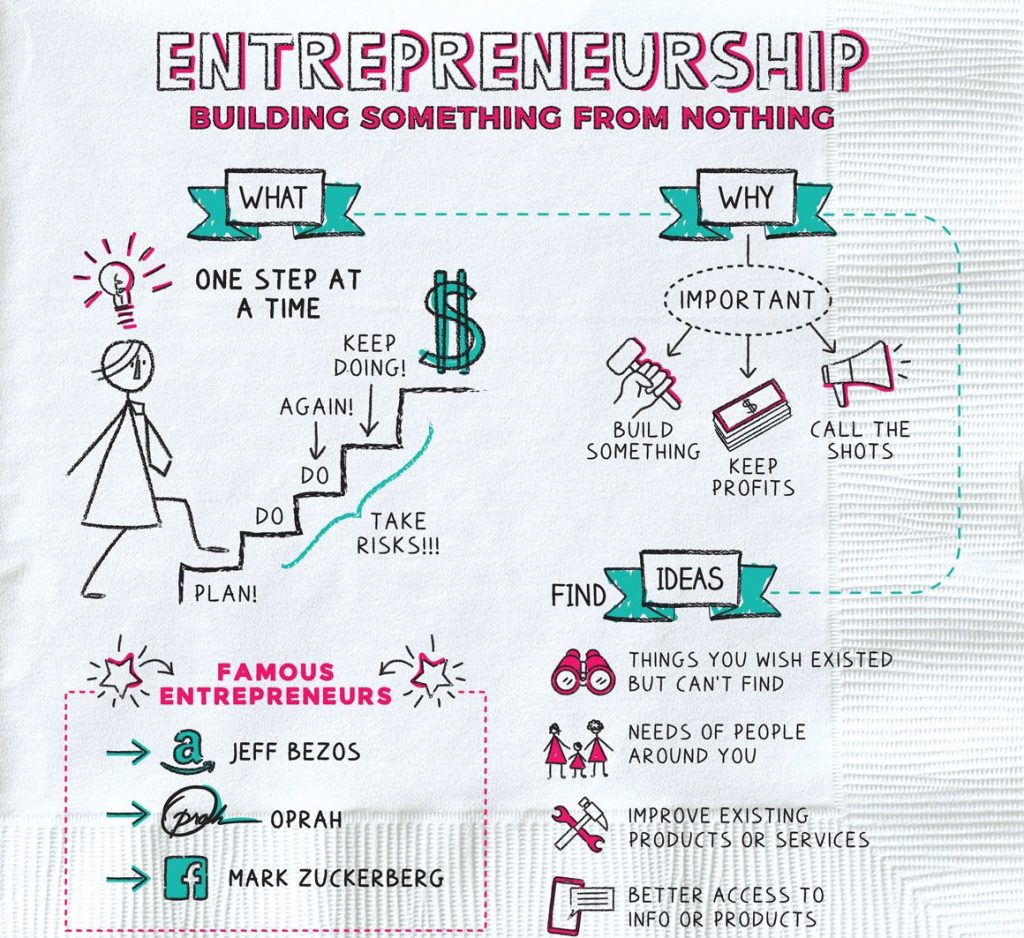
I always compare entrepreneurship to growing a tree. 🌳
You may plant the best seed, but without sunlight, water, fertile soil, and care, it won’t grow.
Similarly, every business idea needs the right environment. That’s exactly why understanding The Top 7 Factors Influencing Entrepreneurship is important.
These factors influence:
- Business growth
- Innovation
- Profitability
- Customer satisfaction
- Long-term success
Now let’s dive into each factor.
1. Innovation and Creativity 🎨
If I had to choose one factor that stands above the rest, it would be innovation.
People don’t buy products.
They buy solutions.
Innovation means creating something new or improving something that already exists.
Example
Instead of opening another regular taxi service, ride-sharing companies transformed transportation by connecting passengers and drivers through mobile apps.
Innovation doesn’t always mean inventing something completely new.
Sometimes asking,
“Can I make this easier?”
is enough.
Why it matters
- Creates competitive advantage
- Solves customer problems
- Improves business growth
- Builds brand value

2. Financial Resources 💰
Let’s be honest.
Even the best business idea needs money.
Finance is one of The Top 7 Factors Influencing Entrepreneurship because every business requires investment.
Money is needed for:
- Buying equipment
- Marketing
- Hiring employees
- Product development
- Daily operations
When I studied startups, I noticed something interesting.
Many businesses didn’t fail because their ideas were bad.
They failed because they ran out of money.
Sources of finance
- Personal savings
- Bank loans
- Investors
- Government schemes
- Crowdfunding
Managing money wisely often matters more than having a large budget.
3. Education and Skills 📚
I used to believe entrepreneurs were born with business talent.
Now I know that’s simply not true.
Skills can be learned.
Education helps entrepreneurs understand:
- Marketing
- Accounting
- Communication
- Leadership
- Business strategy
- Technology
Learning never stops.
Even successful entrepreneurs continue reading books, attending workshops, and improving themselves.
That’s one reason they stay ahead.
4. Government Policies 🏛️
Government support plays a bigger role than most people realize.
Policies influence entrepreneurship through:
- Tax benefits
- Startup funding
- Business registration
- Licenses
- Infrastructure
- Legal protection
When governments encourage startups, more people feel confident about starting businesses.
Supportive policies reduce risks and create better opportunities.
5. Technology 🌐
Can you imagine running an online business without the internet?
Neither can I.
Technology has completely transformed entrepreneurship.
Today businesses use:
- Artificial Intelligence
- Cloud computing
- Digital payments
- Social media
- E-commerce platforms
- Data analytics
Technology helps businesses save time, reduce costs, and reach customers across the world.
Even small businesses can compete globally thanks to digital tools.

6. Market Demand 📈
Here’s something every entrepreneur should ask before starting a business:
“Do people actually need this?”
Many businesses fail because they solve problems that customers don’t have.
Understanding market demand means knowing:
- Customer needs
- Current trends
- Buying behavior
- Competitor products
- Pricing expectations
Real-life example
During the pandemic, demand for video conferencing platforms increased dramatically because remote work became common.
Businesses that adapted quickly experienced significant growth.
Listening to customers is one of the smartest business strategies.
7. Leadership and Risk-Taking 🚀
Every entrepreneur faces uncertainty.
There are no guarantees.
Some days everything goes well.
Other days nothing works.
That’s completely normal.
Leadership means motivating people, making decisions, solving problems, and staying positive even during difficult situations.
Risk-taking doesn’t mean being careless.
It means making calculated decisions after careful planning.
Strong leaders inspire teams and keep businesses moving forward.
Real-Life Example of Entrepreneurship
One example that always inspires me is Steve Jobs.
He didn’t simply create products.
He focused on user experience, innovation, and simplicity.
Another great example is N. R. Narayana Murthy, who co-founded Infosys with a vision of building a globally respected technology company from India. His journey shows how leadership, ethics, and long-term thinking can shape entrepreneurial success.
Both examples demonstrate that The Top 7 Factors Influencing Entrepreneurship work together rather than independently.
Common Challenges Entrepreneurs Face
Even after understanding The Top 7 Factors Influencing Entrepreneurship, entrepreneurs often face obstacles like:
- Limited funding
- High competition
- Lack of experience
- Market uncertainty
- Employee management
- Changing technology
- Customer expectations
I’ve learned that challenges are part of every entrepreneurial journey.
The key is adapting instead of giving up.
Tips for Future Entrepreneurs ✨
If you’re planning to become an entrepreneur someday, here are a few lessons I’ve found valuable:
- Keep learning every day
- Understand your customers before building a product
- Manage your money carefully
- Don’t fear failure—learn from it
- Build strong communication skills
- Stay updated with technology
- Focus on solving real problems
Small improvements made consistently often lead to big results.
Final Thoughts
When I first started learning about business, I assumed success depended only on having a brilliant idea.
Today, I know that’s only one piece of the puzzle.
The Top 7 Factors Influencing Entrepreneurship—innovation, finance, education, government support, technology, market demand, and leadership—work together to determine whether a business succeeds or struggles.
Every entrepreneur’s journey is different. Some start with very little and build something extraordinary. Others have every advantage but still face setbacks. What matters most is the willingness to learn, adapt, and keep moving forward.
If you’re dreaming of starting your own business, don’t wait for the “perfect” moment. Start learning, build your skills, and take one small step at a time. Every successful entrepreneur began exactly where you are today.
Frequently Asked Questions (FAQs)
1. What are the top factors influencing entrepreneurship?
The major factors include innovation, financial resources, education, government policies, technology, market demand, and leadership.
2. Why is innovation important in entrepreneurship?
Innovation helps businesses solve customer problems, create unique products, and stay ahead of competitors.
3. How does technology influence entrepreneurship?
Technology improves productivity, reduces costs, enhances customer experiences, and allows businesses to reach global markets.
4. Why is market demand important?
Without customer demand, even an excellent product may fail. Understanding customer needs helps businesses create products that people actually want.
5. Can anyone become an entrepreneur?
Yes. With continuous learning, determination, planning, and the right mindset, almost anyone can develop entrepreneurial skills.
Want to learn More about Digital Marketing, Kaashiv Infotech Offers Digital Marketing Course, Internship & More, Visit www.kaashivinfotech.com.