What is a Java API? A Complete Guide to Its Types, Advantages and Uses
If you have spent any time in the software development world you’ve probably heard developers talking about API.. When you pair it with one of the most popular programming languages things get really interesting.
So what is a Java API and why is it such a big deal in tech?
Welcome to Wikitechy! In this guide we are going to explain everything you need to know about Java API. We’ll explore what it is, who uses it its core architecture and why you need it to build software.
What is a Java API?
To understand Java API let’s use an analogy.
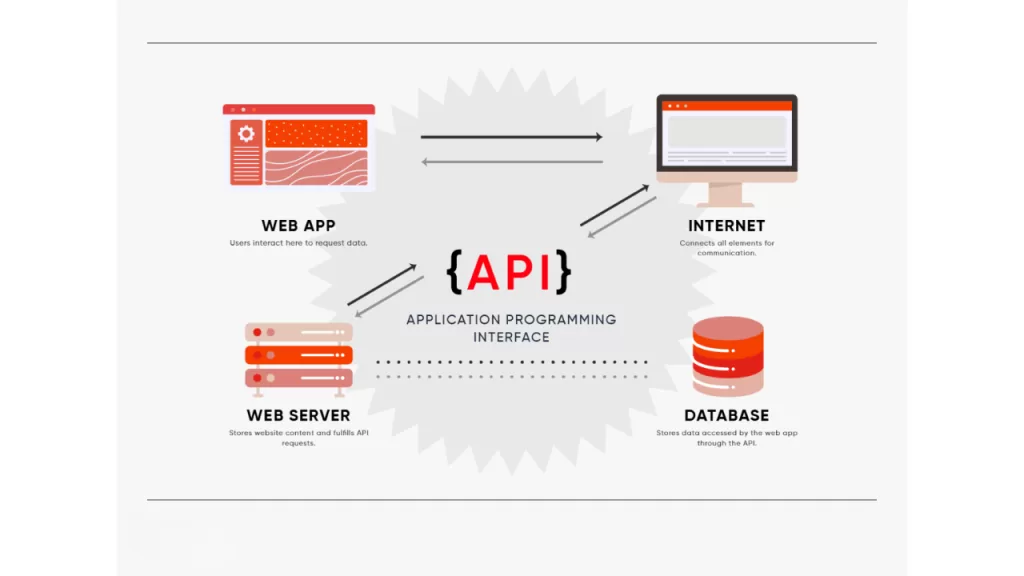
Imagine you are in a restaurant. You are the application that wants food and the kitchen is the database or server that has the food. You can’t just walk into the kitchen. Start cooking. Instead you need a waiter to take your order communicate it to the kitchen and bring your food back to you.
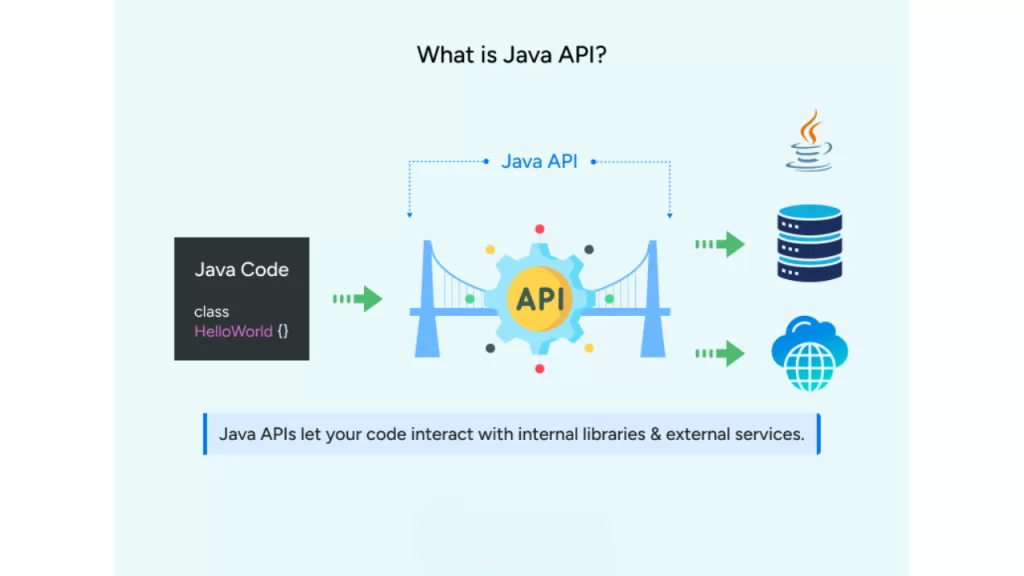
In software Java API is the waiter. A Java API is a collection of software tools, classes and interfaces that allows different applications to talk to each other. Of writing code from scratch to perform a basic function developers can use Java API to do the heavy lifting.
How Does Java API Fit into the Java Ecosystem?
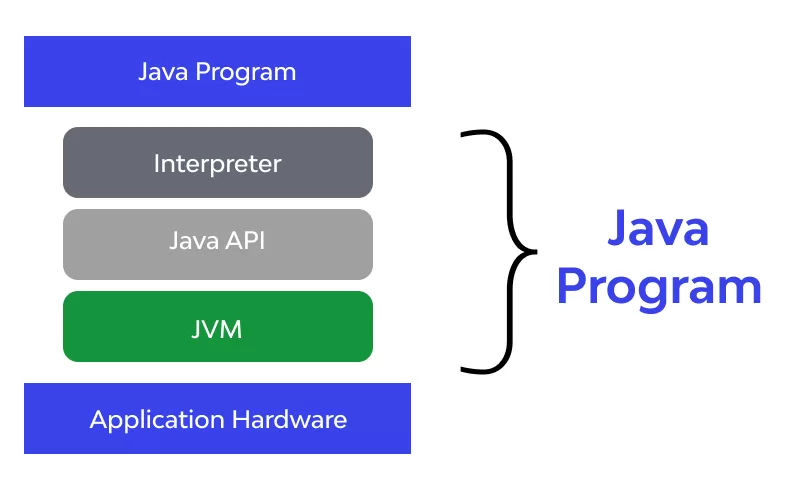
To understand Java API you need to know how Java works. Java is famous for its “write once run anywhere” philosophy. This is made possible by:
- JDK (Java Development Kit): The toolkit you download to write Java programs. Java API comes bundled with JDK.
- The Compiler: A translator that converts your Java code into a low-level format called byte-code.
- JVM (Java Virtual Machine): The engine that reads the byte-code and runs the program on your computer.
Why Do We Need a Java API?
You might wonder, “Can’t developers just code everything from scratch?”. It would take years to build even simple applications. Here’s why Java API is necessary:
- It Streamlines Operations: Java APIs help connect features smoothly on one screen.
- It Improves Business Techniques: Many tech giants release their APIs to the public fostering innovation and creating business ecosystems.
- It Helps Create Applications: APIs allow developers to create robust applications without building the underlying data infrastructure.
Who Uses Java APIs?
Different types of developers rely on Java APIs:
- Internal Developers: Programmers working inside a company using Java APIs to build software for employees.
- Partner Developers: Businesses collaborating digitally using Java APIs to integrate services.
- Open (Public) Developers: developers or third-party companies using public APIs from big tech companies.
Understanding Java API Types
You’ll encounter four categories of APIs:
- Public APIs: Available for anyone to use with restrictions.
- Private APIs: Built for use within a single organization.
- Partner APIs: Shared with legally bound third-party business partners.
- Composite APIs: A combination of APIs used to bundle multiple data requests into one call.
How Java APIs Handle Data and Services
Java APIs can be categorized by the job they perform:
- CRUD Services: Handle functions of persistent storage like creating, reading, updating and deleting data.
- User Interface (UI) Services: Provide -written code to build buttons text boxes and windows.
- External and Internal API Services: Handle behind-the-scenes logic. Allow apps to pull in third-party data.
The Rules of API Service Protocols
A Java API must follow communication rules called protocols. The famous protocol is the RESTful API architecture.
For a Java API to be RESTful it must follow these rules:
- Stateless: The server doesn’t remember client requests.
- Client-Server Architecture: The user interface and data storage are kept separate.
- Cacheable: Data can be cached on the client’s device.
- Uniform Interface: The API must use a way to communicate.
- Layered System: The architecture is built in layers.
Popular Java APIs
Here are some used APIs:
- RESTful APIs: Used for web services and internet communication.
- Twitter4J: A library for integrating Twitter features into Java apps.
- JPA (Java Persistence API): Used to manage data and connect Java objects to databases.
The Biggest Advantages of Java API
Here are the benefits of using Java API:
- Unmatched Efficiency: APIs provide -written code saving developers time.
- Flawless Integration: Java APIs act as translators allowing integration with different systems.
- Powerful Automation: APIs enable computers to talk to each other without intervention.
- Easy Customization: APIs allow businesses to present data in a customized user interface.
The Java API is the hero of modern software development. It connects databases, user interfaces, mobile apps and third-party services. By using APIs developers save time businesses integrate seamlessly. Users enjoy feature-rich applications.
Whether you’re starting your Java journey or scaling an enterprise application, understanding and mastering Java API is a must.
Stay tuned to Wikitechy for insights, into coding, software development and tech innovations.
Become A Java Developer / Java Full Stack Developer Expert With Kaashiv Infotech
Looking to dive into the world of Java development and carve your path to success? Kaashiv Infotech is here for you! Our specialized java Inplant Training (IPT) and comprehensive Full Stack Java Courses in chennai are specially designed by experts to equip you with practical skills and real-world experience that will help you to set your foot in the competitive software development industry.
Let’s break down our training offerings to see what makes our program stand out:
- Live Industry Projects: You’ll work on a variety of real-world applications to build a solid portfolio, enhancing your learning with exactly 2 real-time projects per internship that perfectly showcase your Java and API integration skills.
- Practice Exercises: Get hands-on practice with daily technical exercises that enhance your learning and help you master key concepts like object-oriented programming and RESTful APIs.
- Doubt Clearing Sessions: Our regular doubt sessions ensure that no question goes unanswered, giving you complete clarity on all core Java and API architectures.
- Kaashiv Tech Lab for Coding: Access our exclusive coding environments to practice and polish your backend coding skills in a highly supportive setting.
- Industry-Oriented Curriculum: Learn industry-relevant software skills and backend techniques that are directly applicable to real-world corporate scenarios.
- Exclusive Triple Certification: Earn our highly valued Triple Certification upon completion—an Internship Certificate, an IPT Certificate, and an Industrial Exposure Certificate—recognized and respected by employers in the tech industry.
- Interactive Tech Forums: Engage with fellow batchmates and mentors in our tech forums to exchange ideas, seek coding advice, and collaborate on complex Java projects.
- Instructor-Led Sessions: Benefit from highly interactive sessions led directly by Microsoft MVPs and Google-recognized experts who guide you every step of the way.
- Advanced Career Tools: Gain access to extensive Java interview question banks and our customized ATS-friendly resume building tools to help you seamlessly land your dream job as a Java Developer.
- 100% Job Assistance Guarantee: We’re offering 100% job assistance along with ongoing career support and placement guidance from our dedicated corporate team.
So what are you waiting for? Launch your career with confidence! Join Kaashiv Infotech’s Java Inplant Training and Certification program and unlock your potential today.
Frequently Asked Questions (FAQs)
1. What is an example of a Java API?
A good example is the Java Database Connectivity (JDBC) API. It helps a Java application connect to a database run SQL queries and get data. This way developers do not have to write database code from scratch.
2. Is a REST API the same as a Java API?
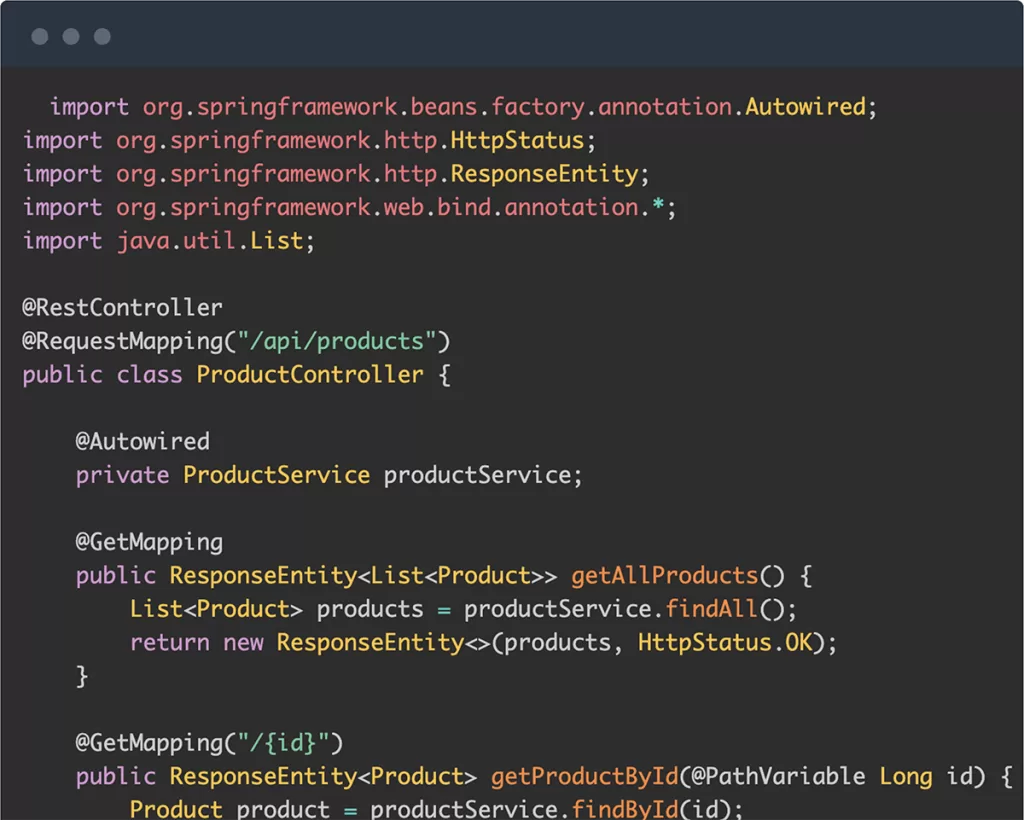
Not really. A Java API is an interface written in Java. A REST API is a set of rules for web communication.. Developers often use Java to build REST APIs using tools like Spring Boot.
3. How do I create my API in Java?
To build a web API in Java developers usually use tools like Spring Boot or Jakarta EE. These tools help set up endpoints that respond to web requests.
4. What is the difference between the JDK and the Java API?
The JDK is the software package you download to write Java code. It includes the compiler, the Java Virtual Machine and the Java API. The Java API is a part of the JDK that has prewritten code libraries.
5. Why is the Java API so important for beginners?
The Java API is really helpful, for beginners. It provides commands that new coders can use instead of figuring out complex math algorithms or data structures. This way beginners can focus on building their application using Java API.