
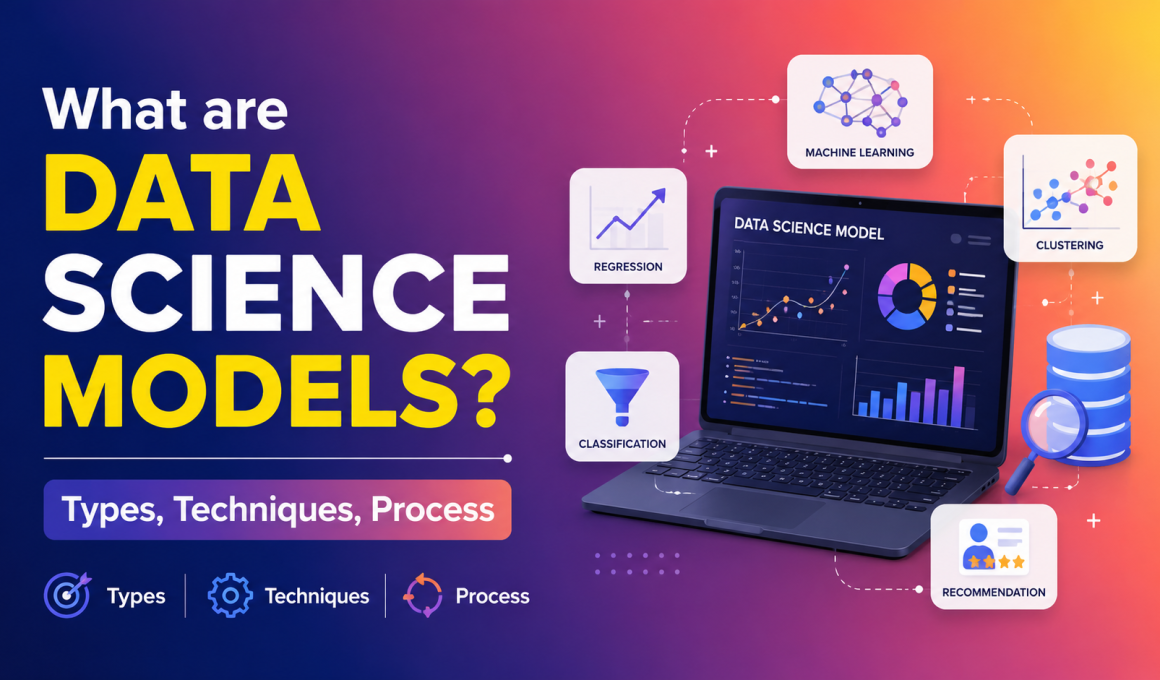
What are Data Science Models? Types, Techniques, Process — honestly, this confused me a lot when I first entered the world of data science. Every tutorial sounded robotic. Everyone kept throwing around words like “algorithms,” “predictive analytics,” and “machine learning pipelines” as if beginners magically understood them 😅
So in this blog, I’m going to explain What are Data Science Models? Types, Techniques, Process in the simplest way possible — the way I wish someone had explained it to me when I started learning data science.
No boring textbook definitions. No unnecessary jargon.
Just practical understanding. 👨💻
📌 Key Highlights
- Understand what data science models really are
- Learn the main types of data science models
- Explore popular data science techniques
- Step-by-step explanation of the data science process
- Real-life examples anyone can understand
- Beginner-friendly explanation with simple words
- Difference between machine learning models and data science models
- Common mistakes beginners make
What are Data Science Models? Types, Techniques, Process 🤔
Let me explain this in the easiest possible way.
A data science model is simply a system or method that learns patterns from data and helps make decisions or predictions.
That’s it.
Think about Netflix recommending movies.
Or Amazon suggesting products.
Or Google Maps predicting traffic.
Behind all these smart systems, there’s a data science model working quietly in the background.
When I first learned this, I realized something important:
👉 A model is not “magic AI.”
It’s basically a smart mathematical system trained using data.
For example:
- If we give a model thousands of house prices,
- along with location, size, number of rooms,
- the model learns patterns,
- and later predicts the price of a new house.
Simple, right?
That’s exactly how many data science models work.
Why are Data Science Models Important? 📊
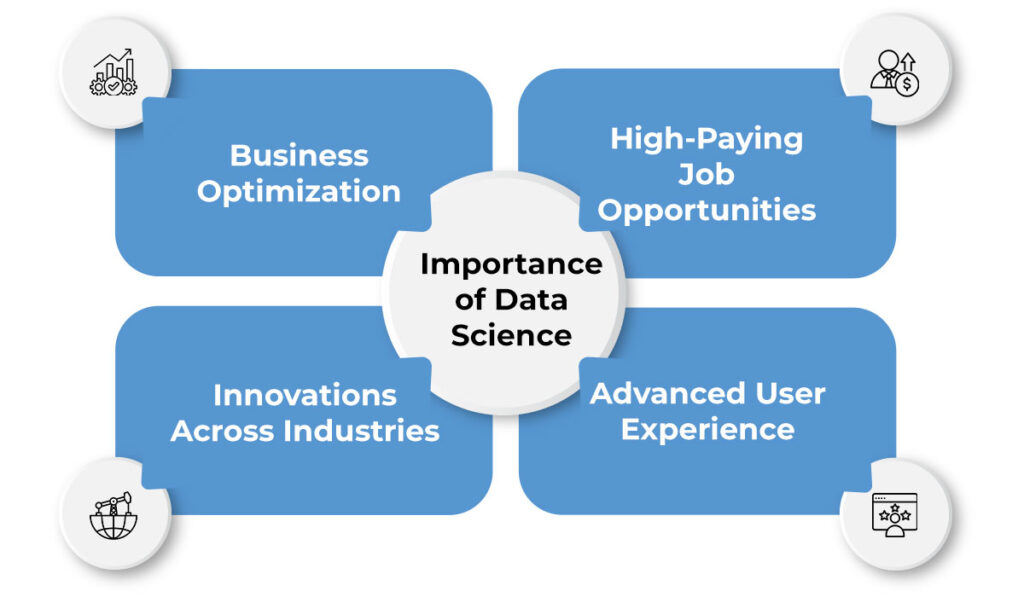
Honestly, today’s world runs on data.
Companies don’t just guess anymore.
They use data science techniques and models to make better decisions.
Here’s where businesses use them:
- Fraud detection in banking 💳
- Product recommendations 🛒
- Face recognition 📸
- Healthcare predictions 🏥
- Chatbots 🤖
- Stock market analysis 📈
- Customer behavior tracking
Even Instagram’s feed ranking uses data science models.
Every scroll you make teaches the system something about you.
Crazy, right?
Types of Data Science Models 🧠
Now let’s get into the interesting part.
There are many types of data science models, but beginners should first understand these major categories.
1. Regression Models
Regression models predict continuous values.
For example:
- Predicting salary
- Predicting temperature
- Predicting house prices
One of the most common models here is:
- Linear Regression
I actually practiced this first while learning Python. I used student study hours to predict exam scores. Surprisingly fun 😄
Real-Life Example
A food delivery company predicts delivery time based on:
- Distance
- Traffic
- Weather
That prediction comes from regression models.
2. Classification Models
These models predict categories.
For example:
- Spam or not spam
- Sick or healthy
- Fraud or genuine transaction
Popular classification models:
- Logistic Regression
- Decision Trees
- Random Forest
- Support Vector Machines (SVM)
Real-Life Example
Gmail detecting spam emails is a classic classification problem.
Every time Gmail blocks junk mail, it uses a data science classification model.
3. Clustering Models
Clustering means grouping similar data together.
No labels. No categories beforehand.
The system finds hidden patterns itself.
Popular clustering technique:
- K-Means Clustering
Real-Life Example
E-commerce companies group customers based on:
- Shopping habits
- Spending patterns
- Interests
This helps businesses target ads better.
4. Recommendation Models
These are everywhere now.
Netflix.
YouTube.
Spotify.
Amazon.
Recommendation models suggest things based on user behavior.
Example
If you watch many sci-fi movies, Netflix starts recommending similar content.
That’s a recommendation data science model working behind the scenes.
5. Deep Learning Models 🤖
This is where things become powerful.
Deep learning models imitate the human brain using neural networks.
These models power:
- ChatGPT
- Self-driving cars
- Voice assistants
- AI image generators
Honestly, when I first saw AI generating realistic images from text prompts, I was shocked 😳
Deep learning changed everything.
Popular Data Science Techniques 📚
Now that we understand the types, let’s talk about common data science techniques.
These techniques help models learn from data effectively.
Data Cleaning
This step is underrated.
Real-world data is messy.
Sometimes:
- Values are missing
- Data is duplicated
- Formats are wrong
Before building models, data scientists clean the data.
And trust me — this takes way more time than beginners expect 😅
Feature Engineering
This means selecting useful information from raw data.
For example:
Instead of storing a full birthdate, we may calculate:
- Age
- Age group
- Experience level
These become better “features” for models.
Training and Testing
This is super important.
We split data into:
- Training data
- Testing data
Why?
Because we want to check if the model actually works on new data.
Otherwise, the model may simply memorize answers.
Data Visualization 📊
Graphs help us understand patterns faster.
Popular tools:
- Tableau
- Power BI
- Matplotlib
- Seaborn
I personally understood data much better once I started visualizing it instead of staring at spreadsheets all day.
The Data Science Process Step-by-Step 🔄
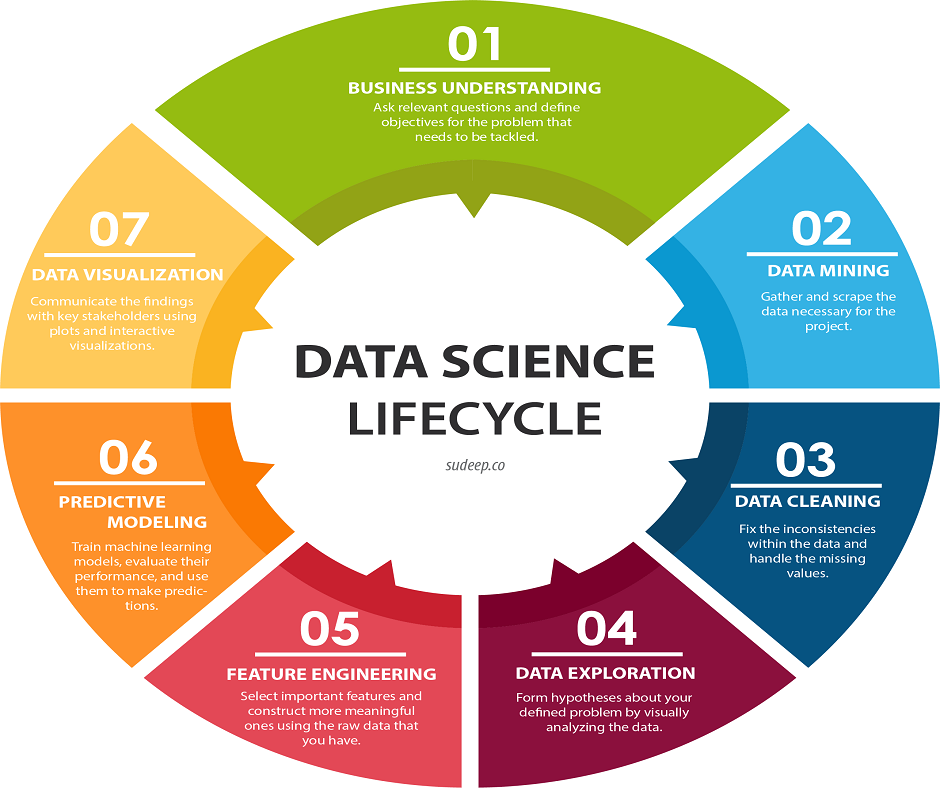
Understanding the data science process is extremely important for beginners.
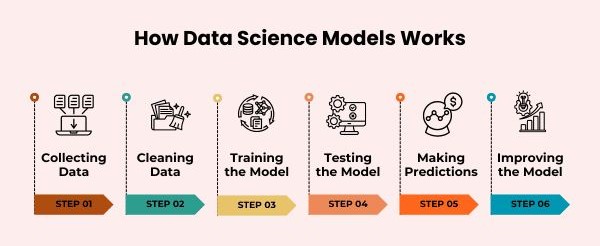
Here’s the typical workflow:
Step 1: Problem Understanding
First, identify the business problem.
Example:
“Why are customers leaving our app?”
Without understanding the problem, even the best model becomes useless.
Step 2: Data Collection
Next, gather data from:
- Databases
- APIs
- Surveys
- Websites
- Sensors
More quality data usually means better predictions.
Step 3: Data Cleaning
Fix errors.
Remove duplicates.
Handle missing values.
This step can take 60–70% of the project time.
Seriously 😅
Step 4: Exploratory Data Analysis (EDA)
Here we analyze patterns and trends.
Questions we ask:
- Which feature matters most?
- Are there correlations?
- Are there unusual values?
EDA helps avoid bad assumptions.
Step 5: Model Building
Now we choose suitable data science models.
Example:
- Regression for prediction
- Classification for categories
- Clustering for grouping
Step 6: Model Evaluation
We test how accurate the model is.
Common evaluation metrics:
- Accuracy
- Precision
- Recall
- RMSE
This tells us whether the model performs well.
Step 7: Deployment 🚀
Finally, the model gets deployed into real applications.
Example:
- Banking apps
- Shopping apps
- Healthcare systems
Once deployed, real users start interacting with it.
Difference Between Machine Learning and Data Science
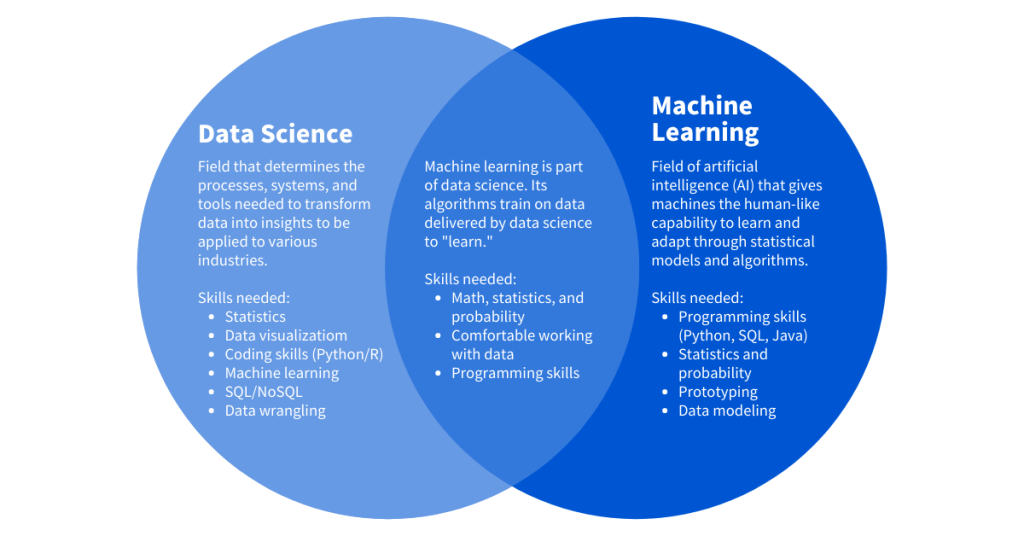
This confused me for months.
So let me simplify it.
| Data Science | Machine Learning |
|---|---|
| Bigger field | Smaller subset |
| Includes analysis, visualization, statistics | Mainly focuses on training models |
| Goal is extracting insights | Goal is prediction and automation |
In short:
👉 Machine learning is part of data science.
Common Mistakes Beginners Make ❌
I made almost all of these mistakes myself 😅
Learning Tools Before Basics
Many beginners jump directly into TensorFlow or deep learning.
Bad idea.
First understand:
- Statistics
- Data handling
- Python basics
- Simple models
Ignoring Data Cleaning
Everyone wants fancy AI.
Nobody wants messy Excel sheets 😂
But data cleaning is one of the most important data science techniques.
Memorizing Instead of Understanding
I used to memorize algorithms.
Huge mistake.
Once I started understanding real-world use cases, learning became much easier.
Best Tools Used in Data Science 🛠️
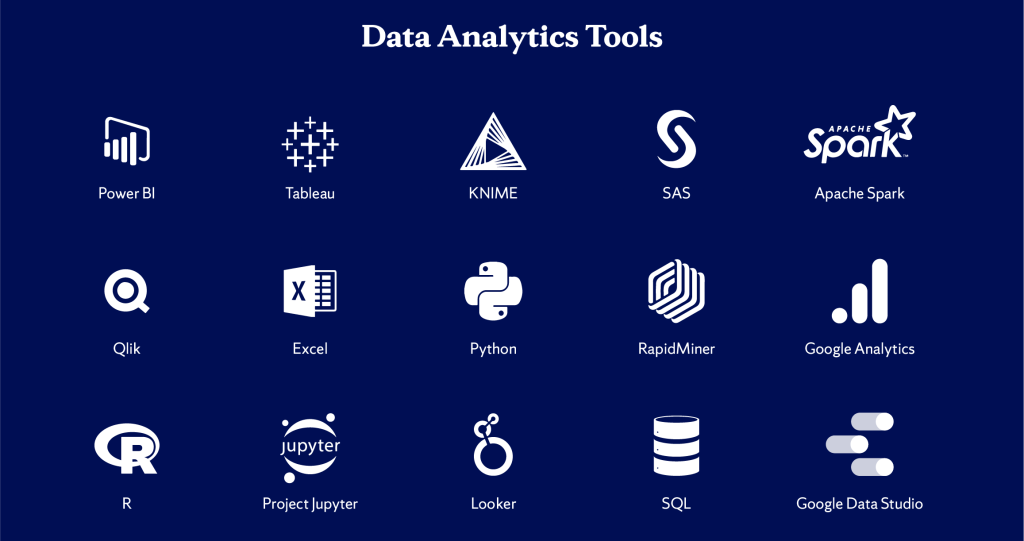
Popular tools include:
- Python
- R
- Jupyter Notebook
- SQL
- Tableau
- Power BI
- TensorFlow
- Scikit-learn
Helpful External Resources
- Python Official Website: https://www.python.org/
- Kaggle Practice Platform: https://www.kaggle.com/
- Scikit-learn Documentation: https://scikit-learn.org/
Suggested Internal Links
You can internally link this article with:
- What is Machine Learning?
- Python for Beginners
- Career in Data Science
- Data Analyst vs Data Scientist
- Best Programming Languages for AI
Final Thoughts 💡
If someone asked me today, “What are Data Science Models? Types, Techniques, Process?” — I’d answer like this:
Data science models are smart systems trained using data to solve problems, predict outcomes, and help businesses make better decisions.
That’s the core idea.
And honestly?
You don’t need to be a math genius to start learning this field.
Start small.
Learn how data works.
Practice with simple projects.
Stay curious.
That’s exactly how I started too 🙂
The beautiful thing about data science is that once you understand the basics, you start seeing data everywhere around you.
And suddenly…
the digital world makes a lot more sense 🚀
Want to learn more ??, Kaashiv Infotech Offers Data Analytics Course, Data Science Course, Cyber Security Course & More Visit Their Website www.kaashivinfotech.com.