
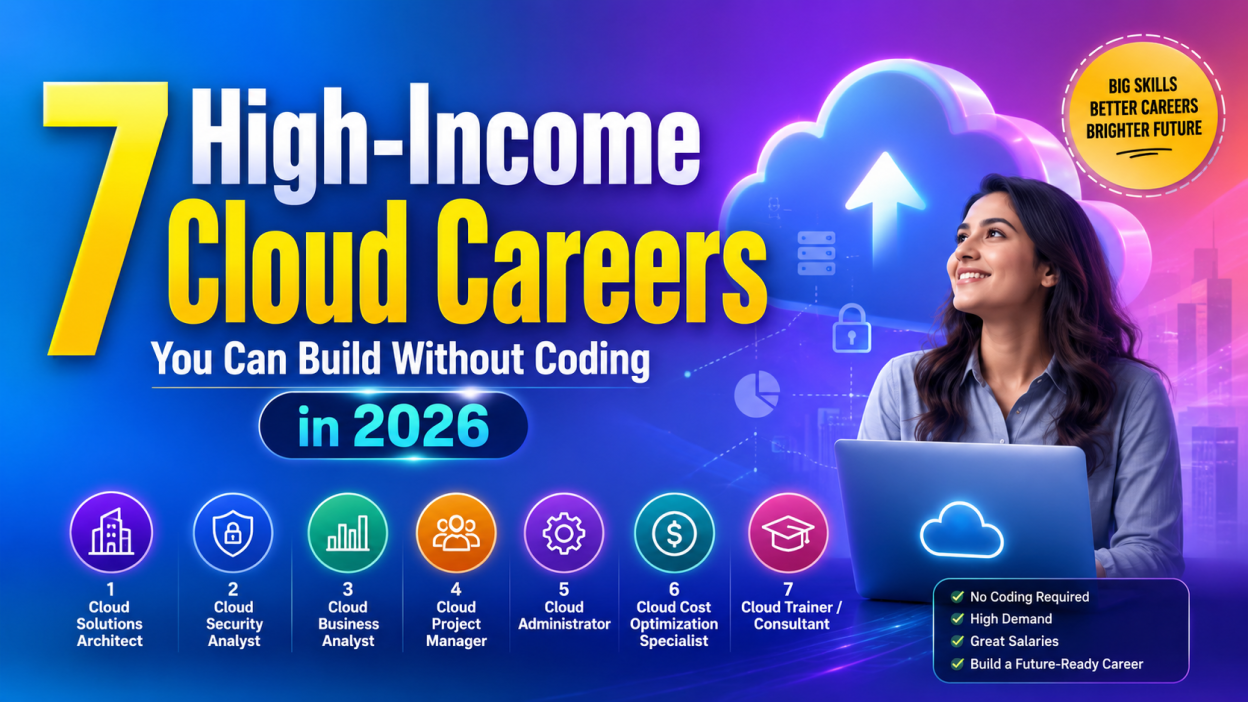
Cloud computing has transformed from a developer-only field into a massive ecosystem of roles where coding is just one small part. Today, organizations need professionals who can plan, secure, manage, optimize, and explain cloud systems—and many of these roles do not require programming skills.
If you’re aiming for a high-paying tech career without coding, cloud computing is one of the most powerful and future-proof paths you can take in 2026.
This in-depth guide will walk you through 7 lucrative cloud careers, what you’ll actually do in each role, why companies pay so much, and how you can start from scratch—even as a beginner.
☁️ Understanding Non-Coding Roles in Cloud Computing
Before jumping into the roles, it’s important to understand one thing clearly:
Cloud computing is not just about writing code—it’s about delivering solutions.
Companies care about:
- Reducing costs
- Improving performance
- Ensuring security
- Scaling systems
- Aligning tech with business goals
And all of this requires decision-makers, analysts, and managers—not just developers.
That’s exactly where non-coding cloud roles come in.
🏆 1. Cloud Solutions Architect (Design & Strategy Expert)

A Cloud Solutions Architect is one of the most prestigious and highest-paying roles in cloud computing. In a non-coding path, your focus is on designing systems, not building them.
You act as the decision-maker who determines:
- Which cloud platform to use
- How systems should be structured
- How to ensure scalability and reliability
- How to optimize performance and cost
Instead of coding, you’ll spend time creating architecture diagrams, planning infrastructure, and guiding teams.
Real-world example:
A company wants to move its entire application to the cloud. You design how the servers, databases, and networks will be structured—ensuring everything runs smoothly.
Why companies pay more:
A single bad decision in architecture can cost thousands (or even millions). Skilled architects prevent that.
Salary range: $120,000 – $180,000/year
🔐 2. Cloud Security Analyst (Protecting Digital Assets)

Security is one of the biggest concerns in cloud computing. A Cloud Security Analyst ensures that systems are safe from cyber threats.
This role is perfect if you’re interested in cybersecurity without coding.
Your responsibilities include:
- Monitoring cloud environments for suspicious activity
- Managing access controls (IAM)
- Ensuring compliance with regulations
- Conducting audits and risk assessments
Real-world example:
You detect unusual login attempts and block unauthorized access before a breach occurs.
Why companies pay more:
Data breaches can destroy a company’s reputation and finances.
Salary range: $100,000 – $150,000/year
📊 3. Cloud Business Analyst (Bridging Business & Technology)

A Cloud Business Analyst ensures that cloud solutions align with business goals. You don’t build systems—you analyze and guide decisions.
You’ll spend your time:
- Understanding business needs
- Recommending cloud strategies
- Creating reports and documentation
- Supporting cloud migration projects
This role is ideal if you enjoy thinking, analyzing, and communicating.
Real-world example:
A company wants to reduce IT costs. You analyze their systems and suggest moving specific services to the cloud.
Why companies pay more:
Wrong decisions lead to wasted resources—analysts help avoid that.
Salary range: $90,000 – $130,000/year
⚙️ 4. Cloud Project Manager (Leadership Without Coding)
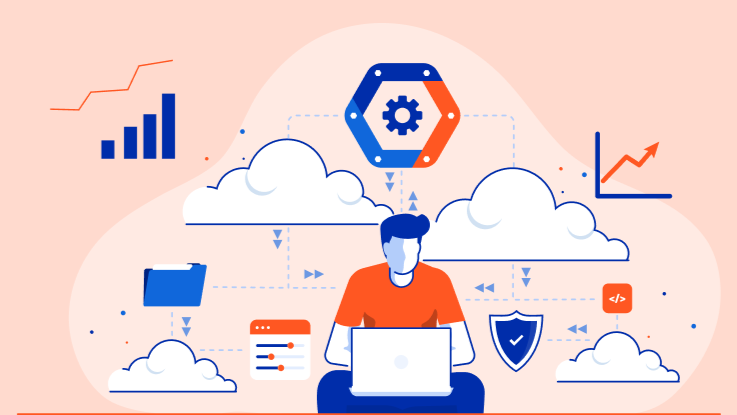
Cloud Project Managers ensure that cloud projects are completed successfully. This role is all about leadership, coordination, and execution.
You will:
- Plan timelines and budgets
- Manage teams and stakeholders
- Track progress and risks
- Ensure project delivery
Real-world example:
A company is migrating its data center to AWS. You manage the entire process from planning to execution.
Why companies pay more:
Cloud projects are complex and expensive—failure is not an option.
Salary range: $100,000 – $140,000/year
📦 5. Cloud Administrator (Hands-On Without Coding)

A Cloud Administrator handles the daily operations of cloud systems. This is one of the best starting roles for beginners.
You will work with:
- Cloud dashboards (AWS, Azure, GCP)
- System monitoring tools
- Backup and recovery systems
- User access management
Real-world example:
You ensure that servers are running, storage is optimized, and users have the correct access.
Why companies pay more:
Smooth operations are critical for business continuity.
Salary range: $80,000 – $120,000/year
💰 6. Cloud Cost Optimization Specialist (FinOps Role)

Cloud services can be expensive if not managed properly. A Cloud Cost Optimization Specialist ensures that companies spend efficiently.
You’ll focus on:
- Analyzing cloud bills
- Identifying unused resources
- Recommending cost-saving strategies
- Creating financial reports
This role is part of the growing field called FinOps.
Real-world example:
You identify unused servers and save the company thousands of dollars monthly.
Why companies pay more:
Saving money directly increases profit.
Salary range: $95,000 – $135,000/year
🧑🏫 7. Cloud Trainer / Consultant (Knowledge-Based Career)
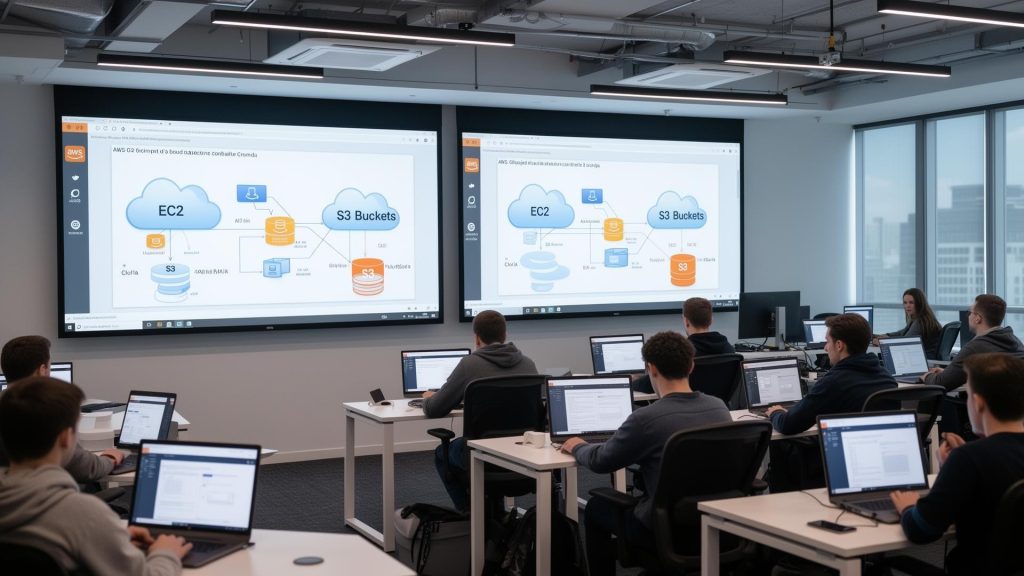
If you enjoy teaching or consulting, this role offers flexibility and high income potential.
You can:
- Train students and professionals
- Conduct corporate workshops
- Offer consulting services
- Help companies adopt cloud technologies
Real-world example:
You train a team on how to use AWS services effectively.
Why companies pay more:
Expert knowledge is highly valuable and scalable.
Salary range: $90,000 – $140,000/year
🎯 Step-by-Step Roadmap to Start (Without Coding)
Starting a cloud career without coding requires a smart and structured approach.
First, build a strong foundation in cloud fundamentals. Understand concepts like virtualization, storage, networking, and cloud deployment models.
Next, earn beginner-friendly certifications:
- AWS Certified Cloud Practitioner
- Microsoft Azure Fundamentals (AZ-900)
- Google Cloud Digital Leader
These certifications don’t require coding but are highly valued in the industry.
Then, gain hands-on experience. Use free tiers of cloud platforms to:
- Launch virtual machines
- Manage storage
- Configure users and permissions
Finally, focus on soft skills:
- Communication
- Problem-solving
- Analytical thinking
These skills are what make non-coding professionals highly valuable.
📈 Career Growth Path
One of the best things about cloud careers is flexibility and growth.
You can start small and grow into high-paying roles:
- Cloud Administrator → Cloud Engineer → Architect
- Business Analyst → Consultant → Strategy Lead
- Security Analyst → Security Architect → CISO
With experience and certifications, salaries can grow 2x–3x within a few years.
💡 Final Thoughts
Cloud computing is no longer limited to programmers. In 2026, it offers some of the highest-paying careers for non-coders.
Whether you choose to become a Cloud Architect, Security Analyst, Project Manager, or Consultant, you can build a successful and rewarding career without writing code.
If you’re serious about entering tech and want a high salary, strong demand, and long-term growth, cloud computing is one of the smartest choices you can make.
Want Learn Cloud Computing Course, Cyber Security Course, Networking Course ?, Visit Our Website www.kaashivinfotech.com.