
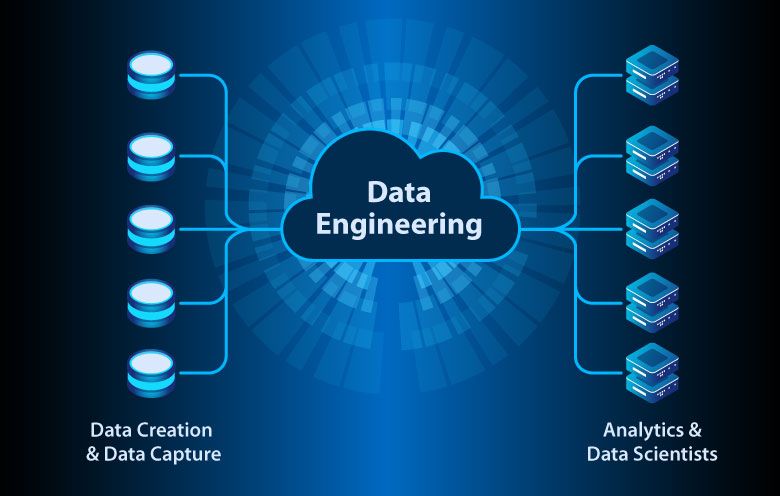
Data Engineering is one of the fastest-growing careers in technology, and if you’re wondering what to study, you’re in the right place. Data Engineering isn’t just about learning SQL or Python. It’s about understanding how data moves, how it’s stored, and how companies turn raw information into meaningful insights.
When I first started exploring this field, I assumed I had to master every programming language before I could even think about becoming a data engineer. I couldn’t have been more wrong. After speaking with professionals and researching industry expectations, I realized that learning the right topics in the right order matters far more than trying to learn everything at once.
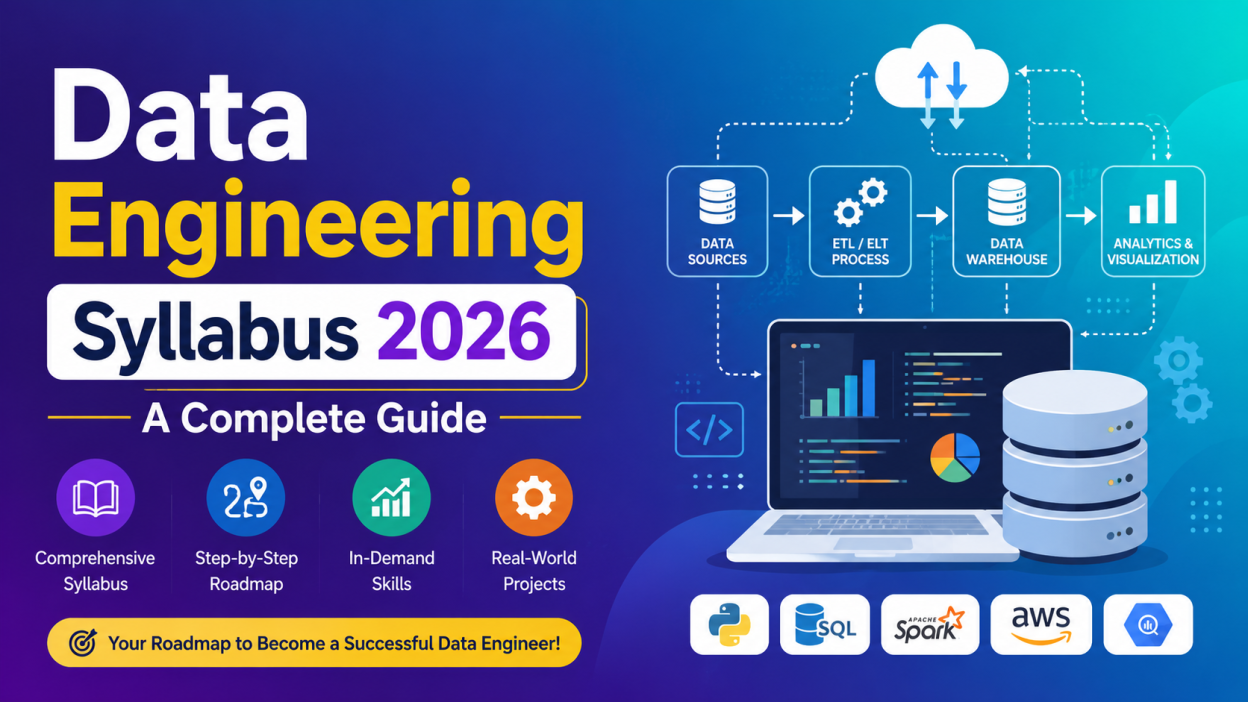
In this guide, I’ll walk you through the Data Engineering Syllabus 2026, explain why each topic matters, and share practical tips that I wish someone had told me earlier.
📌 Key Highlights
- 🚀 Complete Data Engineering Syllabus 2026
- 📚 Beginner to advanced learning roadmap
- 🐍 Programming languages you should learn
- 🗄️ SQL, NoSQL, and database fundamentals
- ⚙️ ETL, ELT, and Data Pipeline concepts
- ☁️ Cloud technologies for Data Engineering
- 📊 Big Data ecosystem explained
- 💼 Real-world projects to build your portfolio
- 🎯 Career opportunities and salary insights
- ✅ Resources to continue learning
Why Learn Data Engineering in 2026? 📈
Every day, companies collect enormous amounts of data.
Think about it.
Whenever you shop online, watch Netflix, order food, or book a cab, data gets created. Someone has to collect it, organize it, clean it, and prepare it before analysts or AI systems can use it.
That’s exactly where Data Engineering comes in.
According to industry trends, organizations are investing more in cloud platforms, AI, and real-time analytics. None of these work efficiently without well-designed data pipelines.
If you enjoy solving problems and building systems behind the scenes, Data Engineering could be a fantastic career choice.
Data Engineering Syllabus 2026 – Complete Learning Path
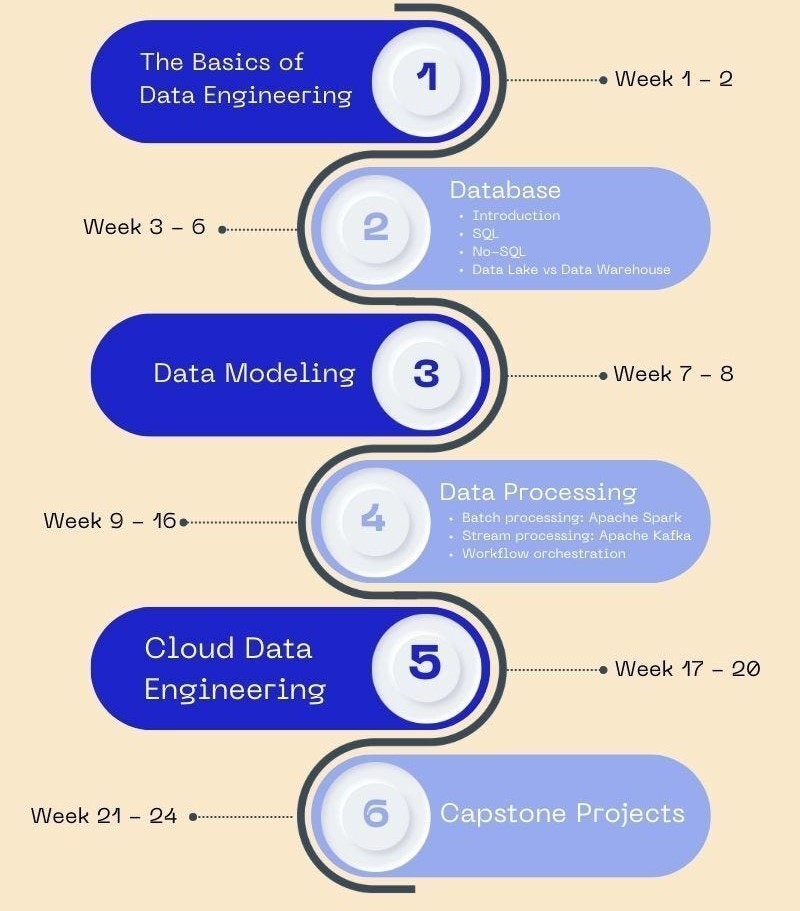
Let’s break the syllabus into simple modules.
1. Computer Science Fundamentals
Before learning advanced tools, build a strong foundation.
Topics include:
- Operating Systems
- Computer Networks
- File Systems
- Data Structures
- Algorithms
- Object-Oriented Programming
These topics help you understand how applications process and manage data.
2. Programming for Data Engineering
Programming is the backbone of every Data Engineering role.
Learn:
- Python ⭐
- Java
- Scala (optional but useful)
- Shell Scripting
Important Python topics:
- Variables
- Functions
- Loops
- Classes
- Exception Handling
- File Handling
- APIs
I personally recommend spending extra time with Python because you’ll use it almost every day.
3. SQL for Data Engineering
If there’s one skill you shouldn’t skip, it’s SQL.
You’ll write queries almost daily.
Important topics:
- SELECT
- WHERE
- ORDER BY
- GROUP BY
- HAVING
- Aggregate Functions
- Joins
- Views
- Stored Procedures
- Indexes
- Transactions
- Window Functions
- Common Table Expressions (CTEs)
Real-life example:
Imagine an e-commerce company wants to find its top-selling products during the last month.
Instead of manually checking thousands of orders, a SQL query can return the answer in seconds.
4. Database Management Systems
A data engineer works with multiple database systems.
Learn:
Relational Databases
- MySQL
- PostgreSQL
- SQL Server
- Oracle
NoSQL Databases
- MongoDB
- Cassandra
- Redis
Understand:
- Primary Keys
- Foreign Keys
- Normalization
- ACID Properties
- CAP Theorem
- Replication
- Partitioning
5. ETL and ELT in Data Engineering
This is one of the most important modules.
ETL stands for:
- Extract
- Transform
- Load
ELT stands for:
- Extract
- Load
- Transform
You’ll learn:
- Data Cleaning
- Data Validation
- Data Transformation
- Workflow Scheduling
- Error Handling
- Automation
Without ETL, businesses would struggle to combine data from different sources.
6. Data Warehousing
A data warehouse stores historical business data for reporting and analytics.
Topics include:
- Data Warehouse Architecture
- Star Schema
- Snowflake Schema
- Fact Tables
- Dimension Tables
- Slowly Changing Dimensions (SCD)
- OLAP
- OLTP
Popular tools:
- Snowflake
- Amazon Redshift
- Google BigQuery
- Azure Synapse Analytics
7. Big Data Technologies
As data grows, traditional databases become slower.
That’s why companies use Big Data technologies.
Learn:
- Hadoop
- HDFS
- MapReduce
- Apache Spark
- Apache Hive
- Apache Kafka
- Apache Flink
Among these, Apache Spark has become one of the most widely adopted frameworks for large-scale data processing because of its speed and versatility.
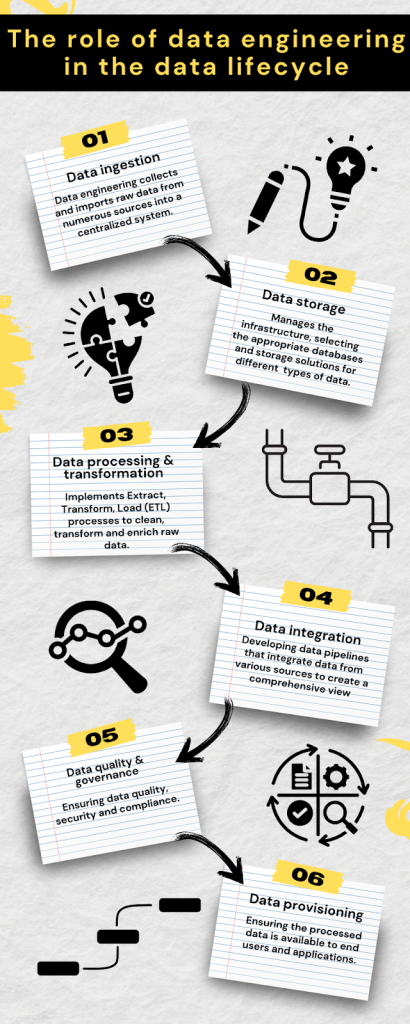
8. Data Pipelines in Data Engineering
A data pipeline moves data from one system to another automatically.
Topics include:
- Pipeline Design
- Batch Processing
- Stream Processing
- Workflow Automation
- Data Validation
- Monitoring
- Logging
Popular tools:
- Apache Airflow
- Prefect
- Dagster
9. Cloud Computing for Data Engineering
Cloud skills are becoming essential.
Focus on one cloud platform first.
Popular choices:
- AWS
- Microsoft Azure
- Google Cloud Platform
Learn services like:
- Cloud Storage
- Compute Services
- Data Lakes
- Managed Databases
- Serverless Computing
10. Data Lakes
A Data Lake stores both structured and unstructured data.
Topics:
- Lakehouse Architecture
- Delta Lake
- Apache Iceberg
- Apache Hudi
- Data Catalogs
These technologies are becoming increasingly common in modern Data Engineering projects.
11. DevOps Basics
Many beginners ignore this section.
Don’t.
Learn:
- Git
- GitHub
- CI/CD
- Docker
- Kubernetes (Basics)
Version control makes team collaboration much easier.
12. Data Security and Governance
Companies take data privacy seriously.
Study:
- Authentication
- Authorization
- Encryption
- Data Masking
- Compliance
- Backup and Recovery
Understanding these concepts helps build secure and reliable systems.
13. Real-World Data Engineering Projects
Projects help you stand out.
Ideas include:
📌 Sales Data Pipeline
📌 Weather Data Analysis
📌 Movie Recommendation Data Pipeline
📌 Stock Market Data Pipeline
📌 Social Media Analytics
📌 IoT Sensor Data Pipeline
📌 Healthcare Data Warehouse
Each project teaches different skills and strengthens your portfolio.
Skills Every Data Engineer Should Build
Besides technical knowledge, focus on these skills:
- ✅ Problem-solving
- ✅ Communication
- ✅ Critical thinking
- ✅ Teamwork
- ✅ Time management
- ✅ Debugging
- ✅ Documentation
I’ve noticed that employers often value someone who can clearly explain a solution, not just build it.
These internal links keep readers engaged and improve your site’s SEO.
Career Opportunities After Learning Data Engineering
Once you complete the Data Engineering Syllabus 2026, you can explore roles such as:
- Data Engineer
- Junior Data Engineer
- ETL Developer
- Big Data Engineer
- Cloud Data Engineer
- Data Platform Engineer
- Analytics Engineer
- Database Developer
Many professionals also move into machine learning engineering, analytics engineering, or data architecture as they gain experience.
My Final Thoughts ❤️
When I first looked at the Data Engineering Syllabus, it felt overwhelming. There were databases, cloud platforms, Python, Spark, Kafka—the list seemed endless. But once I broke everything into smaller learning milestones, it became much more manageable.
Here’s the advice I’d give a friend: don’t rush to learn every tool at once. Start with SQL, Python, and database fundamentals. Then move to ETL, Data Pipelines, cloud platforms, and Big Data technologies. Build projects along the way because they teach lessons that tutorials simply can’t.
Remember, becoming skilled in Data Engineering is a journey, not a race. Stay curious, keep practicing, and celebrate each milestone. Before you know it, you’ll have the confidence to build real-world data pipelines and apply for your first Data Engineering role. 🚀
Want to learn more ??, Kaashiv Infotech Offers Data Analytics Course, Data Science Course, Cyber Security Course & More Visit Their Website www.kaashivinfotech.com.