

Consistency in DBMS: ACID Properties For Data Integrity is one of those database concepts that confused me when I first started learning DBMS. Consistency in DBMS: ACID Properties For Data Integrity sounded like a fancy technical term, but once I understood it with simple examples, everything clicked.
If you’re wondering what Consistency in DBMS actually means, why it matters, and how it fits into the ACID properties, you’re in the right place. I’ll explain everything in plain English, just like I’d explain it to a friend preparing for an interview or an exam.
By the end of this guide, you’ll know:
- ✅ What Consistency in DBMS means
- ✅ How it works with ACID Properties
- ✅ Real-world examples
- ✅ Common interview questions
- ✅ Why companies rely on it every single day
📌 Key Highlights
- ✔️ Learn what Consistency in DBMS means in simple words.
- ✔️ Understand the four ACID Properties.
- ✔️ Discover why Consistency in DBMS: ACID Properties For Data Integrity is essential.
- ✔️ Explore banking and e-commerce examples.
- ✔️ Learn the difference between Consistency and Integrity Constraints.
- ✔️ Understand how DBMS prevents invalid data.
- ✔️ Prepare for DBMS interview questions with confidence.
What is Consistency in DBMS?
When I first heard the word consistency, I honestly thought it meant that a database should always stay the same.
That’s not true.
A database changes all the time. People create accounts, place orders, transfer money, and update information every second. So what exactly stays “consistent”?
Here’s the simple answer:
That’s it.
Think of a school database.
Suppose every student must have a unique Roll Number.
The database already contains:
| Roll Number | Name |
|---|---|
| 101 | Aisha |
| 102 | Rahul |
| 103 | Karan |
Now imagine someone accidentally tries to insert another student with Roll Number 102.
The database should reject it because the Primary Key rule says every Roll Number must be unique.
Since the invalid transaction is rejected, the database remains consistent.
That’s exactly what Consistency in DBMS is all about.
Why Does Consistency Matter?
Imagine opening your banking app.
You see ₹50,000 in your account.
A few seconds later, it suddenly becomes ₹90,000.
Then it changes to ₹12,000.
No transaction history.
No explanation.
Would you trust that bank?
Of course not.
We expect databases to follow strict rules.
Whenever data changes, those rules should never be violated.
That’s why companies like banks, hospitals, airlines, and shopping websites rely heavily on Consistency in DBMS: ACID Properties For Data Integrity.
Without consistency, data becomes unreliable.
A Real-Life Story That Helped Me Understand
I remember shopping online during a festival sale.
The website showed:
I quickly clicked Buy Now.
Within seconds, I received an order confirmation.
Later I wondered…
What if ten people clicked Buy Now at the exact same moment?
Would the website sell ten products even though only one existed?
Thankfully, it doesn’t.
The database checks inventory before confirming the purchase.
Once the item is sold, the stock becomes 0.
The next customer receives a message saying:
That’s Consistency in DBMS working behind the scenes.
The database never allows stock to become -5 because that would violate business rules.
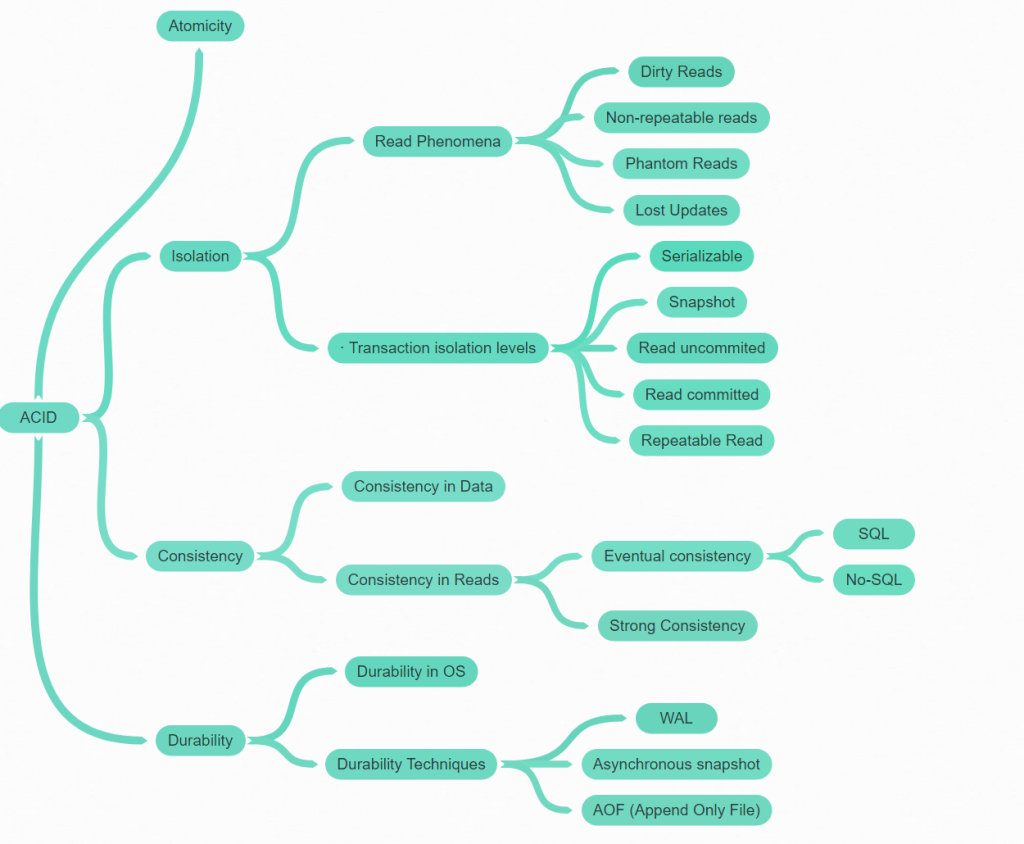
Understanding ACID Properties
Whenever we talk about Consistency in DBMS, we also need to understand ACID Properties.
These four properties make database transactions reliable.
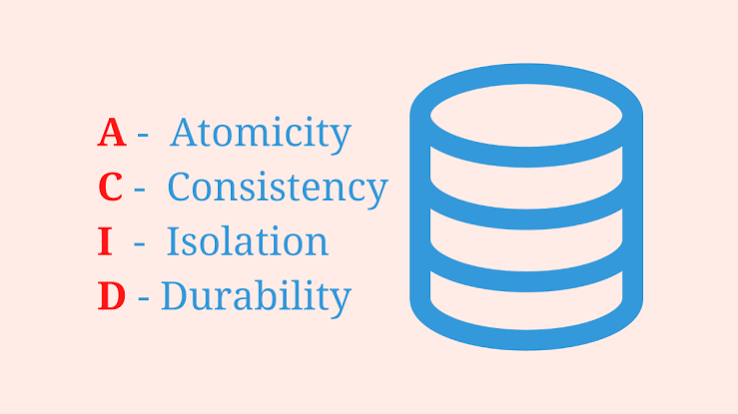
ACID stands for:
- A – Atomicity
- C – Consistency
- I – Isolation
- D – Durability
Together, they ensure data remains safe even if thousands of users access the database simultaneously.
Let’s understand each one.
1. Atomicity
Atomicity means:
There is no “half completed” transaction.
Imagine transferring ₹5,000 from your account to your friend’s account.
The transaction has two steps:
- Debit ₹5,000
- Credit ₹5,000
Suppose the amount is deducted from your account, but before it reaches your friend, the server crashes.
Without Atomicity:
- Your money disappears.
- Your friend never receives it.
That’s a disaster.
Atomicity prevents this.
If one step fails, the entire transaction is rolled back.
Everything returns to its original state.
2. Consistency ⭐
This is the star of our article.
Consistency in DBMS ensures that every transaction follows all predefined rules.
These rules include:
- Primary Key
- Foreign Key
- Unique Constraint
- Check Constraint
- Business Rules
- Data Validation
If any transaction violates these rules, the DBMS rejects it.
The database always remains valid.
Simple.
Example of Consistency
Suppose a company has this rule:
Someone accidentally runs:
UPDATE Employee
SET Salary = -40000;
The DBMS refuses this update because it violates the company’s business rule.
Consistency is maintained.
3. Isolation
Now imagine hundreds of people booking movie tickets.
Everyone wants Seat A10.
If two users reserve the same seat at exactly the same moment, chaos begins.
Isolation ensures that transactions don’t interfere with one another.
Every transaction behaves as if it’s running alone.
That’s why only one person finally gets Seat A10.
4. Durability
Imagine you’ve just submitted your university exam online.
The screen says:
Suddenly…
Power cut.
Internet disconnects.
Laptop shuts down.
You panic.
But when you log in again, your answers are still there.
Why?
Because of Durability.
Once a transaction is committed, it remains permanently saved—even if the system crashes immediately afterward.
How ACID Properties Work Together
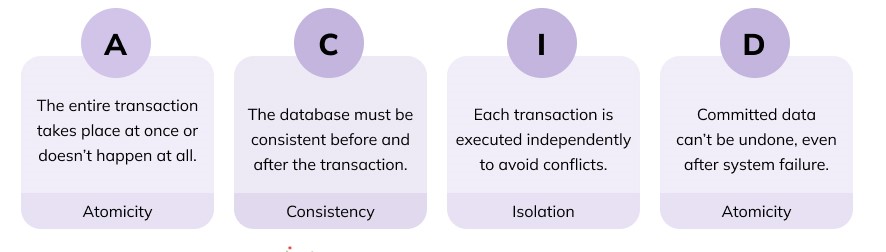
I like to imagine ACID Properties as a team.
- Atomicity says, “Finish everything or cancel everything.”
- Consistency says, “Follow every rule.”
- Isolation says, “Don’t disturb other transactions.”
- Durability says, “Once saved, never lose it.”
When these four work together, databases become reliable and trustworthy.
That’s exactly why modern applications—from banking apps to food delivery platforms—depend on Consistency in DBMS: ACID Properties For Data Integrity every day.
Where Do We See Consistency in Real Life? 🌍
Honestly, before learning DBMS, I never realized how often I interact with databases. Now I notice them everywhere.
Here are a few examples:
🏦 Banking Systems
- Money transfers
- ATM withdrawals
- Balance updates
- Loan processing
🛒 E-commerce Websites
- Product stock updates
- Shopping cart management
- Order placement
- Online payments
✈️ Airline Reservation Systems
- Seat booking
- Ticket cancellation
- Passenger details
- Flight schedules
🏥 Hospital Management Systems
- Patient records
- Doctor appointments
- Medicine inventory
- Billing information
In every one of these cases, Consistency in DBMS ensures that the data always remains valid, accurate, and trustworthy.
How Does Consistency in DBMS Actually Work?
When I first learned about Consistency in DBMS, I had one question:
“Who checks whether the data is valid?”
The answer surprised me.
The Database Management System (DBMS) itself acts like a strict teacher. Every time we insert, update, or delete data, it checks whether the transaction follows all the rules.
If the transaction is valid, the DBMS allows it.
If it breaks even one rule, the DBMS rejects it immediately.
That’s why Consistency in DBMS: ACID Properties For Data Integrity is so important. It protects the database from invalid or corrupted data.
A Banking Example That Makes Everything Clear 💳
Let’s imagine a bank where I have ₹20,000 in my account.
I decide to transfer ₹5,000 to my friend.
The transaction looks like this:
Step 1
My account balance:
₹20,000
Friend’s balance:
₹15,000
Step 2
The database deducts ₹5,000 from my account.
My balance becomes:
₹15,000
Step 3
The database adds ₹5,000 to my friend’s account.
Friend’s balance becomes:
₹20,000
Everything looks perfect.
But now imagine something unexpected happens…
The server crashes after deducting money from my account but before adding it to my friend’s account.
What happens now?
If the transaction stopped there, ₹5,000 would simply disappear.
That would completely break Consistency in DBMS.
Instead, the DBMS rolls back the entire transaction.
My balance returns to ₹20,000.
My friend’s balance stays ₹15,000.
The database returns to its previous valid state.
That’s consistency in action.
Another Example: Online Shopping 🛍️
Suppose an online store has only 3 laptops left.
The inventory table says:
| Product | Stock |
|---|---|
| Laptop | 3 |
Now four customers place orders at exactly the same time.
Without proper consistency checks, the database might process all four orders.
The stock becomes:
-1
That’s impossible.
A company can’t sell products it doesn’t have.
Instead, the DBMS processes valid transactions only.
The first three orders succeed.
The fourth customer receives:
The stock never becomes negative.
The database remains consistent.
Rules That Help Maintain Consistency
A DBMS doesn’t magically know what’s right or wrong.
We define rules, and the DBMS enforces them.
Some of the most common rules include:
1. Primary Key
Every record must have a unique value.
Example:
Two employees cannot have the same Employee ID.
2. Foreign Key
Relationships between tables must remain valid.
Example:
An Order cannot exist without a valid Customer.
3. Unique Constraint
Certain values cannot repeat.
Examples include:
- Email ID
- Aadhaar Number
- Passport Number
4. NOT NULL Constraint
Some fields must always contain a value.
For example:
- Student Name
- Employee ID
- Date of Birth
Leaving them blank isn’t allowed.
5. CHECK Constraint
This validates data before saving it.
Examples:
- Age must be greater than 18.
- Salary cannot be negative.
- Marks cannot exceed 100.
These simple rules play a huge role in maintaining Consistency in DBMS: ACID Properties For Data Integrity.
Consistency vs Integrity Constraints
Many beginners—including me—used to think these two terms meant the same thing.
They don’t.
Here’s an easy way to remember the difference.
| Consistency | Integrity Constraints |
|---|---|
| Part of the ACID properties | Database rules |
| Ensures every transaction keeps the database valid | Defines what “valid” means |
| Checks transactions | Checks data |
| Happens during every transaction | Exists as predefined constraints |
Think of it this way:
- Integrity Constraints are the traffic rules.
- Consistency is the traffic police making sure everyone follows them.
Without rules, consistency has nothing to enforce.
Without consistency, rules become meaningless.
What Happens If Consistency Is Lost?
Let’s imagine a hospital database.
A patient receives a prescription.
However, due to an application bug:
- Patient ID doesn’t exist.
- Doctor ID is missing.
- Medicine quantity becomes -5.
Can doctors trust this database?
Definitely not.
Inconsistent data creates confusion.
Some possible consequences include:
- Wrong medical treatments
- Incorrect bank balances
- Duplicate orders
- Lost airline reservations
- Invalid examination results
- Incorrect payroll calculations
Even a small mistake can have serious consequences.
That’s why companies invest heavily in reliable database systems.
How Popular Database Systems Maintain Consistency
Modern databases include built-in mechanisms to ensure consistency.
Some well-known examples are:
- MySQL
- PostgreSQL
- Oracle Database
- Microsoft SQL Server
They use features such as:
- Transactions
- Constraints
- Rollback
- Commit
- Locking
- Validation checks
As developers, we don’t have to build these mechanisms from scratch.
The DBMS handles most of the hard work for us.
Common Mistakes Students Make ❌
While teaching DBMS concepts, I’ve noticed the same misunderstandings come up repeatedly.
Here are a few of the biggest ones.
Mistake 1
Thinking Consistency means the database never changes.
That’s incorrect.
A consistent database changes all the time—but only through valid transactions.
Mistake 2
Confusing Consistency with Data Backup.
Backup is about recovering lost data.
Consistency is about ensuring every transaction keeps the database valid.
Mistake 3
Believing Consistency works alone.
It doesn’t.
Consistency works alongside:
- Atomicity
- Isolation
- Durability
Together, they form the ACID properties.
Mistake 4
Ignoring business rules.
Not every rule comes from SQL constraints.
For example:
- A customer cannot order more than the available stock.
- Employees cannot approve their own expense claims.
These are business rules, and maintaining them is also part of preserving consistency.
Best Practices for Maintaining Consistency ✅
Whenever I build a database or practice SQL, I try to follow these habits:
- ✔️ Use Primary Keys wherever necessary.
- ✔️ Create proper Foreign Key relationships.
- ✔️ Validate user input before inserting data.
- ✔️ Use transactions for related operations.
- ✔️ Roll back failed transactions.
- ✔️ Avoid duplicate records.
- ✔️ Use CHECK constraints for validation.
- ✔️ Test edge cases before deploying applications.
- ✔️ Keep business rules documented.
- ✔️ Review database design regularly.
These practices help keep databases accurate and reliable over time.
Final Thoughts 💡
When I first started learning databases, Consistency in DBMS: ACID Properties For Data Integrity felt like a difficult concept. But once I connected it to real-life situations—like banking transactions, online shopping, and hospital records—it became much easier to understand.
The biggest lesson I learned is this: Consistency isn’t about keeping the data unchanged; it’s about keeping the data correct. Every transaction should take the database from one valid state to another while following all the predefined rules and constraints. If something goes wrong, the DBMS prevents invalid data from being saved, ensuring the database remains accurate and reliable.
want to learn more?, kaashiv infotech offers, SQL Course , data science course, data analytics and more visit their website www.kaashivinfotech.com
Related Reads