
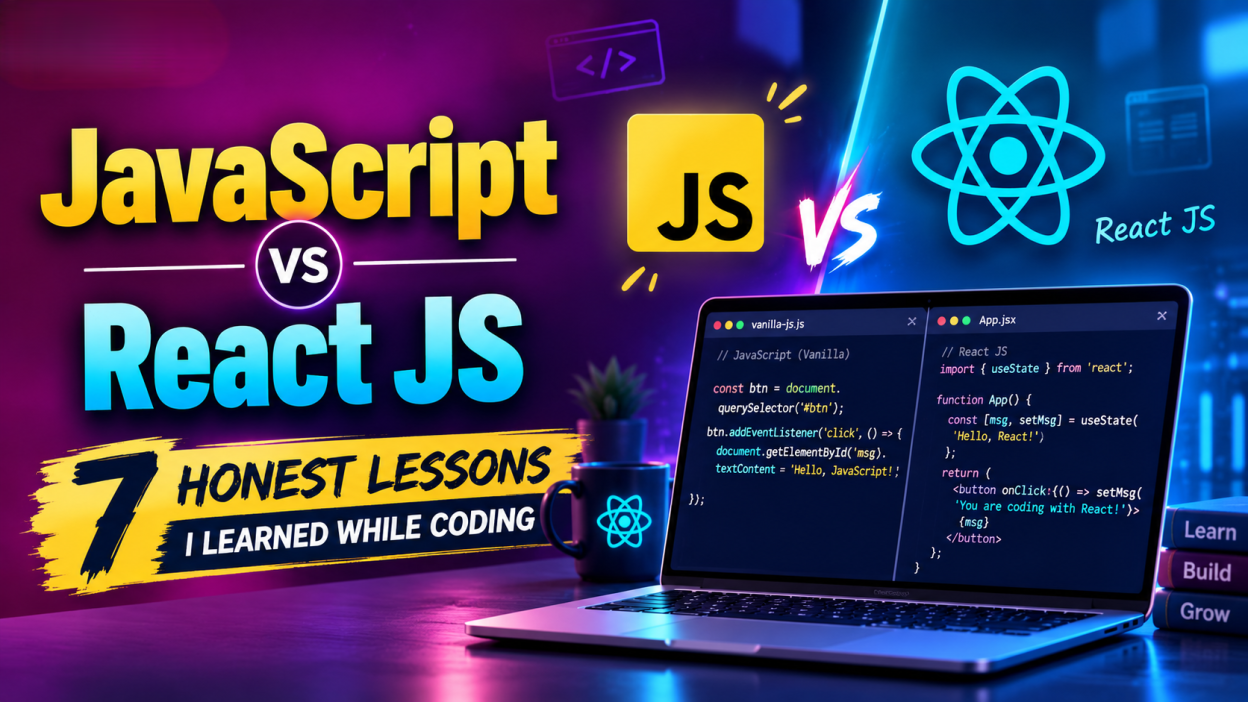
When I first stepped into frontend development, I kept hearing two words everywhere — JavaScript vs React JS. At that time, I didn’t fully understand how they were connected. I thought React was a “better version” of JavaScript. That assumption cost me time, confusion, and a lot of debugging frustration.
Over time, through real projects, mistakes, and continuous learning, I understood something important: JavaScript and React are not competitors — they are partners. One builds your foundation, the other helps you scale.
In this article, I’m going to share 7 honest lessons I learned while coding with both. No fluff, no textbook explanation — just practical insights.
Understanding the Core Difference
JavaScript: The Language Behind Everything
JavaScript is the backbone of web development. It is the language that allows you to add logic, interactivity, and dynamic behavior to websites. Whether it’s handling a button click, validating a form, or updating content on the page, JavaScript is always involved.
When I started learning it deeply, I realized that concepts like functions, closures, asynchronous programming, and array methods are not just “topics” — they are tools you use every day.

React JS: A Smarter Way to Build UI
React JS is not a language. It is a library built using JavaScript that focuses on building user interfaces efficiently. Instead of directly manipulating the DOM like in vanilla JavaScript, React introduces a structured, component-based approach.
When I first used React, it felt strange. But after building a few projects, I realized how powerful it is for organizing and scaling applications.
1. Strong JavaScript Knowledge Changes Everything
One of the biggest mistakes I made was trying to jump into React without fully understanding JavaScript. Initially, I could copy code and make things work, but the moment I tried to build something on my own, I got stuck.
React heavily depends on modern JavaScript features. Things like arrow functions, destructuring, spread operators, promises, and array methods such as map() and filter() are used everywhere. Without understanding these concepts, React feels confusing and overwhelming.
After going back and strengthening my JavaScript basics, everything in React suddenly started making sense. It was like switching from memorizing formulas to actually understanding the logic behind them.
The truth is simple: React does not replace JavaScript — it depends on it.
2. DOM vs Virtual DOM is a Real Productivity Shift
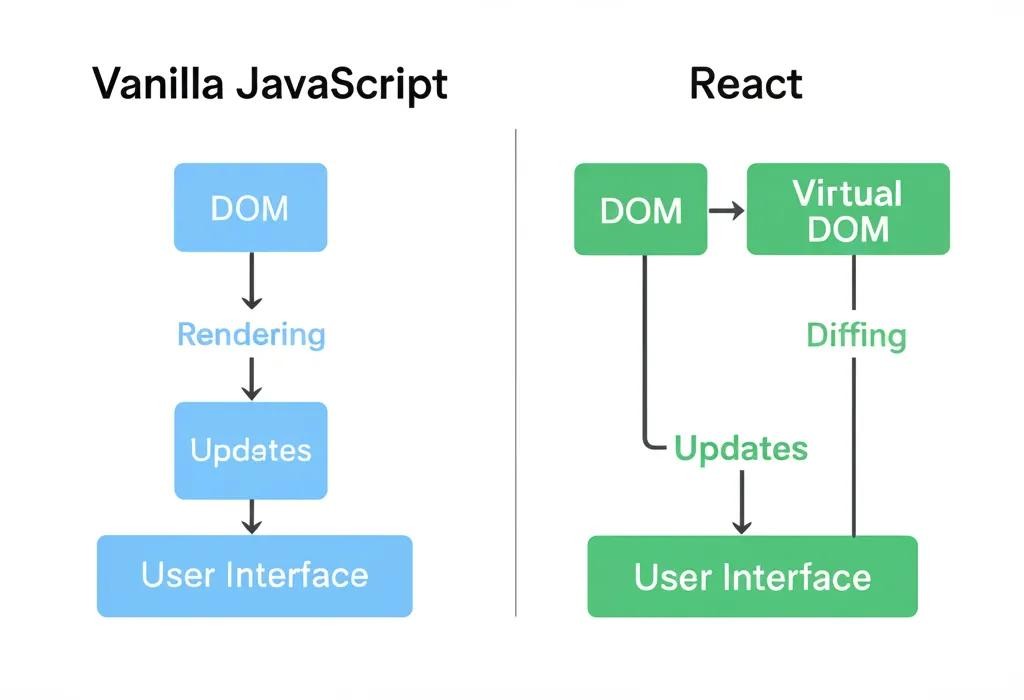
In JavaScript, when you want to update the UI, you directly interact with the DOM. This works fine for small projects, but as your application grows, managing these updates becomes complicated and error-prone.
React introduces the concept of the Virtual DOM, which acts as a lightweight copy of the real DOM. Instead of updating everything manually, React calculates the difference and updates only what is necessary.
When I worked on a medium-sized project using JavaScript, I spent a lot of time managing UI updates manually. In React, the same logic became much simpler because the framework handled the heavy lifting.
This shift doesn’t just improve performance — it improves how you think about building UI.
3. The Coding Style Feels Completely Different
When you write code in JavaScript, you usually think in terms of steps. You select elements, attach event listeners, and update the UI manually. It feels procedural and direct.
In React, you think in terms of components. Instead of writing step-by-step instructions, you describe what the UI should look like for a given state. React takes care of updating the UI when the state changes.
Here’s a simple comparison:
JavaScript Approach
const button = document.querySelector("button");
button.addEventListener("click", () => {
  document.body.style.background = "black";
});
React Approach
function App() {
  const changeColor = () => {
    document.body.style.background = "black";
  };

  return <button onClick={changeColor}>Click</button>;
}
At first, React’s approach felt unusual, but later it became more intuitive. It encourages you to write cleaner and more organized code.
4. State Management is Where React Truly Shines
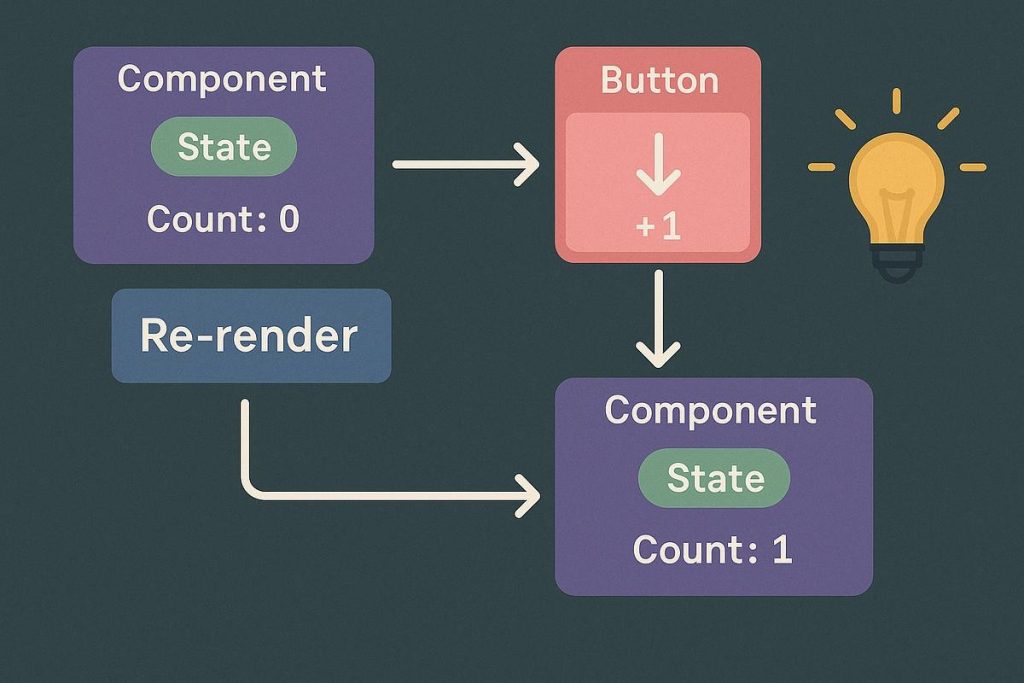
Managing data and keeping the UI in sync is one of the hardest parts of frontend development.
In JavaScript, you manually track values and update the DOM whenever something changes. This works initially, but as the application grows, it becomes difficult to manage.
React introduces the concept of state. With hooks like useState, you can store data inside components and automatically re-render the UI when the data changes.
The first time I used state properly, it completely changed how I approached development. Instead of worrying about “how to update the UI,” I focused on “what the UI should look like.”
5. Reusability Saves Time and Effort
One thing I struggled with in JavaScript projects was repetition. I often found myself writing similar code again and again for buttons, forms, or UI sections.
React solves this problem through components. You can create a component once and reuse it anywhere in your application.
For example:
function Button({ text }) {
  return <button>{text}</button>;
}
This simple idea becomes extremely powerful in large applications. It not only saves time but also keeps your code consistent and maintainable.
After working with components, going back to repetitive JavaScript code felt inefficient.
6. Debugging Teaches You How Things Work
Debugging in JavaScript is usually straightforward. You can use console logs and browser developer tools to find issues quickly.
In React, debugging initially feels more complex because you have to understand component structure, props, and state flow. However, tools like React Developer Tools make it easier to inspect components and track changes.
What I realized is that React forces you to think deeper about your code. Instead of just fixing errors, you start understanding how data flows through your application.
This learning curve can feel frustrating at first, but it makes you a better developer in the long run.
7. React is Powerful, But Not Always Necessary

One of the most important lessons I learned is that React is not always the right tool.
For small projects like landing pages or simple websites, using plain JavaScript is often faster and easier. Adding React in such cases can increase complexity unnecessarily.
However, for large applications with dynamic data, multiple components, and complex state management, React becomes extremely valuable.
Choosing the right tool based on the project is a skill that comes with experience.
JavaScript vs React JS: A Practical Comparison
| Aspect | JavaScript | React JS |
|---|---|---|
| Nature | Programming Language | Library |
| Approach | Manual DOM handling | Virtual DOM |
| Code Style | Flexible, direct | Component-based |
| Reusability | Limited | High |
| Best Use Case | Small to medium projects | Large, scalable apps |
Final Thoughts
Looking back, I can confidently say that learning both JavaScript and React was one of the best decisions in my development journey.
JavaScript taught me the fundamentals — how things actually work behind the scenes. React taught me how to build applications efficiently and at scale.
If you are just starting out, don’t rush into frameworks. Take time to understand JavaScript deeply. Once you have that foundation, React will feel much easier and more logical.
Conclusion
The journey from JavaScript to React is not about replacing one with the other. It’s about growing from understanding the basics to building real-world applications.
Start with small projects, experiment, make mistakes, and keep improving. Over time, you’ll naturally understand when to use JavaScript and when to use React.
And remember:
Frameworks evolve, but strong fundamentals always stay relevant.
Want to learn more about javascript??, kaashiv Infotech Offers Front End Development Course, Full Stack Development Course, & More www.kaashivinfotech.com.