

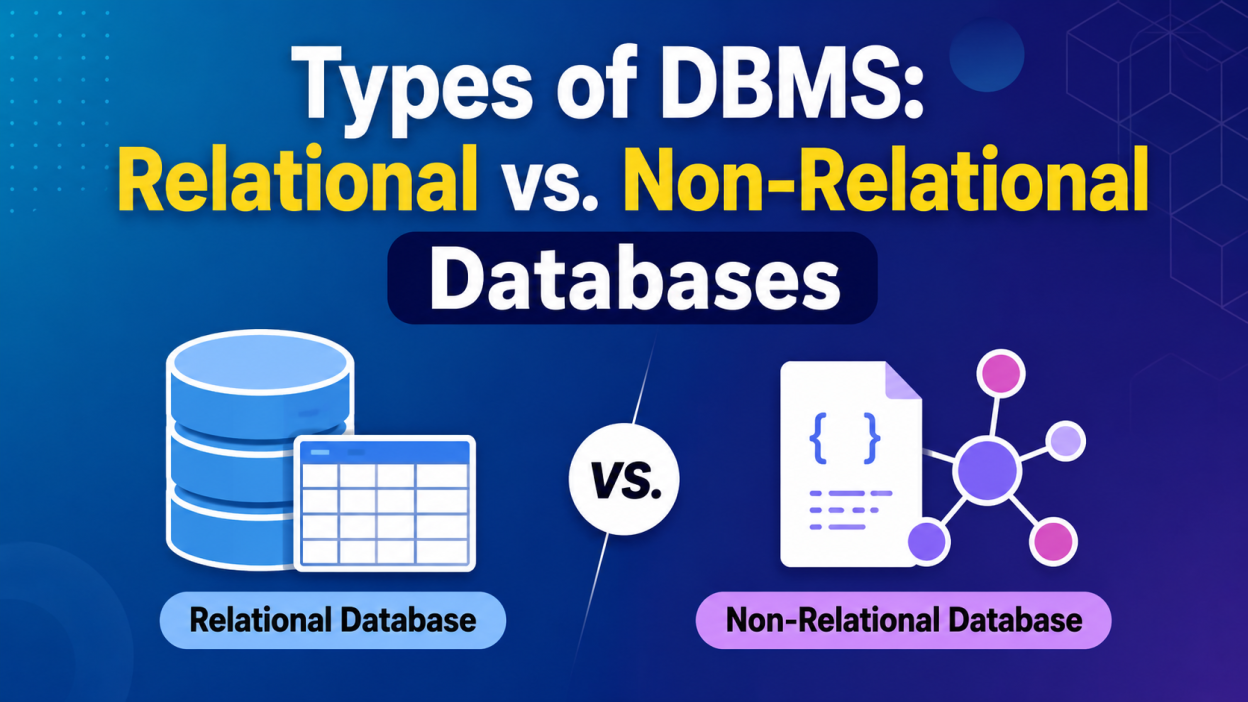
Database Management Systems (DBMS) are an essential part of modern software development. Almost every application, website, business platform, and digital service needs a reliable way to store, organize, retrieve, and manage data. From customer information and product details to financial transactions and user activity, databases help applications handle large amounts of information efficiently.
There are different types of DBMS available today, but Relational Database Management Systems (RDBMS) and Non-Relational databases are among the most widely used. While both are designed to store and manage data, they differ significantly in structure, scalability, relationships, querying methods, and use cases.
Understanding the difference between relational and non-relational databases can help developers and organizations choose the right database technology for their applications.
What Is a DBMS?
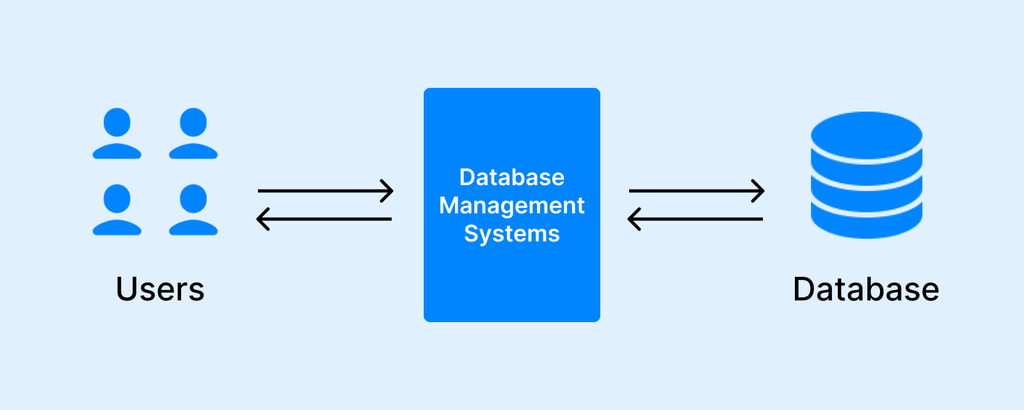
A Database Management System (DBMS) is software that allows users and applications to create, store, organize, update, retrieve, and manage data in a database.
Instead of storing information in disconnected files, a DBMS provides a structured environment for managing data. It can also provide features such as security, backup and recovery, access control, data consistency, and transaction management.
Popular database technologies include MySQL, PostgreSQL, Oracle Database, Microsoft SQL Server, MongoDB, Redis, Cassandra, and many others.
The two major categories discussed in this article are:
- Relational databases
- Non-relational databases
What Is a Relational Database?
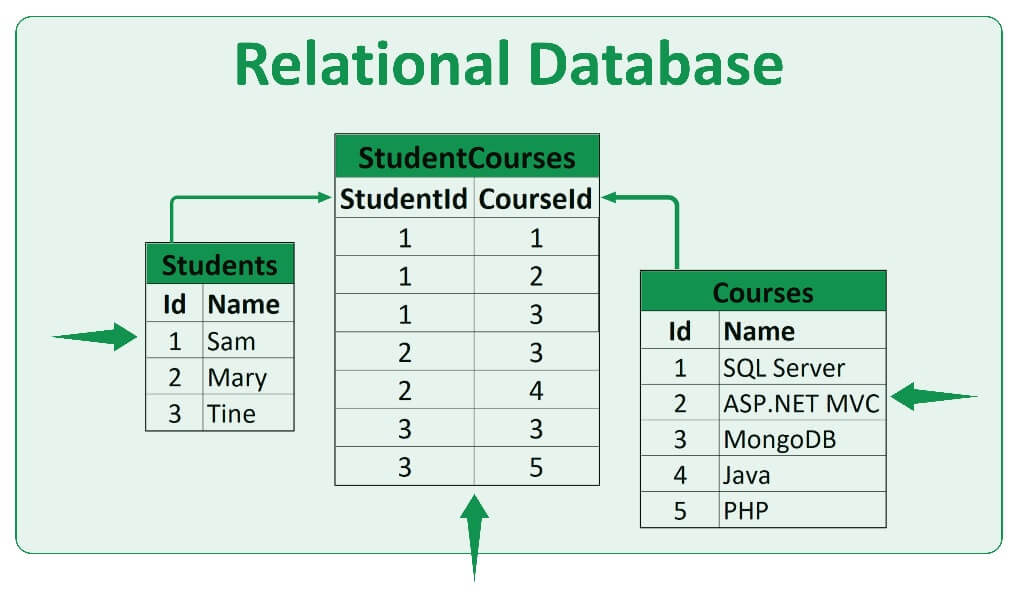
A relational database stores data in structured tables consisting of rows and columns. Each table represents a particular type of information, while rows represent individual records and columns represent attributes.
For example, an online shopping application might have a Customers table containing customer IDs, names, email addresses, and phone numbers.
A separate Orders table could contain order IDs, customer IDs, order dates, and order amounts.
The tables can be connected using relationships. A customer ID, for example, can connect an order to the customer who placed it.
Relational databases generally use SQL (Structured Query Language) to create, retrieve, update, and delete data.
Popular relational database systems include MySQL, PostgreSQL, Oracle Database, Microsoft SQL Server, and SQLite.
Key Features of Relational Databases
One of the biggest advantages of relational databases is their structured approach to data.
Structured Data
Relational databases typically require a predefined schema. Developers define tables, columns, data types, and relationships before storing data.
This structure helps maintain consistency and makes data easier to understand and manage.
Relationships Between Tables
Relational databases are particularly useful when data has strong relationships.
For example, an e-commerce system may connect customers, orders, products, payments, and shipping information through keys and relationships.
SQL Support
SQL makes it possible to perform powerful operations on data. Developers can filter records, join multiple tables, calculate values, group information, and sort results.
For example:
SELECT name, email
FROM customers
WHERE city = 'Chennai';
This query retrieves customers who are located in Chennai.
Data Integrity
Relational databases provide mechanisms such as primary keys, foreign keys, unique constraints, and data validation to maintain data integrity.
ACID Transactions
Most traditional relational databases strongly support ACID transactions:
- Atomicity – A transaction is completed fully or not at all.
- Consistency – Data remains valid before and after a transaction.
- Isolation – Concurrent transactions are controlled to prevent unwanted interference.
- Durability – Successfully committed data remains stored even after system failures.
These properties make relational databases suitable for applications such as banking, payment processing, accounting, and enterprise systems.
What Is a Non-Relational Database?
A non-relational database, often called a NoSQL database, does not necessarily store data in traditional tables with rows and columns.
Instead, NoSQL databases can use different data models depending on the technology. Common models include:
- Document databases
- Key-value databases
- Wide-column databases
- Graph databases
For example, a document database may store customer information as a JSON-like document:
{
  "name": "Arun",
  "email": "arun@example.com",
  "city": "Chennai"
}
Unlike a traditional relational table, different documents can potentially contain different fields.
Popular non-relational databases include MongoDB, Redis, Apache Cassandra, Amazon DynamoDB, and Neo4j.
Key Features of Non-Relational Databases
Flexible Data Models
One of the biggest advantages of NoSQL databases is schema flexibility.
Developers can store data with different structures without necessarily modifying a fixed table schema.
This is useful for applications where data changes frequently or comes from multiple sources.
High Scalability
Many NoSQL databases are designed for horizontal scaling, where additional servers can be added to handle increasing workloads.
This makes them useful for applications that need to process huge amounts of data and large numbers of requests.
High Performance
NoSQL databases can provide excellent performance for specific workloads, particularly when applications need fast reads and writes across distributed systems.
Handling Large and Unstructured Data
Non-relational databases can be useful for applications involving rapidly changing, semi-structured, or unstructured data.
Examples include social media platforms, real-time analytics, IoT applications, content platforms, and recommendation systems.
Relational vs. Non-Relational Databases
Although both database types manage data, their approaches are different.
| Feature | Relational Database | Non-Relational Database |
|---|---|---|
| Data Structure | Tables | Documents, key-value, graphs, columns |
| Schema | Usually fixed | Usually flexible |
| Query Language | SQL | Depends on database |
| Relationships | Strong support | Varies by database |
| Scaling | Often vertical, also supports horizontal approaches | Commonly designed for horizontal scaling |
| Transactions | Strong ACID support | Varies by system |
| Best For | Structured and transactional data | Flexible and large-scale data |
| Data Consistency | Typically strong | Depends on database and configuration |
| Examples | MySQL, PostgreSQL, Oracle | MongoDB, Redis, Cassandra |
When Should You Choose a Relational Database?
A relational database is generally a good choice when your application has highly structured data and complex relationships.
For example, consider a banking application. A bank needs to maintain accurate information about accounts, customers, transactions, balances, and payments. Transactions must be reliable and consistent.
Similarly, relational databases are commonly suitable for:
- Banking applications
- Payment systems
- Accounting software
- ERP systems
- Inventory management
- Customer relationship management
- Enterprise applications
- Applications requiring complex SQL queries
If maintaining strict data integrity is a major requirement, an RDBMS can be an excellent choice.
When Should You Choose a Non-Relational Database?
A non-relational database may be more appropriate when an application needs flexible schemas, high scalability, or distributed data processing.
For example, a social media platform can generate enormous amounts of user posts, comments, likes, images, and activity data. The structure of this information can change frequently.
NoSQL databases can also be useful for:
- Real-time applications
- IoT systems
- Big data platforms
- Social media applications
- Content management systems
- Gaming applications
- Caching
- Recommendation engines
- Distributed cloud applications
The specific NoSQL model should depend on the application’s requirements.
Advantages of Relational Databases
Relational databases offer several important benefits. Their structured schema makes data organization straightforward. SQL provides a standardized and powerful method for querying information. Strong relationships and constraints help maintain data integrity.
Another major benefit is the maturity of relational database technology. Developers have access to extensive documentation, tools, frameworks, monitoring systems, and community support.
Relational databases are particularly valuable when businesses need reliable transactions and complex reporting.
Advantages of Non-Relational Databases
Non-relational databases provide flexibility that can be difficult to achieve with traditional relational systems.
Their flexible data models make it easier to handle changing application requirements. Many NoSQL systems are also designed for distributed environments and large-scale workloads.
For modern applications running across cloud infrastructure, NoSQL databases can provide convenient scaling and high availability.
However, NoSQL does not automatically mean “better performance.” The actual performance depends on the database, data model, queries, infrastructure, and application architecture.
Can Relational and Non-Relational Databases Be Used Together?
Yes. Modern applications often use both relational and non-relational databases.
For example, an e-commerce platform could use a relational database for customer accounts, payments, and orders while using a NoSQL database for product catalogs, session information, caching, or real-time user activity.
This approach is sometimes called polyglot persistence, where different database technologies are selected according to different application requirements.
Instead of asking which database is universally better, developers should ask which database is better suited to a particular workload.
Conclusion
Relational and non-relational databases are both important parts of modern database management. Relational databases organize information into tables and are excellent for structured data, relationships, complex queries, and reliable transactions. Non-relational databases provide flexible data models and are often well suited for large-scale, distributed, rapidly changing, or semi-structured data.
Choosing between them depends on factors such as data structure, transaction requirements, scalability, performance, consistency, and application architecture.
For beginners, learning SQL and relational databases is an excellent starting point because SQL and relational concepts remain fundamental to software development and data management. After understanding tables, keys, relationships, joins, and transactions, learning NoSQL technologies can provide a broader understanding of modern database systems.
Ultimately, there is no single database that is perfect for every application. The best DBMS is the one that matches the data, workload, scalability requirements, and business needs of the project.
Kaashiv Infotech Offers, SQL Course, SQL Internship & More Visit Our website www.kaashivinfotech.com.