
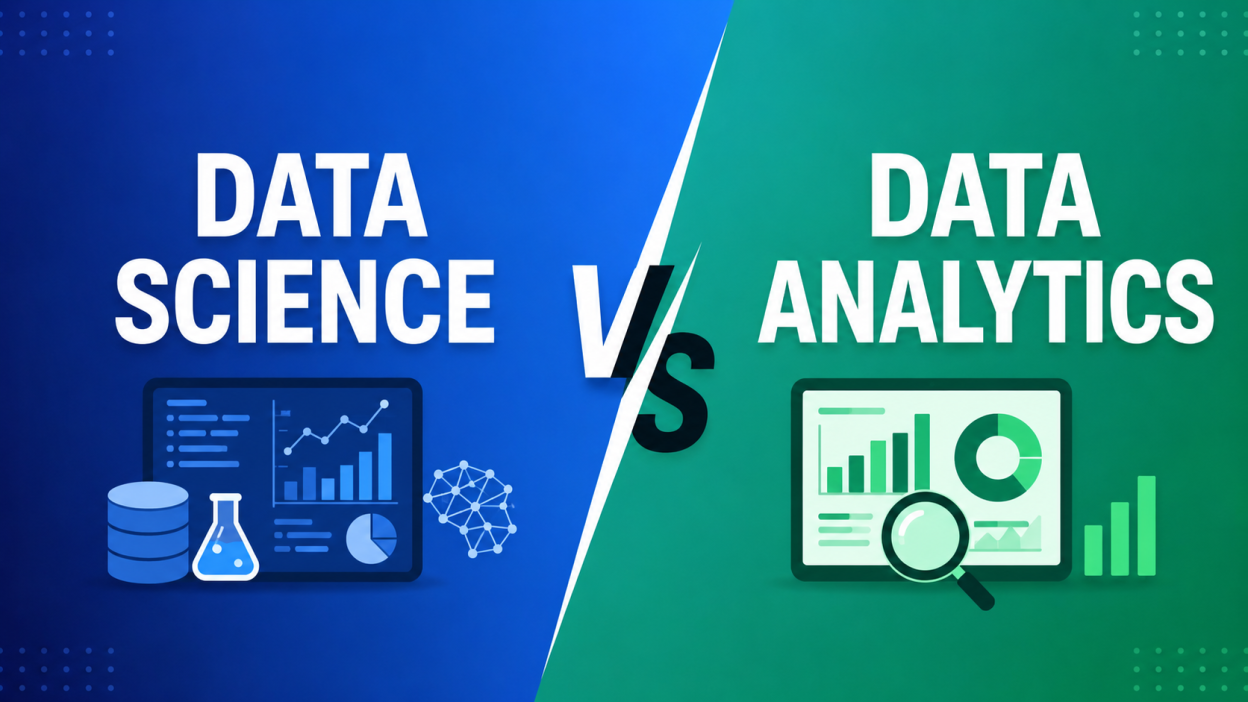
In 2026, data is everywhere—apps, businesses, healthcare, banking, and even everyday decision-making depend on it. Because of this explosion of data, two career paths have become extremely popular: Data Science vs Data Analytics.
At first glance, they may look similar. Both involve working with data, extracting insights, and helping organizations make better decisions. But when you go deeper, the difference becomes clear. One focuses on predicting the future using advanced algorithms, while the other focuses on understanding the past to guide present decisions.
If you’re confused about which career to choose, don’t worry. Let’s break everything down in a simple, practical way.
Data Science vs Data Analytics in 2026
📊 Understanding Data Science
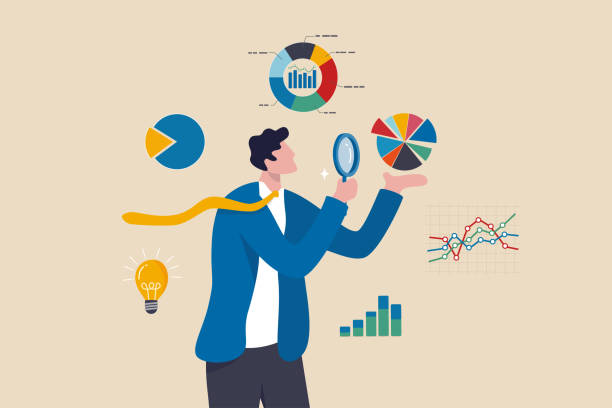
Data Science is a field that combines programming, statistics, and domain knowledge to extract insights from structured and unstructured data. But more importantly, it goes beyond just analysis—it focuses on building intelligent systems that can learn from data and make predictions.
A Data Scientist doesn’t just ask “What happened?” They ask questions like:
“What will happen next?” and “How can we automate decisions using data?”
This is why Data Science is closely connected to technologies like Artificial Intelligence and Machine Learning.
In real-world applications, Data Science powers systems such as recommendation engines, fraud detection models, self-driving algorithms, and predictive healthcare systems. When you see platforms suggesting content tailored to your interests, that is Data Science working behind the scenes.
To perform these tasks, Data Scientists work with programming languages such as Python or R. They build models using machine learning algorithms, clean messy data, and test different approaches to improve accuracy. The work is deeply technical and often involves handling large datasets using tools like Apache Spark or cloud platforms.
Because of its complexity, Data Science is considered a more advanced career path. It requires patience, strong logical thinking, and a willingness to continuously learn.
📈 Understanding Data Analytics

Data Analytics, on the other hand, is more focused on interpreting data to understand trends and patterns. Instead of predicting the future, it answers questions like:
“What happened?” and “Why did it happen?”
A Data Analyst plays a crucial role in helping businesses make informed decisions. They take raw data, organize it, and present it in a meaningful way through dashboards, charts, and reports.
For example, if a company’s sales dropped last quarter, a Data Analyst would investigate the data to identify possible reasons. They might analyze customer behavior, seasonal trends, or product performance to provide insights that help the business improve.
The tools used in Data Analytics are generally easier to learn compared to Data Science. Excel, SQL, Power BI, and Tableau are commonly used. While some programming knowledge can be helpful, it is not always mandatory at the beginner level.
This makes Data Analytics a great entry point into the data field, especially for those who prefer working with business insights rather than complex algorithms.
⚖️ Core Differences Between Data Science and Data Analytics
Although both careers revolve around data, their purpose, tools, and depth are quite different.
Data Science is forward-looking. It focuses on prediction, automation, and building intelligent models. It requires strong programming skills, knowledge of machine learning, and a deeper understanding of mathematics and statistics.
Data Analytics is more descriptive and diagnostic. It focuses on analyzing past data, identifying trends, and supporting decision-making. It emphasizes visualization, reporting, and business understanding.
In simple terms, you can think of it like this:
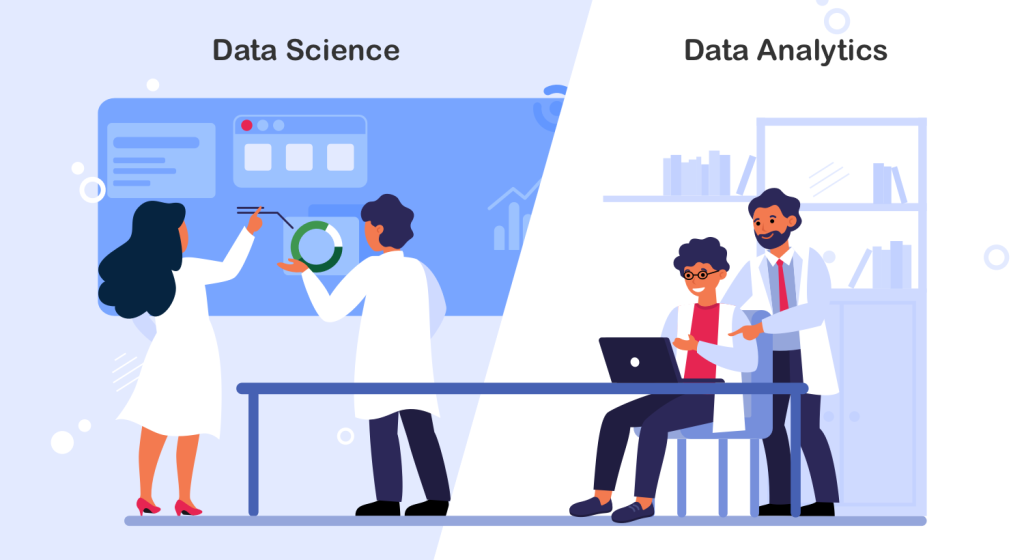
A Data Analyst explains what is happening in the business, while a Data Scientist builds systems that influence what will happen next.
💼 Career Scope and Industry Demand in 2026
Both Data Science and Data Analytics are among the most in-demand careers in 2026, not just globally but also in India. Companies across industries—finance, healthcare, e-commerce, education, and entertainment—are investing heavily in data-driven decision-making.
Data Analytics roles are more widespread because every organization needs someone to interpret data and create reports. These roles are available in startups, mid-sized companies, and large enterprises.
Data Science roles, while fewer in number compared to analytics, are highly specialized and command higher salaries. Organizations hire Data Scientists to build advanced systems such as recommendation engines, predictive models, and AI-based automation tools.
In India, entry-level Data Analysts can expect salaries ranging from ₹4 LPA to ₹10 LPA, depending on skills and company. Data Scientists, due to their advanced skill set, often start between ₹8 LPA and can go beyond ₹25 LPA with experience.
Globally, the salary gap is even wider, with Data Scientists earning significantly more due to the technical expertise required.
🧠 Choosing the Right Career Path
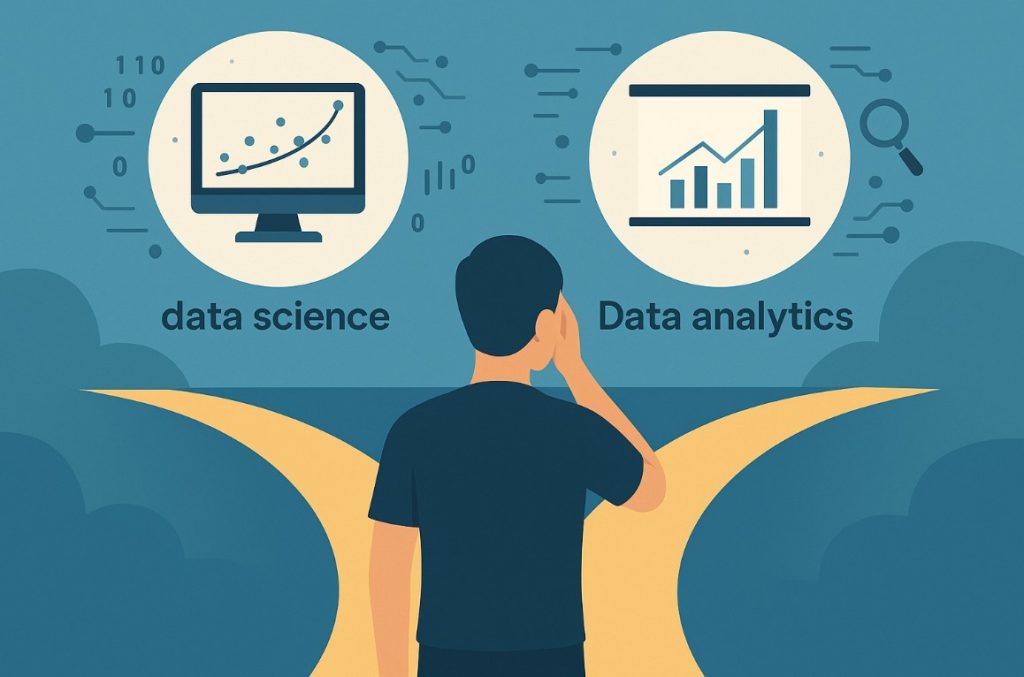
Choosing between Data Science and Data Analytics depends largely on your interests, strengths, and career goals.
If you enjoy coding, solving complex problems, and working with algorithms, Data Science will feel exciting and rewarding. It is ideal for those who want to work on cutting-edge technologies like AI and machine learning.
If you are more interested in business insights, storytelling with data, and creating visual reports, Data Analytics is a better fit. It allows you to work closely with business teams and influence decisions without diving deep into heavy programming.
Another important factor is learning curve. Data Analytics can be learned relatively quickly, allowing you to enter the job market faster. Data Science requires a longer learning path but offers higher long-term rewards.
Many professionals actually start as Data Analysts and gradually transition into Data Science as they gain experience and technical skills. This hybrid path is very common and practical.
🚀 Learning Path for 2026
To build a successful career, you need a clear roadmap.
For Data Analytics, the journey usually begins with mastering Excel and SQL. Once you are comfortable handling data, you move into visualization tools like Power BI or Tableau. Understanding basic statistics and practicing real-world projects helps you stand out.
For Data Science, the path is more technical. It starts with learning Python programming, followed by statistics and probability. After that, you move into machine learning concepts and work on building predictive models. Practical projects, such as recommendation systems or forecasting models, are essential to gaining confidence.
In both paths, hands-on experience matters more than theory. Employers in 2026 expect candidates to demonstrate real-world skills through projects, portfolios, or internships.
🔥 Final Thoughts
Data Science and Data Analytics are both excellent career choices in 2026. There is no universally “better” option—only the one that aligns with your interests and goals.
If your aim is to enter the workforce quickly and build a stable, insight-driven career, Data Analytics is a strong choice. If you are ready to invest time in learning complex skills and want to work on advanced technologies, Data Science offers incredible growth and opportunities.
The best strategy is not to overthink but to start learning. Once you begin working with data, your interest will naturally guide you toward the right path.
Want to learn more ??, Kaashiv Infotech Offers Data Analytics Course, Data Science Course, Cyber Security Course & More Visit Their Website www.kaashivinfotech.com.