

How to Explain a Project in an Interview – Explaining a project in an interview is not just about describing what you built—it’s about showing how you think, how you solve problems, and how you deliver real results. Many candidates underestimate this part, but in reality, a well-explained project can make a stronger impact than even your resume.
In this detailed guide, you’ll learn how to confidently present your project in a structured, professional, and engaging way—so interviewers remember you.
Understanding What Interviewers Actually Want
Before you even start preparing your explanation, you need to understand the mindset of the interviewer. They are not just listening for technical terms or tools—they are trying to evaluate your thinking process.
They want to know how you approached a problem, how you handled challenges, and whether you can apply your knowledge in real-world situations. Your project becomes proof of your abilities.
A Visual Overview of Project Explanation Flow
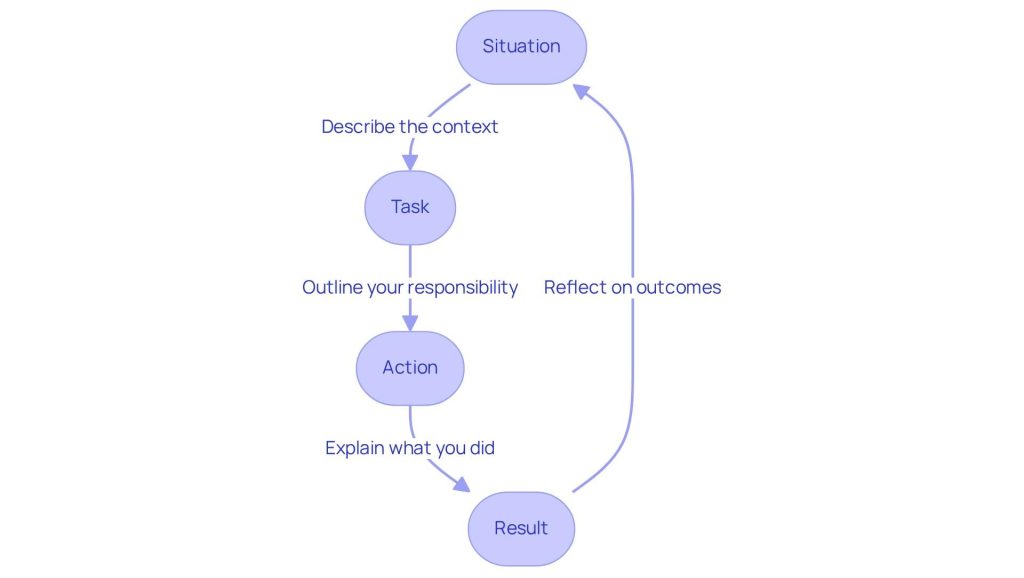
A strong project explanation always follows a clear flow. Without structure, even a good project can sound confusing. With structure, even a simple project can sound impressive.
The Ideal Way to Structure Your Answer
One of the most effective storytelling frameworks is the STAR method—Situation, Task, Action, and Result. Instead of listing points, think of it like narrating a short story with purpose.
Start with the situation by briefly introducing the project context. This helps the interviewer understand where your work fits in. Then move to the task, where you clearly define the problem you were trying to solve.
The most important part is the action. This is where you talk about what you actually did. Explain your approach, your decisions, and your contributions. This section should carry most of your explanation.
Finally, end with the result. This is where you show impact. If you can include measurable outcomes, your answer becomes much more powerful.
Example of a Strong Project Explanation
To understand this better, imagine you are explaining a real project in an interview:
“One of the key projects I worked on was a smart attendance system using face recognition. The main problem we wanted to solve was the inefficiency and inaccuracy of manual attendance systems.
My role in the project was focused on developing the recognition module. I used Python along with OpenCV and trained a basic machine learning model to detect and recognize faces. I also worked on integrating the system with a database for storing attendance records.
One challenge I faced was poor accuracy in low-light conditions. To solve this, I implemented image preprocessing techniques and adjusted the training dataset to improve performance.
As a result, the system achieved around 90–92% accuracy and significantly reduced the time required to take attendance.”
This kind of explanation is clear, structured, and impactful.
Understanding Project Architecture Visually
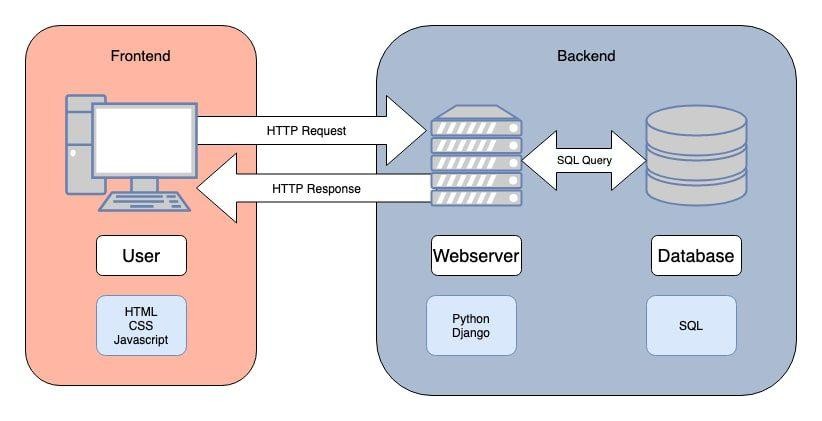
Sometimes, visualizing your project structure helps both you and the interviewer. Even if you don’t draw it, thinking in terms of architecture gives clarity to your explanation.
When you understand how each part connects—frontend, backend, database, or model—you naturally explain your project in a more confident and organized way.
How to Talk About Your Contribution Clearly
One of the biggest mistakes candidates make is speaking too generally. Saying “we developed this project” does not help the interviewer understand your role.
Instead, shift your language to reflect ownership. Talk about what you designed, what you implemented, and what decisions you made. Even in a team project, your individual contribution must stand out.
For example, instead of saying:
“We built the UI”
You can say:
“I designed and implemented the user interface using React, focusing on improving user experience and responsiveness.”
This small change makes a big difference.
Handling Challenges and Showing Problem-Solving Skills

Interviewers are especially interested in challenges because they reveal how you think under pressure.
Instead of avoiding difficulties, highlight them. Talk about what went wrong, what you tried, and how you eventually solved the problem. This shows resilience and analytical thinking.
A strong explanation of a challenge might include how you faced performance issues, bugs, or unexpected results—and how you systematically solved them.
Making Your Explanation More Impressive
Clarity is more powerful than complexity. You don’t need to use heavy technical language to impress someone. In fact, overcomplicating your explanation can make it harder to follow.
What truly stands out is when you connect your work to real outcomes. For instance, explaining that your system reduced processing time, improved accuracy, or handled more users makes your project feel real and valuable.
Confidence also plays a big role. When you speak clearly and logically, it shows that you truly understand your work.
Common Mistakes You Should Avoid

Many candidates lose marks not because they lack knowledge, but because of poor presentation.
A common mistake is going too deep into unnecessary details at the beginning, which confuses the interviewer. Another is failing to clearly explain your role, especially in team projects.
Some candidates also forget to mention results, which makes their work feel incomplete. Others rely too much on technical jargon, making it difficult to understand their explanation.
Avoiding these mistakes alone can significantly improve your performance.
Preparing for Follow-Up Questions
Once you explain your project, the interviewer will likely ask deeper questions. These are not meant to trap you, but to explore your understanding.
You should be ready to explain why you chose certain technologies, how your system can scale, and what improvements you would make in the future.
If you don’t know an answer, it’s perfectly fine to admit it honestly and explain how you would approach finding a solution.
Final Thoughts
Explaining a project in an interview is not about memorizing a script—it’s about telling a clear, structured story that reflects your skills and thinking process.
When you focus on the problem, your role, your actions, and the results, your explanation naturally becomes powerful. Add clarity, confidence, and a bit of practice, and you will stand out in any interview.
Want to learn more, Kaashiv Infotech Offers, UI UX Course, Front End Development Course, Full Stack Development Course & More, Visit Their Website www.kaashivinfotech.com.