AWS vs Azure in 2025: 7 Honest Lessons I Learned Comparing These Cloud Giants ☁️🔥

⚡ AWS vs Azure – Let’s Not Pretend This is Easy

If you’re anything like me, you’ve Googled “AWS vs Azure” and been hit with 6,000-word whitepapers that feel like they were written by a robot. I’ve been through the rabbit hole. The decision feels high-stakes—like choosing a co-founder for your business or deciding between Android and iPhone (but with way more billable hours at stake).
Here’s the truth: There’s no one-size-fits-all winner. But I’ve worked with both cloud computing platforms over the last 5 years, and I’ve got a lot to say—some of it will surprise you.
Let’s get into the stuff that actually matters.
💡 What Even Are AWS and Azure?
Before we start comparing AWS vs Azure pricing or features, let’s cover what these platforms actually are.
- AWS (Amazon Web Services): The OG cloud giant. Launched in 2006, it basically invented the public cloud. Think of it as the Swiss army knife of cloud platforms—powerful, flexible, and… yeah, a little overwhelming at first.
- Azure (Microsoft Azure): Microsoft’s answer to AWS. Came a few years later (2010), but now neck-and-neck in terms of enterprise adoption. Seamless integration with Microsoft tools is its secret weapon.
Both are cloud computing platforms that offer infrastructure (like servers, databases, storage, AI, etc.) over the internet. No physical hardware needed.
📊 AWS vs Azure Market Share in 2025: Who’s Winning?
Let’s talk numbers (because your boss probably will).
As of early 2025:
- AWS holds about 31% of the global cloud market.
- Azure is close behind at 25% and growing fast—especially in hybrid and government sectors.
🎯 Statista confirms this. But here’s the nuance: AWS dominates startups and tech companies, while Azure is the darling of the enterprise world, especially where Microsoft 365 is already entrenched.
💰 AWS vs Azure Pricing – My Monthly Bill Shock
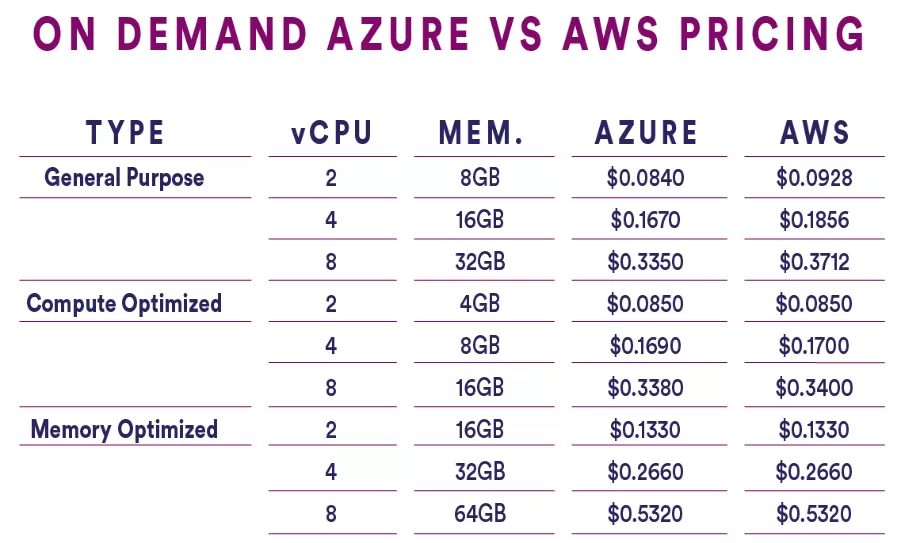
Let’s be real: pricing will punch you in the face if you don’t plan right.
I once spun up an EC2 instance in AWS and forgot about it… let’s just say I bought Amazon a new chair with that mistake. 😂
📉 AWS Pricing:
- On-demand is pricey, but offers the most flexibility.
- Reserved instances are cheaper, but commit you to 1-3 years.
- You’re charged for everything—bandwidth, compute, storage, region, data transfer, the air you breathe. (Kidding. Kinda.)
📈 Azure Pricing:
- Slightly more predictable.
- Better hybrid pricing if you’re already a Microsoft customer.
- More transparent in some areas, especially with Azure Hybrid Benefit.
🛠️ Azure vs AWS Features – Which Does What Better?
Here’s where it gets juicy. I broke down some of the top services:
| Service Category | AWS 🟧 | Azure 🟦 |
| Compute | EC2 (flexible, powerful) | Virtual Machines (great UI) |
| Containers | ECS, EKS | Azure Kubernetes Service (AKS) |
| Serverless | Lambda (very mature) | Azure Functions (solid) |
| AI & ML | SageMaker (awesome but complex) | Azure AI (easier for beginners) |
| DevOps | CodePipeline, CodeBuild | Azure DevOps, GitHub Actions |
| Storage | S3 (industry gold standard) | Blob Storage |
| Networking | VPC | Virtual Network |
☁️ Want to learn more about these tools hands-on? Check out this cloud computing course to get started.
🌍 Performance, Regions & Uptime
I’ve deployed apps in both AWS and Azure across the US, India, and Germany. Performance differences? Subtle. But here’s what matters:
- AWS has more global regions (100+).
- Azure often has better latency in Microsoft-dominated geographies.
- Uptime is rock solid for both, with 99.99% SLAs in most regions.
🔐 Bonus: Both offer multi-region backups, load balancing, and DDoS protection out of the box.
🔐 Security & Compliance: Who Do You Trust?
If you’re in finance, healthcare, or government, security is non-negotiable.
- AWS: Long track record, trusted by Netflix, NASA, and the CIA.
- Azure: Very strong in compliance-heavy sectors. HIPAA, FedRAMP, GDPR—you name it.
Personally, I felt more confident onboarding clients in Azure because of its tight Microsoft integration and audit readiness. But both are elite.
🧠 Use Cases & Industry Adoption
Here’s what I’ve noticed in the wild:
- Startups, dev-first teams, AI companies ➝ Go with AWS
- Enterprise, hybrid IT environments, .NET shops ➝ Go with Azure
- Government and public sector ➝ Azure is often mandated
✅ Pros & Cons Summary: AWS vs Azure
| AWS | Azure | |
| ✅ Pros | Massive service catalog, global reach | Easy Microsoft 365 integration, hybrid-ready |
| ❌ Cons | Can be overwhelming, tricky billing | UI still feels clunky in some areas |
| 🎯 Best For | Startups, scale-ups, dev teams | Enterprises, regulated industries |
💬 My Final Verdict: Azure vs AWS in 2025
Honestly? I love both—but for different reasons.
- When I want maximum control, I go with AWS.
- When I need simplicity and solid integration, Azure wins.
If you’re just starting out in cloud computing, start with Azure. It’s friendlier. But if you’re serious about building at scale, AWS gives you the ultimate power tools.
Still not sure? Try both. They both offer free tiers and cloud computing courses to help you decide.
🌤️ Ready to Dive Into Cloud Computing?
If you’re still unsure where to begin, check out this hands-on cloud computing course that covers AWS, Azure, and Google Cloud in one package. You’ll learn by doing—no boring lectures.
🧠 Final Thoughts
Comparing AWS vs Azure isn’t just about numbers and features—it’s about fit. What works for a fintech startup might be a nightmare for a government agency. So take this guide, mix in your team’s goals, your budget, and your tech stack—and make the choice that works for you.
Because at the end of the day, you’re not choosing a platform—you’re choosing a partner.
Related Links