
Cloud computing Career has become one of the most important technologies behind modern businesses. Companies use cloud platforms to host websites, store data, run applications, manage databases, build AI solutions, and scale their digital services. As more organizations move from traditional infrastructure to cloud-based environments, the demand for skilled cloud professionals continues to grow.
A career in cloud computing can offer opportunities across infrastructure, development, security, networking, automation, and data management. You do not necessarily need to become an expert in every cloud technology. Instead, you can choose a career path based on your interests and build the required technical skills.
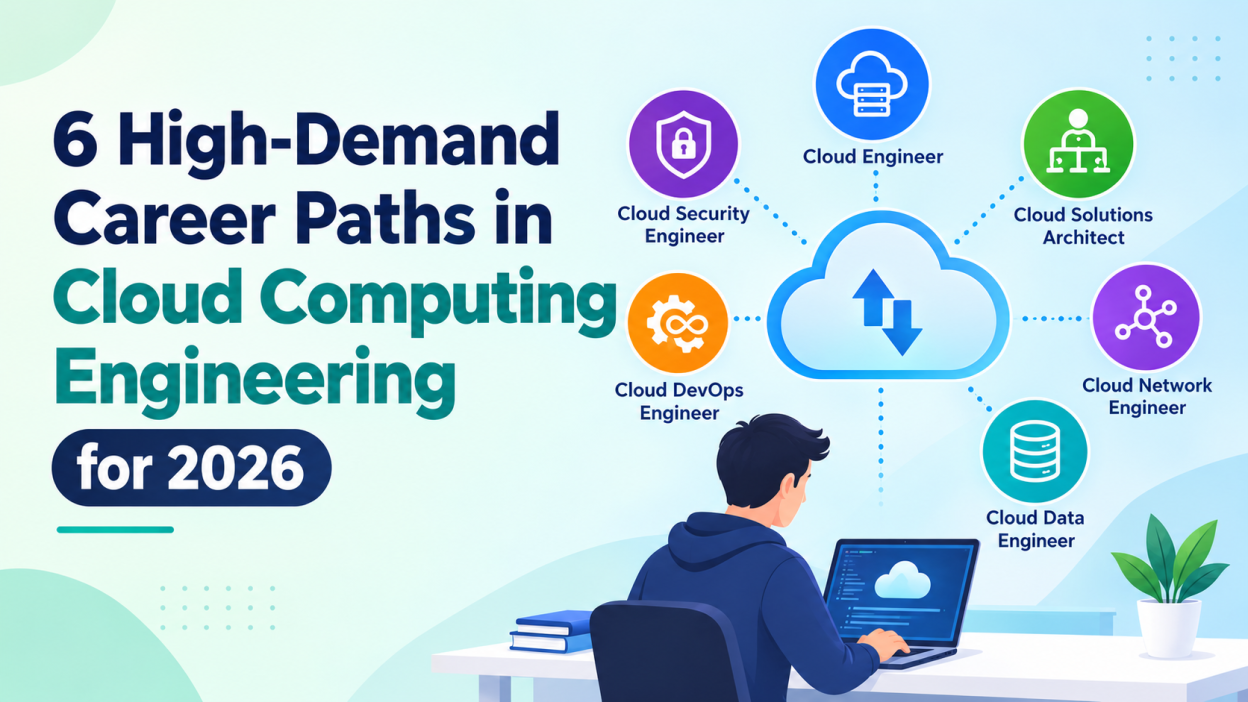
In this article, let us explore six important career opportunities in cloud computing engineering that can offer strong career potential in 2026.
1. Cloud Engineer

A Cloud Engineer is one of the most common career paths in cloud computing. Cloud Engineers are responsible for designing, implementing, maintaining, and improving cloud infrastructure.
They work with platforms such as Amazon Web Services (AWS), Microsoft Azure, and Google Cloud to deploy applications, configure servers, manage storage, and monitor cloud resources.
Typical responsibilities include setting up virtual machines, managing cloud storage, configuring networks, monitoring performance, and handling cloud-related problems.
To become a Cloud Engineer, you should understand:
- Cloud computing fundamentals
- AWS, Azure, or Google Cloud
- Linux
- Networking
- Virtualization
- Databases
- Security fundamentals
- Automation tools
Cloud Engineers are particularly valuable because businesses need professionals who can maintain reliable and scalable cloud infrastructure.
2. Cloud Solutions Architect
If you are interested in designing complete cloud environments, becoming a Cloud Solutions Architect can be an excellent career option.
A Cloud Solutions Architect plans how an organization’s applications, databases, networking, security, and infrastructure should work together in the cloud. Instead of focusing only on individual servers or services, they look at the bigger technical picture.
For example, when a company wants to move its existing application from an on-premises data center to the cloud, the architect may decide which cloud services should be used, how the application should be structured, and how security and scalability should be handled.
Important skills include cloud architecture, networking, databases, security, cost optimization, and system design. Experience as a Cloud Engineer, Developer, or DevOps professional can be helpful before moving into an architect role.
3. Cloud DevOps Engineer

DevOps combines software development and IT operations, and cloud platforms have made DevOps practices even more important.
A Cloud DevOps Engineer helps development teams build, test, deploy, and maintain applications efficiently. They automate repetitive tasks and create pipelines that allow software to move from development to production more quickly.
Cloud DevOps Engineers commonly work with technologies such as Docker, Kubernetes, Git, Jenkins, Terraform, and cloud-native services.
Their responsibilities can include:
- Creating CI/CD pipelines
- Automating infrastructure deployment
- Managing containers
- Monitoring applications
- Managing cloud environments
- Improving deployment processes
- Troubleshooting infrastructure issues
This career path is particularly suitable for people who enjoy both programming and infrastructure.
4. Cloud Security Engineer

As organizations store sensitive information and business applications in cloud environments, security has become a major priority. This has created strong opportunities for Cloud Security Engineers.
A Cloud Security Engineer protects cloud infrastructure, applications, networks, identities, and data from security threats. They implement security controls and help organizations reduce risks associated with cloud environments.
Their work may involve identity and access management, encryption, network security, security monitoring, vulnerability management, and compliance.
A strong foundation in cybersecurity and networking can be very useful for this career. Learning cloud security services along with concepts such as zero-trust security, access control, encryption, and security monitoring can help you build the required expertise.
For cybersecurity professionals who want to move into cloud technology, Cloud Security Engineering can be a natural career progression.
5. Cloud Network Engineer

Cloud infrastructure depends heavily on reliable networking. Cloud Network Engineers specialize in designing and managing networks within cloud environments.
They work with virtual networks, subnets, routing, firewalls, load balancers, VPNs, DNS, and connectivity between cloud and on-premises infrastructure.
For example, a large company may have offices, data centers, and cloud resources that all need to communicate securely. A Cloud Network Engineer designs the networking architecture that connects these environments.
To enter this field, you should have a strong understanding of traditional networking concepts such as TCP/IP, DNS, routing, switching, firewalls, and VPNs. You can then learn how these concepts are implemented using AWS, Azure, or Google Cloud networking services.
This career is especially suitable for people who enjoy networking and infrastructure rather than application development.
6. Cloud Data Engineer
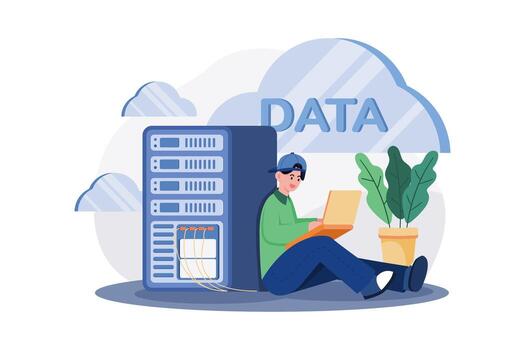
The growth of cloud computing has also created significant opportunities in data engineering. Cloud Data Engineers build systems that collect, process, store, and manage large amounts of data.
They may create data pipelines that move information from different applications into cloud data warehouses or data lakes. They also work with databases, data processing platforms, and analytics systems.
Common skills include SQL, Python, databases, ETL processes, data pipelines, cloud storage, and cloud-based data services.
Cloud Data Engineers often work closely with data analysts, data scientists, software developers, and business teams. Their work provides the infrastructure required for organizations to analyze large datasets and make data-driven decisions.
Skills You Should Learn for a Cloud Career
Regardless of the career path you choose, developing a strong technical foundation is important. Start with cloud computing concepts and then choose one major cloud platform such as AWS, Azure, or Google Cloud.
You should also learn Linux, networking, databases, security fundamentals, Git, and basic scripting. Python can be particularly useful because it is widely used for automation, cloud applications, and data-related tasks.
Practical experience is equally important. Instead of only watching tutorials, create cloud projects such as deploying a website, setting up a database, creating a virtual network, building a CI/CD pipeline, or deploying a containerized application.
Cloud certifications can also help demonstrate your knowledge, especially when you are starting your career.
How to Choose the Right Cloud Career
Choosing a cloud career depends largely on your interests.
If you enjoy infrastructure and servers, Cloud Engineer may be a good choice. If you enjoy designing complete systems, consider Cloud Solutions Architect. Developers interested in automation can explore Cloud DevOps Engineering.
If cybersecurity interests you, Cloud Security Engineer is worth considering. Students who enjoy networking can choose Cloud Network Engineering, while those interested in databases and analytics can explore Cloud Data Engineering.
You do not need to learn everything at once. Start with cloud fundamentals, choose one specialization, build practical projects, and gradually expand your skills.
Conclusion
Cloud computing offers several career opportunities for students, developers, IT professionals, and cybersecurity enthusiasts. The six career paths discussed above—Cloud Engineer, Cloud Solutions Architect, Cloud DevOps Engineer, Cloud Security Engineer, Cloud Network Engineer, and Cloud Data Engineer—each provide different opportunities to build a long-term technology career.
The best approach is to understand the fundamentals first and then specialize in an area that matches your interests. With practical projects, continuous learning, and relevant certifications, you can build the skills needed to pursue a successful career in cloud computing in 2026.
Want Learn Cloud Computing Course, Cyber Security Course, Networking Course ?, Visit Our Website www.kaashivinfotech.com.