

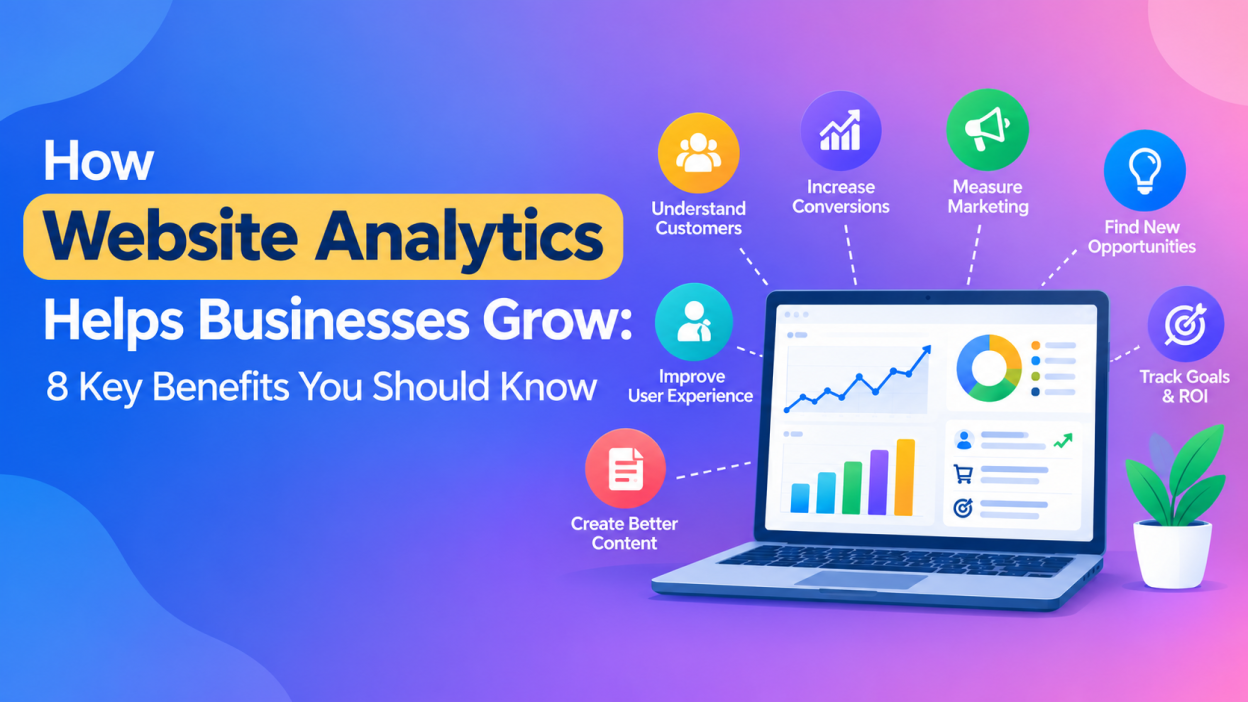
In today’s digital-first business environment, having a website is no longer enough. Businesses also need to understand how visitors discover their website, what they do after arriving, which pages perform well, and why some visitors leave without taking action.
This is where website analytics becomes valuable. Web analytics involves collecting and analyzing website data to understand visitor behavior and improve website performance, conversions, and business outcomes.
Tools such as Google Analytics can help businesses understand customer journeys, measure important actions, evaluate marketing performance, and identify opportunities for improvement.
Let’s explore the major ways businesses can benefit from using analytics on their websites.
What Is Website Analytics?
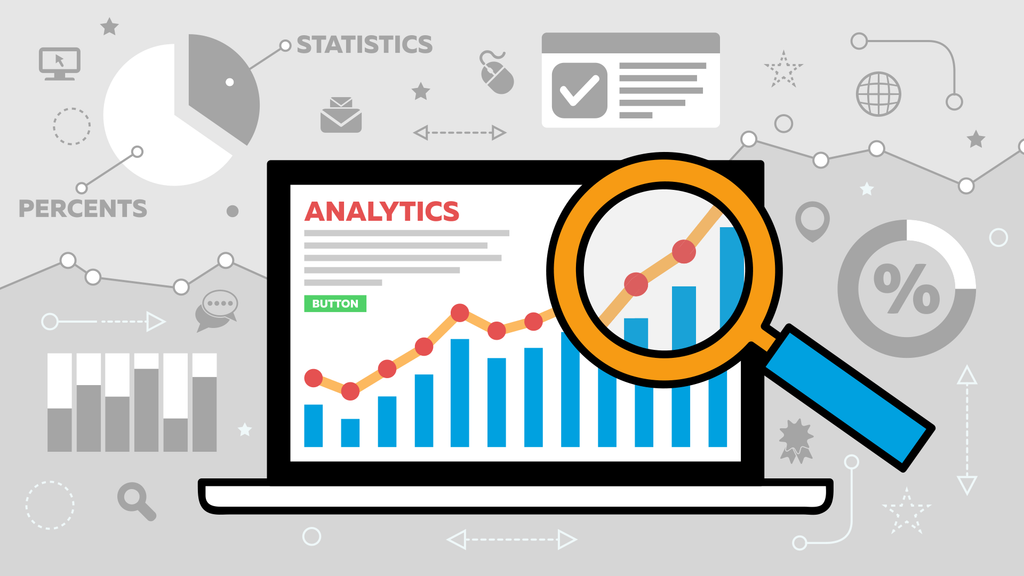
Website analytics is the process of collecting, measuring, and analyzing data about visitors and their interactions with a website. This can include information such as traffic sources, page views, user interactions, engagement, conversions, and other important performance metrics.
For example, analytics can help a business discover whether most visitors come from Google Search, social media, paid advertisements, or referral websites. It can also show which pages users visit before completing an important action.
Modern analytics platforms can measure events and user interactions, helping businesses understand how visitors engage with their websites.
1. Understand Customer Behavior
One of the biggest advantages of website analytics is that it helps businesses understand their customers better.
Instead of guessing what visitors want, businesses can study actual website behavior. Analytics can reveal which pages attract the most attention, which content generates engagement, and where users leave the website.
For example, if an online store notices that many users visit a product page but do not proceed to checkout, the business can investigate the product information, pricing, page design, or checkout experience.
Understanding these patterns helps businesses make more informed decisions.
2. Improve Website User Experience

A website should be easy to navigate, fast, informative, and convenient to use. Analytics can help identify areas where the user experience needs improvement.
Businesses can analyze popular pages, user journeys, engagement patterns, and conversion paths to discover potential problems.
For instance, if visitors consistently leave after reaching a particular page, that page may need better content, clearer navigation, stronger calls-to-action, or improved design.
The goal is not simply to increase traffic but to make the traffic more valuable by creating a smoother experience.
3. Increase Conversion Rates
Getting visitors to a website is only part of the job. Businesses ultimately want visitors to take valuable actions, such as purchasing a product, submitting a form, registering for a service, downloading a resource, or contacting the company.
Analytics helps businesses measure these actions and identify where potential customers drop out of the conversion process.
By studying conversion data, businesses can optimize landing pages, forms, product pages, calls-to-action, and checkout processes.
Even small improvements to important pages can potentially make a significant difference to business results.
4. Measure Marketing Performance
Businesses often spend money on SEO, social media, email campaigns, paid advertising, and other marketing activities. Without analytics, it can be difficult to understand which channels are actually producing results.
Website analytics helps businesses evaluate where visitors come from and how different marketing channels contribute to conversions.
For example, a company might discover that social media generates a large amount of traffic, while organic search generates fewer visitors but more leads. This information can help the business allocate its marketing resources more effectively.
Google Analytics also supports integrations with platforms such as Google Ads and Google Search Console, helping businesses connect marketing activity with website performance.
5. Create Better Content

Content plays an important role in attracting and educating potential customers. However, not every blog post, video, landing page, or product description will perform equally well.
Analytics can show businesses which content attracts visitors and generates engagement.
Suppose a company publishes ten blog posts and discovers that three of them consistently attract significant organic traffic. The company can study those topics and create more useful content around similar customer interests.
This creates a data-driven content strategy instead of relying entirely on assumptions.
6. Make Better Business Decisions
Without reliable data, business decisions can easily become based on opinions or assumptions.
Analytics provides measurable information that can support better decision-making. Businesses can use performance data to determine which products to promote, which campaigns to improve, which pages to redesign, and which customer segments to target.
Google Analytics is designed to turn website and customer data into insights that businesses can use to improve marketing performance and ROI.
This makes analytics useful not only for marketing teams but also for business owners, product managers, sales teams, and decision-makers.
7. Identify New Growth Opportunities
Analytics can reveal opportunities that businesses might otherwise miss.
For example, a company may discover that visitors from a particular location have a high engagement rate. Another business may notice that a specific product category receives increasing interest.
Analytics platforms can also provide automated or predictive insights. Google Analytics, for example, uses machine learning to identify patterns and provide insights related to customer behavior and potential future actions.
These insights can help businesses identify new markets, products, audiences, and marketing opportunities.
8. Track Business Goals and ROI
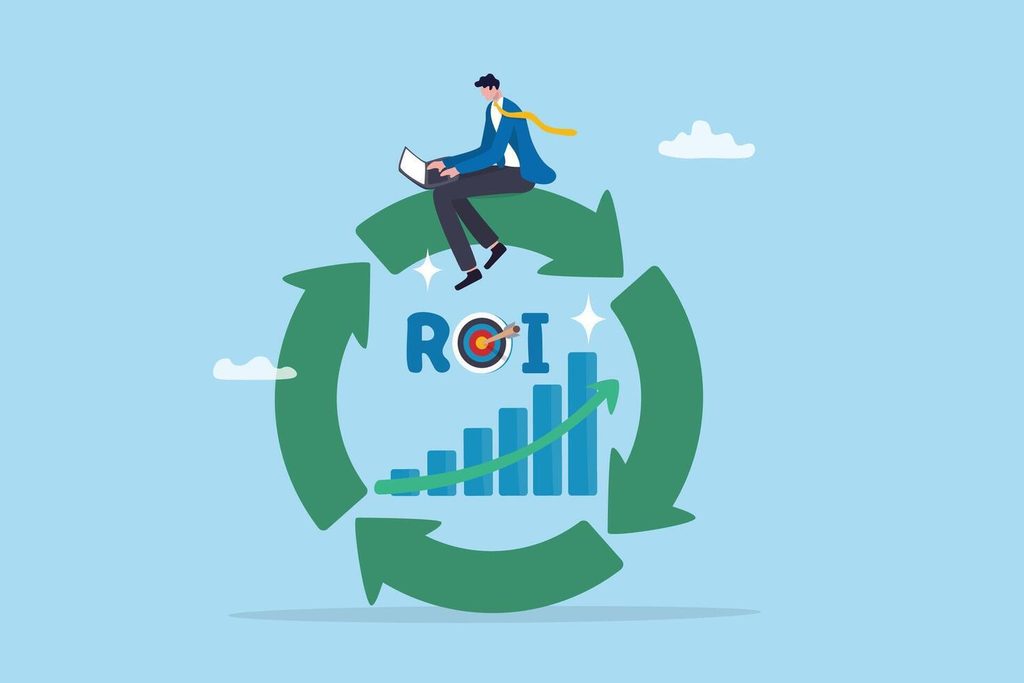
Every business website should have clearly defined goals. These could include sales, lead generation, registrations, downloads, phone calls, or other valuable actions.
Analytics allows businesses to track these goals and compare performance over time.
Instead of simply saying, “Our website receives more visitors,” businesses can ask more meaningful questions:
- Are visitors becoming customers?
- Which marketing channels generate the most valuable leads?
- Which pages contribute to conversions?
- Are sales increasing?
- Which campaigns provide the best return?
This approach connects website activity with actual business objectives.
How Businesses Can Get Started with Website Analytics
Businesses do not need to analyze every available metric. The better approach is to start with a few metrics that directly support business goals.
First, install an analytics platform such as Google Analytics and properly configure the website data stream. Google recommends defining important business actions as conversions so they can be measured and improved.
Next, identify key metrics such as:
- Website traffic
- Traffic sources
- Engagement
- Important events
- Conversion rate
- Leads or purchases
- Revenue
- Landing-page performance
Businesses should then review these metrics regularly and use the findings to make practical improvements.
Conclusion
Website analytics has become an essential part of modern digital business strategy. It helps businesses move beyond assumptions and understand what is actually happening on their websites.
From understanding customer behavior and improving user experience to increasing conversions, measuring marketing performance, creating better content, and discovering new growth opportunities, analytics can provide valuable insights at every stage of the customer journey.
The real value of analytics is not simply collecting numbers. It is turning those numbers into meaningful decisions and actions. Businesses that consistently measure, analyze, test, and improve their websites can build better digital experiences while working toward stronger marketing performance and long-term growth.
Want to learn more ??, Kaashiv Infotech Offers Data Analytics Course, Data Science Course, Cyber Security Course & More Visit Their Website www.kaashivinfotech.com.