
MongoDB has become a popular choice for developers building modern web, mobile, real-time, and AI-powered applications. Unlike traditional relational databases, MongoDB stores data in flexible document structures, making it useful when applications need to handle changing data models and large volumes of information.
In 2026, simply creating a basic CRUD application or to-do list is not enough to make a project stand out. Students and developers can build more practical projects using features such as aggregation pipelines, Atlas Search, Change Streams, geospatial queries, and Vector Search. MongoDB’s current ecosystem also supports AI applications involving semantic search, RAG, and AI agents.
MongoDB itself has highlighted student projects involving fraud detection, smart waste management, AI applications, and other real-world problems, showing how the database can be used beyond basic CRUD applications.
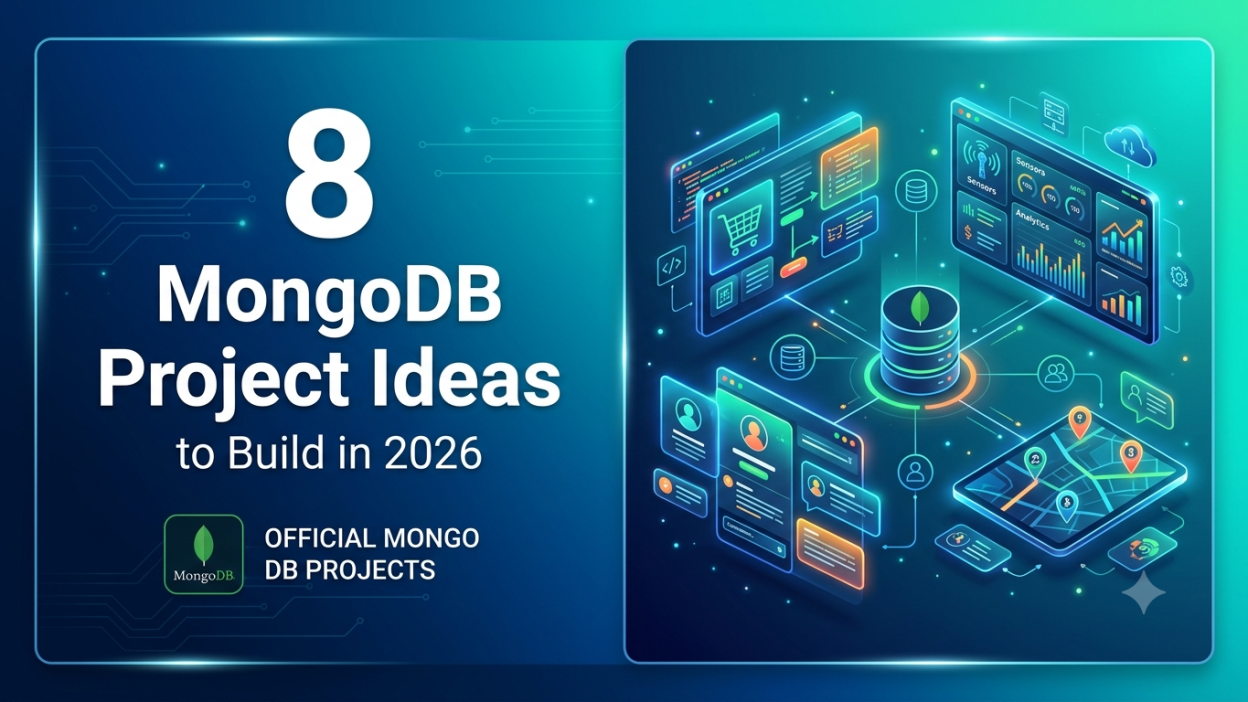
Here are 8 unique MongoDB project ideas for 2026 that can help you build an impressive portfolio.
1. AI-Powered Resume and Job Matching Platform

An AI-powered job matching platform can connect job seekers with suitable job opportunities based on their skills, experience, education, and career interests.
Users can create profiles containing their technical skills, certifications, projects, experience, and preferred job roles. Companies can publish job descriptions containing required skills and qualifications.
MongoDB can store these profiles as flexible documents because every candidate may have a different combination of skills and experience.
For an advanced version, you can use MongoDB Vector Search to compare the semantic meaning of candidate profiles with job descriptions instead of depending only on exact keyword matches. Vector Search supports semantic search and RAG-based applications.
Key features:
- User registration and authentication
- Resume upload
- Skill extraction
- Job posting
- AI-based job matching
- Candidate recommendations
- Application tracking
- Recruiter dashboard
Technologies: MongoDB, Node.js/Python, React, Express.js, and an AI/embedding model.
This is an excellent project for students interested in MongoDB, AI, and full-stack development.
2. Smart Expense and Financial Analytics System
Instead of building a simple expense tracker, create an intelligent financial analytics application.
Users can record income, expenses, subscriptions, bills, investments, and financial goals. MongoDB can store transactions as documents and allow the application to support different categories and custom fields.
The system can use MongoDB’s aggregation framework to generate monthly and yearly reports.
For example, the application could calculate:
- Monthly spending
- Category-wise expenses
- Highest spending areas
- Subscription costs
- Monthly savings
- Income versus expenses
- Spending trends
You could also add an AI assistant that answers questions such as:
“How much did I spend on food this month?”
or
“Which category increased the most compared with last month?”
This turns a basic database project into a practical financial analytics platform.
3. Real-Time Inventory and Stock Alert System

A real-time inventory management system is another strong MongoDB project for 2026.
Imagine an application used by a retail business to monitor products, warehouse stock, orders, suppliers, and sales.
MongoDB Change Streams can be used to react to database changes in real time. Change Streams allow applications to subscribe to changes occurring in collections, databases, or deployments.
For example, when product quantity falls below a predefined threshold, the application could immediately generate a low-stock notification.
Possible features include:
- Product management
- Supplier management
- Warehouse management
- Stock tracking
- Purchase orders
- Sales tracking
- Low-stock notifications
- Real-time dashboard
- Search and filtering
- Sales analytics
You can make the project more advanced by adding Atlas Search for intelligent product searching. MongoDB’s own learning examples demonstrate combining Change Streams with search capabilities for real-time inventory applications.
4. AI Knowledge Base and RAG Chatbot
AI-powered applications are among the most interesting MongoDB projects to build in 2026.
Create a chatbot that allows users to upload documents such as PDFs, manuals, company policies, or technical documentation. The system processes the documents and stores relevant information and embeddings in MongoDB.
When users ask questions, the application retrieves relevant information and sends the context to an AI model to generate an answer.
This is known as Retrieval-Augmented Generation (RAG).
MongoDB officially supports Vector Search for RAG applications, semantic search, and AI agents.
Example applications:
- College knowledge assistant
- Company HR chatbot
- Technical documentation assistant
- Customer support chatbot
- Course learning assistant
This project is particularly useful for demonstrating knowledge of MongoDB + AI + Vector Search + APIs.
5. Smart City Complaint and Waste Management Platform
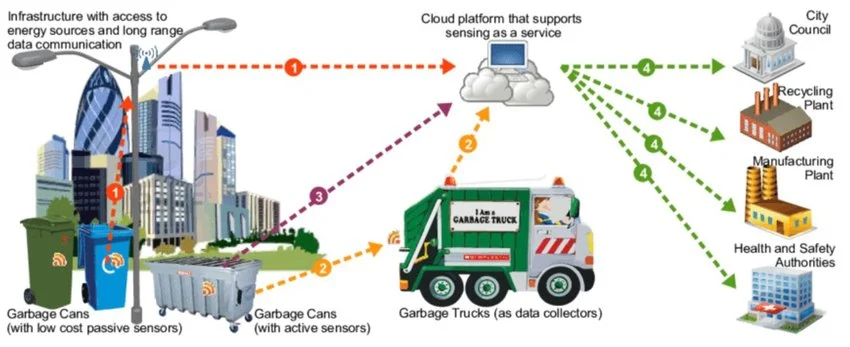
Build a platform where citizens can report problems such as overflowing garbage bins, damaged roads, broken streetlights, water leaks, or other public infrastructure issues.
Each complaint can contain:
- Description
- Category
- Images
- Location
- Date and time
- Citizen information
- Status
- Assigned department
MongoDB’s document model is useful for storing this type of variable information.
You can also implement geospatial queries to identify complaints near a particular location.
An advanced version could automatically classify uploaded complaints using AI and assign them to the appropriate department.
You could create dashboards showing:
- Most reported problems
- Complaint density by location
- Resolution time
- Department performance
- Pending complaints
This project combines MongoDB, geospatial data, APIs, dashboards, and AI.
6. Personalized Learning and Student Performance Platform
Create a learning platform that tracks how students interact with educational content.
The database can store student profiles, courses, lessons, quiz attempts, scores, assignments, learning time, and progress.
Instead of simply showing marks, the application can analyze student behavior and recommend what they should learn next.
For example:
Student → Weak in Java → Recommend Java OOP lessons → Generate practice quiz → Track improvement
MongoDB’s flexible documents make it convenient to maintain different types of learning data.
You can add an AI recommendation engine to personalize learning paths.
Major features:
- Student dashboard
- Course management
- Quiz system
- Progress tracking
- Performance analytics
- Personalized recommendations
- Instructor dashboard
- AI learning assistant
This is a particularly useful project for students who want to demonstrate both database development and recommendation systems.
7. Real-Time Social Media Analytics Platform

Build a platform that collects and analyzes social media-style engagement data.
The application could process posts, likes, comments, shares, followers, hashtags, and engagement information.
MongoDB’s aggregation capabilities can be used to generate analytics such as:
- Most popular posts
- Trending hashtags
- Engagement rate
- Active users
- Daily interactions
- User growth
- Content performance
You can create interactive dashboards using technologies such as React and Chart.js.
For an advanced version, add sentiment analysis to classify comments as positive, negative, or neutral.
The project could therefore become a combination of:
MongoDB + Data Analytics + AI + Visualization
This makes it considerably more impressive than a standard social media CRUD application.
8. AI-Powered Personal Shopping Recommendation System
Create an e-commerce recommendation engine that suggests products based on customer behavior.
The system can track:
- Products viewed
- Products purchased
- Search history
- Wishlist items
- Categories visited
- Ratings
- Similar products
MongoDB can store these activities and product documents.
A recommendation engine can then suggest products based on previous behavior.
For example:
User views laptops → searches gaming laptops → compares graphics cards → system recommends gaming laptops and accessories.
You can make the project more advanced with semantic product search using MongoDB Vector Search. MongoDB supports semantic search and hybrid approaches that combine traditional keyword search with vector-based retrieval.
This project is ideal for demonstrating MongoDB, recommendation systems, AI, APIs, and e-commerce development.
How to Make Your MongoDB Project Stand Out
The biggest mistake students make is building only a basic CRUD application. A stronger portfolio project should demonstrate how MongoDB solves an actual problem.
Try incorporating features such as:
- Authentication and authorization
- Aggregation pipelines
- Indexing
- Search
- Geospatial queries
- Real-time Change Streams
- Analytics dashboards
- REST APIs
- AI integration
- Vector Search
- Cloud deployment
MongoDB’s current student ecosystem specifically includes projects involving recommendation engines, AI applications, smart waste management, NLP, and other practical use cases.
Which MongoDB Project Should You Choose?
Your choice should depend on your skill level and career goal.
For beginners: Smart Expense Tracker or Learning Platform
For intermediate developers: Inventory Management or Social Media Analytics
For advanced developers: AI Job Matching Platform, RAG Chatbot, or AI Recommendation System
For full-stack developers: Smart City Management or Real-Time Inventory System
For AI/ML enthusiasts: RAG Chatbot or AI Job Matching Platform
Conclusion
MongoDB projects in 2026 can go far beyond simple CRUD applications. By combining MongoDB with AI, real-time processing, search, analytics, and modern web technologies, you can create projects that demonstrate practical development skills.
The most valuable project is not necessarily the most complicated one. Choose a genuine problem, design your MongoDB schema carefully, build a working application, and explain why you selected MongoDB for the project.
If you are building a portfolio for a MongoDB, backend, full-stack, or AI developer role, projects such as an AI job-matching platform, real-time inventory system, RAG chatbot, or intelligent recommendation engine can provide much stronger practical experience than basic database projects.
Kaashiv Infotech Offers, SQL Course, SQL Internship & More Visit Our website www.kaashivinfotech.com.