

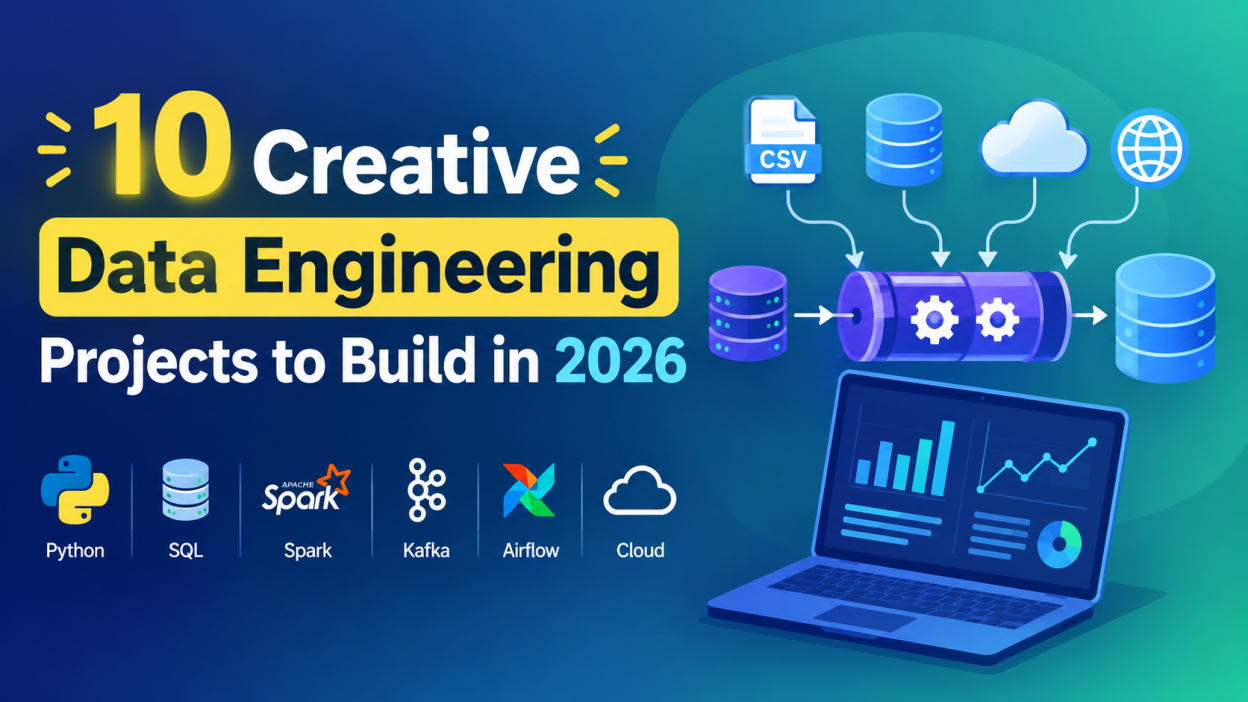
Data engineering is one of the most valuable fields in modern technology. Businesses generate huge amounts of information from websites, mobile applications, online transactions, IoT devices, and cloud platforms. To make this data useful, they need reliable systems that collect, process, transform, and store it efficiently.
Working on practical projects is one of the best ways to learn data engineering. Projects help beginners understand how data pipelines work, how databases are managed, and how cloud platforms support large-scale data processing. They also provide hands-on experience that can strengthen a resume and help candidates prepare for technical interviews.
In 2026, aspiring data engineers can explore technologies such as Python, SQL, Apache Spark, Apache Kafka, Airflow, and cloud-based data services. You do not need to master every tool before starting. Begin with a simple project, understand the workflow, and gradually add more advanced features.
Here are 10 creative data engineering project ideas to help you develop practical skills and build a strong portfolio.
Why Are Data Engineering Projects Important?
Data engineering projects help you understand how raw information becomes useful business data. They teach you to automate repetitive tasks, handle missing values, combine information from different sources, and make datasets available for analysis.
Practical experience also helps you understand real-world challenges, including data quality, pipeline failures, performance, security, and scalability. These skills are useful when applying for entry-level data engineering jobs or moving toward more advanced roles.
1. Real-Time Stock Market Data Pipeline

Build a system that collects stock market data, processes price updates, and stores the results for analysis. This project introduces you to real-time data processing and helps you understand how financial applications handle continuously changing information.
Use Python to collect data from a suitable stock market API. Store historical records in PostgreSQL and use Apache Kafka to stream incoming updates. You can process the data with Python or Apache Spark and schedule supporting workflows with Apache Airflow.
Key skills: Python, APIs, SQL, Kafka, data streaming, and database design.
Advanced feature: Create alerts when a stock price crosses a predefined threshold.
2. E-Commerce Sales Data Warehouse
An e-commerce data warehouse combines information about orders, customers, products, payments, and sales performance in one organized system. This project is ideal for beginners who want to understand how businesses prepare data for reporting.
Create sample sales datasets using CSV files or a database. Use Python to clean the data, remove duplicates, and standardize product categories. Load the transformed records into PostgreSQL or a cloud data warehouse such as BigQuery.
Design fact and dimension tables to organize sales transactions and customer information. Finally, connect the warehouse to a visualization tool to create reports showing revenue, popular products, and monthly sales trends.
Key skills: SQL, Python, ETL pipelines, data modeling, and data warehousing.
Advanced feature: Automate daily data loads and generate reports for different sales periods.
3. Real-Time Weather Data Processing System
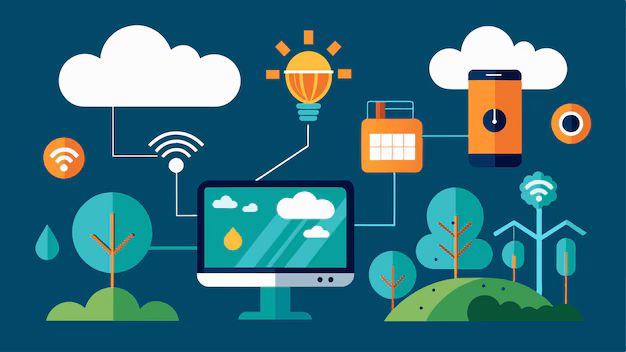
Weather information is useful for agriculture, transportation, travel, and disaster planning. In this project, build a pipeline that collects weather data from an API and transforms it into a structured dataset.
Use Python to retrieve temperature, humidity, rainfall, and wind speed for selected cities. Store the original responses in cloud storage, clean the data, and load it into a relational database.
You can schedule the pipeline using Apache Airflow and create dashboards to compare weather patterns over time. Add validation checks to identify missing measurements or unexpected values.
Key skills: REST APIs, Python, JSON, scheduling, cloud storage, and data validation.
Advanced feature: Compare historical weather records across cities and identify unusual temperature changes.
4. Social Media Sentiment Data Pipeline
Social media platforms generate large volumes of text, reactions, and engagement data. This project explores how data engineers collect and prepare social media information for sentiment analysis.
Use an approved API or a public dataset to gather posts, timestamps, and engagement counts. Process the text using Python, remove duplicate records, and organize the results in a database.
You can then connect a sentiment analysis library to classify posts as positive, negative, or neutral. The main data engineering challenge is building a reliable pipeline that separates data collection, cleaning, storage, and analysis.
Key skills: Python, API integration, text processing, SQL, and pipeline design.
Advanced feature: Track sentiment changes over time for selected topics using authorized data sources.
5. IoT Sensor Data Streaming Platform

Internet of Things devices generate continuous streams of information from machines, vehicles, smart homes, and industrial equipment. This project teaches you to process frequent updates efficiently.
Simulate temperature, humidity, or machine vibration readings using Python. Send the generated events to Apache Kafka and process them with a consumer application. Store the processed results in a database or time-series storage system.
Build a dashboard to monitor sensor values and identify unusual readings. You can also introduce window-based aggregation to calculate average sensor measurements over specific time periods.
Key skills: Python, Kafka, streaming architecture, event processing, and time-series data.
Advanced feature: Trigger an alert when a sensor reading exceeds a configured limit.
6. Automated ETL Pipeline Using Apache Airflow
ETL stands for Extract, Transform, and Load. It is a fundamental process in data engineering that moves information from source systems into a destination where it can be analyzed.
Build a pipeline that extracts data from CSV files or APIs, transforms the records using Python, and loads them into PostgreSQL. Use Apache Airflow to schedule tasks, define dependencies, retry failed operations, and monitor execution.
For example, the pipeline could process daily customer orders and update a reporting database automatically.
Key skills: Python, SQL, ETL, Apache Airflow, scheduling, and error handling.
Advanced feature: Add logging, data-quality checks, notifications, and automatic retries for failed tasks.
7. Cloud-Based Data Lake
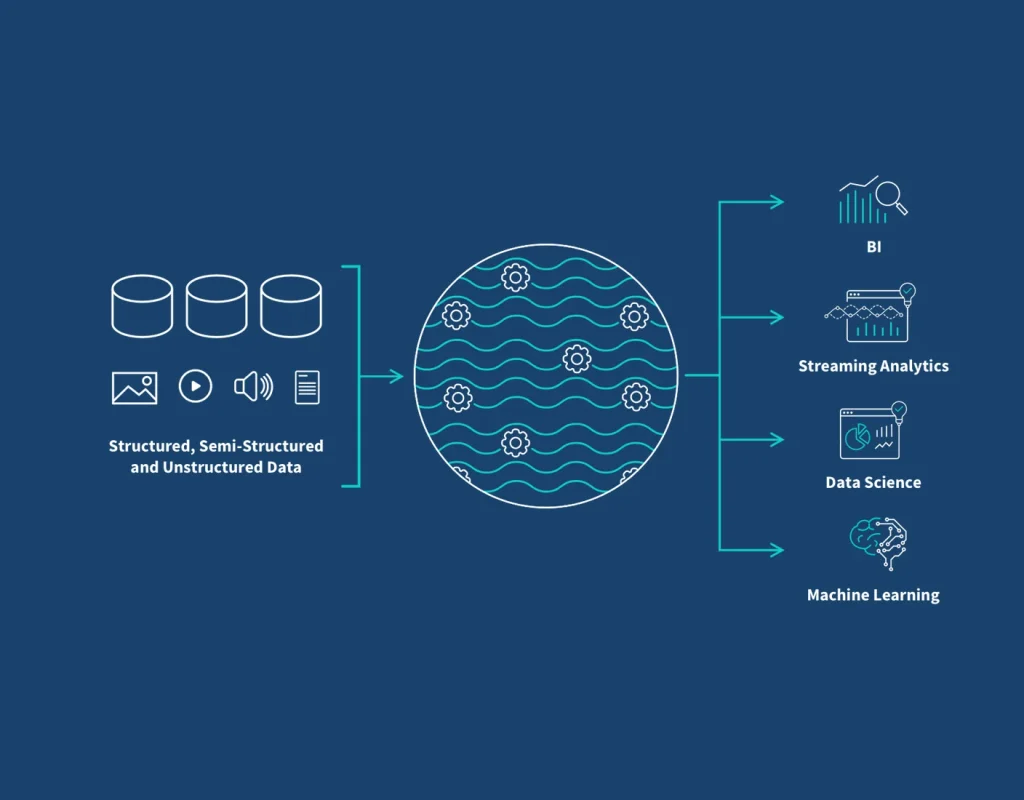
A data lake stores large amounts of information in different formats, including structured tables, JSON files, logs, and images. This project helps you understand how cloud storage supports modern data platforms.
Create a cloud storage bucket using Amazon S3, Azure Data Lake Storage, or Google Cloud Storage. Upload sample datasets and organize them into raw, processed, and curated folders.
Use Python or Apache Spark to clean and transform selected datasets. Apply access controls and document the data formats so that other applications can use the stored information.
Key skills: Cloud storage, Python, Spark, data organization, and access management.
Advanced feature: Add automated ingestion and partition datasets by date to improve query performance.
8. Customer Churn Data Pipeline
Customer churn occurs when customers stop using a product or service. Businesses analyze customer activity to understand why customers leave and identify possible retention opportunities.
Build a pipeline using a public customer churn dataset. Extract customer information, clean missing values, standardize columns, and calculate useful metrics such as subscription duration and monthly spending.
Store the transformed dataset in a database and prepare it for analysis or machine learning. You can optionally integrate a classification model to estimate churn risk, while keeping the data pipeline separate from the prediction process.
Key skills: Python, SQL, data cleaning, feature engineering, and database integration.
Advanced feature: Schedule weekly updates and compare churn patterns across customer groups.
9. Website Log Analytics Pipeline

Web servers generate logs containing request times, response codes, URLs, and other technical information. Analyzing these logs helps teams understand traffic patterns and identify operational issues.
Collect sample web server logs and use Python to parse them into structured records. Load the cleaned information into a database or analytics platform, then calculate metrics such as request volume, error rates, and frequently accessed pages.
You can process larger datasets using Apache Spark and schedule regular analysis with Airflow.
Key skills: Python, log processing, SQL, Spark, and data monitoring.
Advanced feature: Detect sudden increases in server errors and identify endpoints with unusually high request volumes.
10. Data Quality Monitoring System
Reliable data is essential for accurate reporting and decision-making. A data quality monitoring system checks whether incoming datasets meet predefined standards before they reach downstream applications.
Create a pipeline that validates required columns, checks for duplicate records, detects missing values, and verifies acceptable data ranges. Use Python with Pandas or a data validation framework such as Great Expectations.
Store validation results in a database and generate a report showing passed checks, failed checks, and affected records. This project demonstrates that data engineering involves not only moving information but also ensuring its reliability.
Key skills: Python, SQL, data validation, testing, monitoring, and pipeline reliability.
Advanced feature: Send notifications when important quality checks fail and prevent invalid data from reaching production tables.
Tools to Learn for Data Engineering Projects
Choose tools according to your project’s complexity rather than trying to learn everything at once.
| Tool | Main purpose |
|---|---|
| Python | Data processing and automation |
| SQL | Querying and managing databases |
| PostgreSQL | Relational data storage |
| Apache Airflow | Workflow orchestration |
| Apache Kafka | Real-time data streaming |
| Apache Spark | Distributed data processing |
| Docker | Reproducible development environments |
| AWS, Azure, or GCP | Cloud storage and processing |
How to Choose the Right Project
If you are a beginner, start with an ETL pipeline, weather data processor, or sales data warehouse. These projects teach the fundamentals without requiring a complex infrastructure.
Once you understand data cleaning, SQL, and pipeline design, move to streaming systems, cloud data lakes, or large-scale log processing. Include a GitHub repository with a clear README, architecture diagram, sample data, setup instructions, and screenshots of your results.
Pay attention to security, too. Never upload API keys, passwords, or private customer information to a public repository.
Conclusion
Data engineering projects provide practical experience in collecting, transforming, storing, and monitoring information. From real-time stock market pipelines to automated data quality systems, each project develops skills that are useful in modern data environments.
Start with one manageable project and gradually improve it by adding automation, testing, logging, and cloud integration. A well-documented project that demonstrates a complete, reliable data pipeline can be more valuable than several unfinished projects.
The most important goal is to understand how data moves from its original source to a reliable, usable destination. With consistent practice, these projects can help you build a strong foundation for a career in data engineering.
Want to learn more ??, Kaashiv Infotech Offers Data Analytics Course, Data Science Course, Cyber Security Course & More Visit Their Website www.kaashivinfotech.com.