
![What is MERN Stack A Complete Guide [2026] for Beginners](https://www.wikitechy.com/wp-content/uploads/2026/05/What-is-MERN-Stack-A-Complete-Guide-2026-for-Beginners-1160x680.png)
What is MERN Stack? A Complete Guide [2026] — if you’ve been searching for this, trust me, you’re not alone. A few years ago, when I first entered web development, I kept hearing developers throw around words like “MERN,” “full-stack,” and “MongoDB.” Honestly? It sounded intimidating at first 😅.
But once I understood how the MERN Stack works, everything started making sense.
Today, MERN Stack is one of the most popular technologies for building modern web applications. Companies love it, startups use it everywhere, and developers prefer it because it uses JavaScript for everything — frontend, backend, and database operations.
So in this blog, I’ll explain What is MERN Stack? A Complete Guide [2026] in the simplest way possible, like a friend explaining it over coffee ☕.
✨ Key Highlights of This Article
- ✅ Understand what MERN Stack is
- ✅ Learn the 4 technologies inside MERN
- ✅ Discover how MERN Stack works together
- ✅ Real-world examples of MERN applications
- ✅ MERN Stack advantages and disadvantages
- ✅ Career opportunities in 2026
- ✅ MERN Stack roadmap for beginners
- ✅ Difference between MERN and other stacks
💡 What is MERN Stack? A Complete Guide [2026]
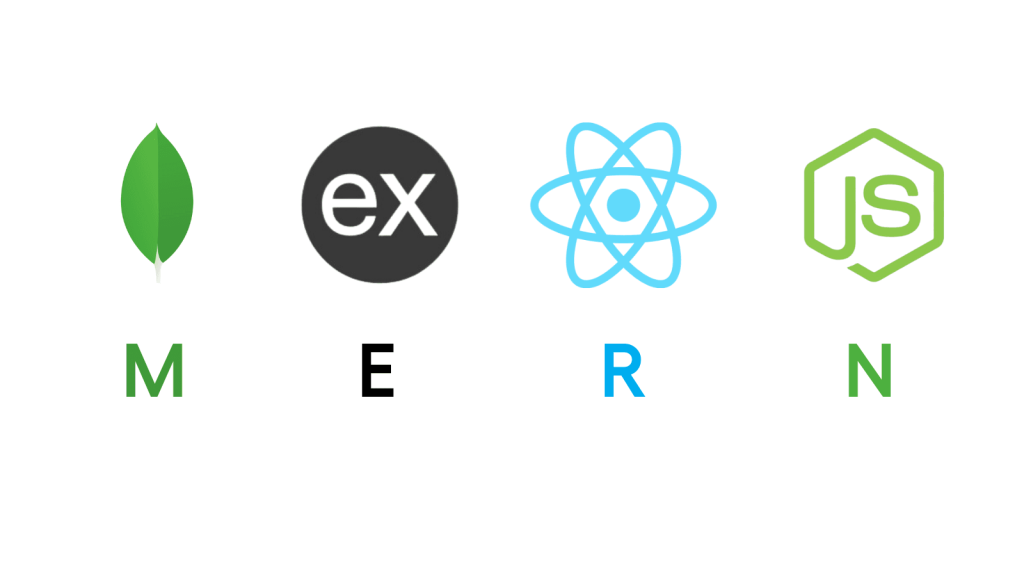
The MERN Stack is a collection of four powerful technologies used to build full-stack web applications.
MERN stands for:
- M → MongoDB
- E → Express.js
- R → React.js
- N → Node.js
The best part? All four technologies use JavaScript.
That means instead of learning different languages for frontend and backend, we can build an entire application using a single language. That’s one of the biggest reasons why MERN Stack became extremely popular in recent years 🚀.
I still remember building my first MERN project — a simple task manager app. Seeing the frontend connect with the database in real time felt magical.
🧩 Components of MERN Stack
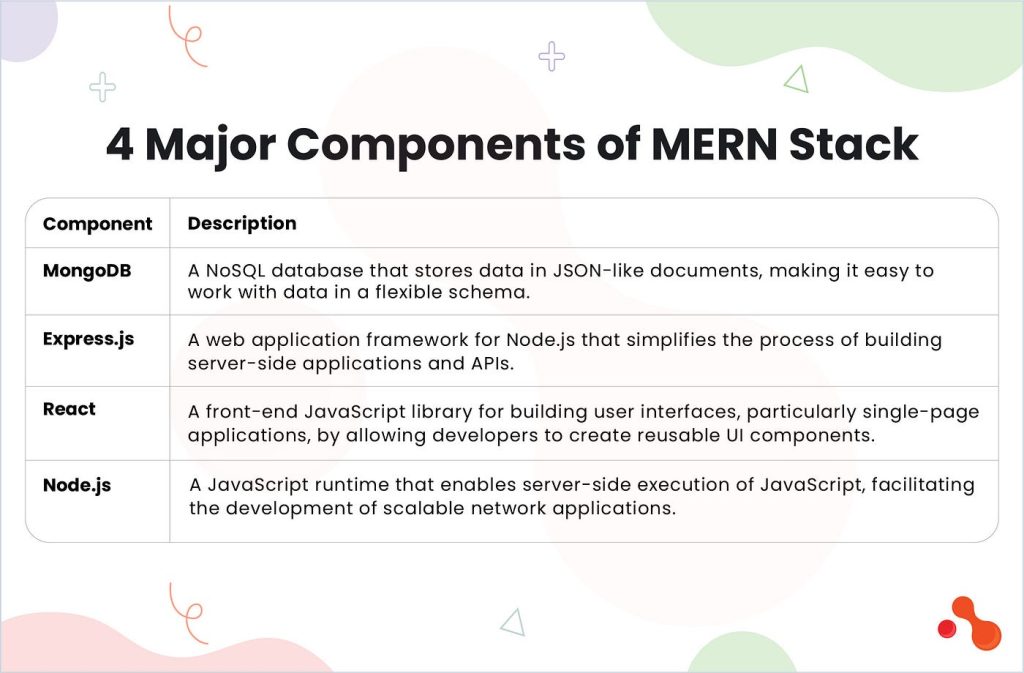
1. MongoDB – The Database 🗄️
MongoDB is a NoSQL database used to store application data.
Instead of tables and rows like traditional SQL databases, MongoDB stores data in flexible JSON-like documents.
Example:
If you create a user account on a website, MongoDB can store:
- Name
- Password
- Profile image
Why developers like MongoDB:
- Flexible structure
- Easy to scale
- Fast performance
- Works naturally with JavaScript
👉 Official Website: MongoDB
2. Express.js – The Backend Framework ⚙️
Express.js is a lightweight backend framework that runs on Node.js.
It helps developers create:
- APIs
- Server-side logic
- Authentication systems
- Routing
When I first used Express.js, I realized how much easier backend development becomes compared to writing everything from scratch.
Example:
If a user clicks “Login,” Express handles the request and checks whether the credentials are correct.
👉 Official Website: Express.js
3. React.js – The Frontend Library 🎨
React.js is used to build user interfaces.
This is the part users actually see and interact with.
Popular websites like:
- Netflix
use React for smooth user experiences.
What I personally love about React is how fast and dynamic it feels. Pages update instantly without refreshing the whole website.
Features of React:
- Reusable components
- Virtual DOM
- Fast rendering
- Easy UI management
👉 Official Website: React
4. Node.js – The Runtime Environment 🌐
Node.js allows JavaScript to run outside the browser.
Normally, JavaScript only works in web browsers. But Node.js changed everything by allowing JavaScript to run on servers too.
That’s why MERN developers can use one language across the entire application.
Why Node.js is popular:
- Fast performance
- Event-driven architecture
- Scalable applications
- Huge package ecosystem
👉 Official Website: Node.js
🔄 How MERN Stack Works Together
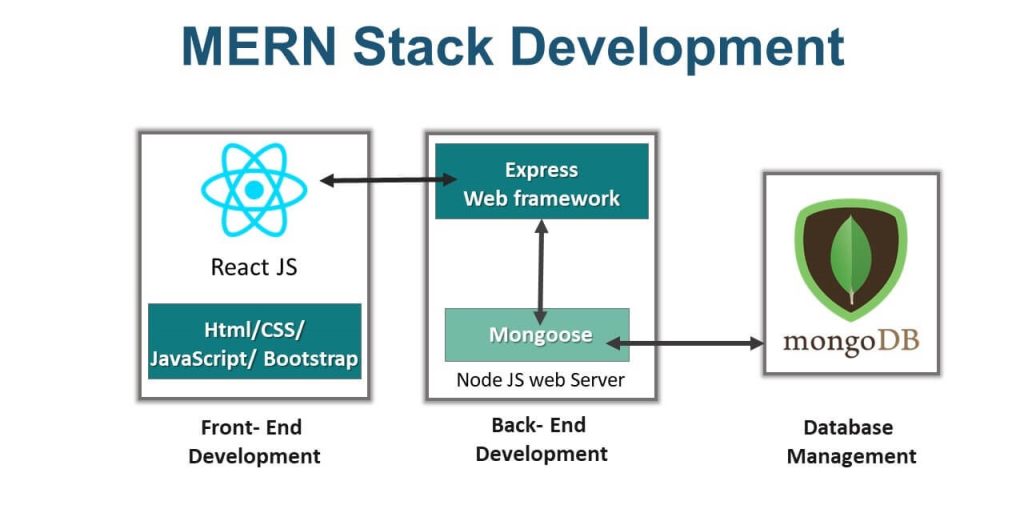
Here’s the simplest way I explain the MERN Stack workflow:
- User interacts with the React frontend
- React sends requests to Express/Node backend
- Backend processes the request
- MongoDB stores or retrieves data
- Response returns to the frontend
Everything stays connected beautifully.
Think of it like a food delivery app 🍔:
- React = Restaurant menu users see
- Express/Node = Waiter taking orders
- MongoDB = Kitchen storage
- Node.js = Entire restaurant system running behind the scenes
🌍 Real-World Applications Built with MERN Stack
Many modern applications use MERN Stack because it’s fast and scalable.
Common MERN Stack projects:
- E-commerce websites
- Social media platforms
- Chat applications
- Online learning platforms
- Project management tools
- Food delivery apps
I’ve personally seen startups choose MERN because it helps them build products quickly with smaller development teams.
🚀 Advantages of MERN Stack
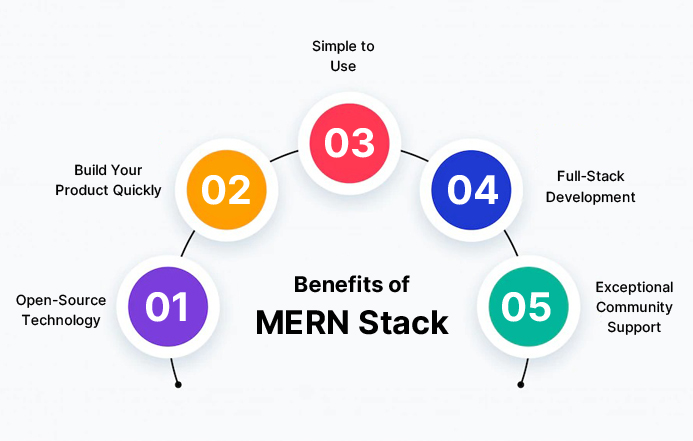
1. Full JavaScript Stack
This is probably the biggest advantage.
Frontend + backend + database operations can all use JavaScript.
That means:
- Faster development
- Easier learning curve
- Better team collaboration
2. Fast Development ⚡
React components and reusable code save a lot of time.
I noticed this especially when redesigning pages. Instead of rebuilding everything, I reused components.
3. Open Source and Free 💸
All MERN technologies are open-source.
That’s amazing for students and beginners who don’t want to spend money on expensive software.
4. Strong Community Support 👨💻
If you get stuck, chances are someone already solved the same problem online.
Platforms like:
can help a lot.
📚 MERN Stack Roadmap for Beginners [2026]
If I had to restart my MERN journey today, this is exactly how I’d learn it.
Step 1: Learn HTML, CSS, and JavaScript
Start with web basics first.
Without JavaScript fundamentals, MERN becomes difficult.
Step 2: Learn React.js
Focus on:
- Components
- Props
- State
- Hooks
Step 3: Learn Node.js and Express.js
Understand:
- APIs
- Routing
- Middleware
- Authentication
Step 4: Learn MongoDB
Practice:
- CRUD operations
- Collections
- Documents
- Queries
Step 5: Build Real Projects 🛠️
This is the most important part.
Projects teach more than tutorials.
Beginner MERN project ideas:
- To-do app
- Blog website
- Chat application
- Expense tracker
- Online course platform
💼 MERN Stack Developer Salary in 2026
MERN developers are highly in demand.
Average salaries:
- Beginner: ₹3 LPA – ₹6 LPA
- Mid-level: ₹8 LPA – ₹15 LPA
- Experienced: ₹20+ LPA
Freelancers also earn well by building websites and applications for clients.
🔥 MERN Stack vs MEAN Stack
People often compare MERN with MEAN Stack.
Difference:
- MERN uses React
- MEAN uses Angular
Personally, I find React easier and more flexible for beginners.
🎯 Is MERN Stack Worth Learning in 2026?
Absolutely yes ✅
Here’s why:
- High job demand
- Strong community
- Modern development approach
- Excellent freelance opportunities
- Full-stack capability
If your goal is becoming a web developer in 2026, MERN Stack is still one of the smartest choices.
🏁 Final Thoughts on What is MERN Stack? A Complete Guide [2026]
So, What is MERN Stack? A Complete Guide [2026] really comes down to this:
It’s a powerful combination of technologies that helps developers build complete web applications using JavaScript.
When I first started learning MERN Stack, it honestly felt huge. But once I broke it down step by step, it became exciting instead of scary.
My advice?
Don’t try to master everything in one week.
Start small.
Build projects.
Make mistakes.
Fix bugs.
Repeat.
That’s exactly how real developers grow 💙
And trust me — your first working MERN project will feel incredibly rewarding.
Want to Learn More About Java ?, Kaashiv Infotech Offers, Full Stack Java Course, Java Course, Data Science Course, Internships & More, Visit Their Website www.kaashivinfotech.com.
Related Reads:
- Java vs JavaScript: 3 Key Differences Every Developer Must Know
- Java Serialization Explained: A Complete Beginner’s Guide