
Key Highlights 📌
- Learn the OOPs Concepts in Java – 4 Basic Concepts in simple language.
- Understand Encapsulation, Inheritance, Polymorphism, and Abstraction with real-life examples.
- Discover why Java uses Object-Oriented Programming.
- Learn how OOP makes programs easier to build and maintain.
- Perfect for beginners, students, and interview preparation.
- Includes practical examples you can relate to in daily life.
OOPs Concepts in Java – 4 Basic Concepts
OOPs Concepts in Java – 4 Basic Concepts are the foundation of Java programming. When I first started learning Java, I kept hearing people say, “If you understand OOP, you’ve already won half the battle.” At first, I honestly had no idea what that meant.
I tried memorizing definitions. It didn’t help.
Everything finally clicked when I started connecting OOP concepts with things I see every day—like my phone, my car, my TV remote, and even my bank account. That’s exactly how I’ll explain them in this article.
If you’re searching for an easy explanation of OOPs Concepts in Java – 4 Basic Concepts, you’re in the right place.
By the end of this guide, you’ll clearly understand:
- What OOP means
- Why Java uses OOP
- The 4 Basic Concepts of OOPs in Java
- Real-life examples for each concept
- Why every Java developer should master these concepts
Let’s get started!
What is OOP in Java? 🤔

OOP (Object-Oriented Programming) is a programming style where we create software using objects.
An object represents something from the real world.
For example:
- 🚗 Car
- 📱 Mobile Phone
- 👨 Student
- 🏦 Bank Account
- 🐶 Dog
Every object has:
- Properties (Data)
- Behaviors (Functions or Methods)
Think about your mobile phone.
Properties:
- Brand
- Color
- Storage
Behaviors:
- Call
- Take Photos
- Play Music
- Send Messages
Java allows us to create these real-world objects using classes.
This is why learning OOPs Concepts in Java – 4 Basic Concepts is so important.
Why Does Java Use OOP?
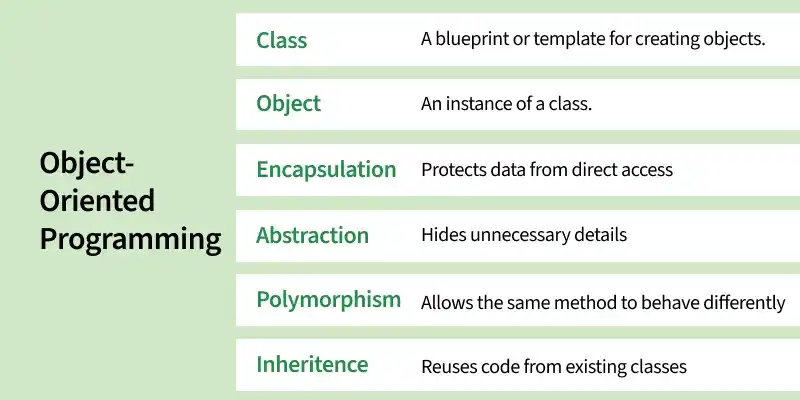
This question confused me when I was learning Java.
I thought, “Why can’t we just write normal code?”
The answer became obvious after I worked on larger projects.
Without OOP:
- Code becomes messy.
- Fixing bugs becomes difficult.
- Reusing code is almost impossible.
With OOP:
- ✅ Code stays organized.
- ✅ Reusability increases.
- ✅ Maintenance becomes easier.
- ✅ Programs become easier to understand.
- ✅ Teams can work together more efficiently.
Imagine building an online shopping website with millions of users.
Without OOP, managing products, customers, payments, and orders would quickly become chaotic.
The 4 Basic OOPs Concepts in Java
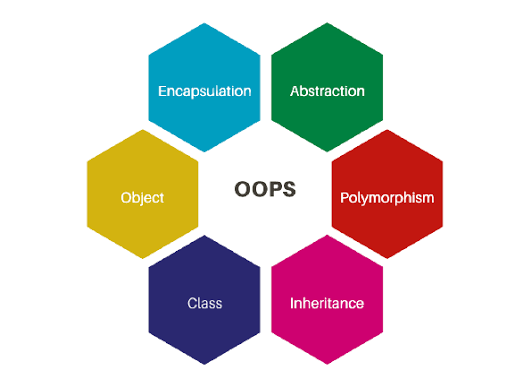
The OOPs Concepts in Java – 4 Basic Concepts are:
- Encapsulation
- Inheritance
- Polymorphism
- Abstraction
Let’s understand each one in the simplest way possible.
1. Encapsulation in Java 🔒
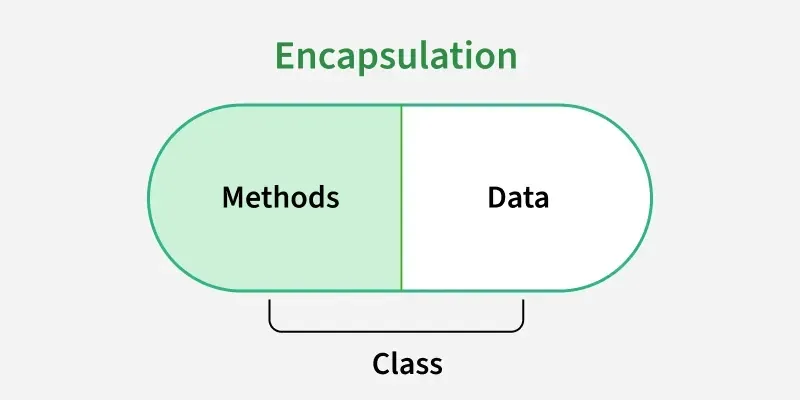
Encapsulation means wrapping data and methods into a single unit while protecting the data from direct access.
I like to think of a medicine capsule.
A capsule contains several ingredients inside, but we only see the outer shell.
That’s exactly how encapsulation works.
Real-Life Example
Think about your bank account.
You cannot directly change your account balance.
Instead, you use methods like:
- Deposit Money
- Withdraw Money
- Check Balance
The bank protects your data.
Java follows the same idea.
Benefits of Encapsulation
- Protects data
- Prevents unauthorized access
- Makes programs secure
- Improves code organization
In Java, encapsulation is usually achieved by:
- Making variables private
- Accessing them using getter and setter methods
This is one of the most important OOPs Concepts in Java – 4 Basic Concepts because it improves both security and maintainability.
2. Inheritance in Java 👨👩👧
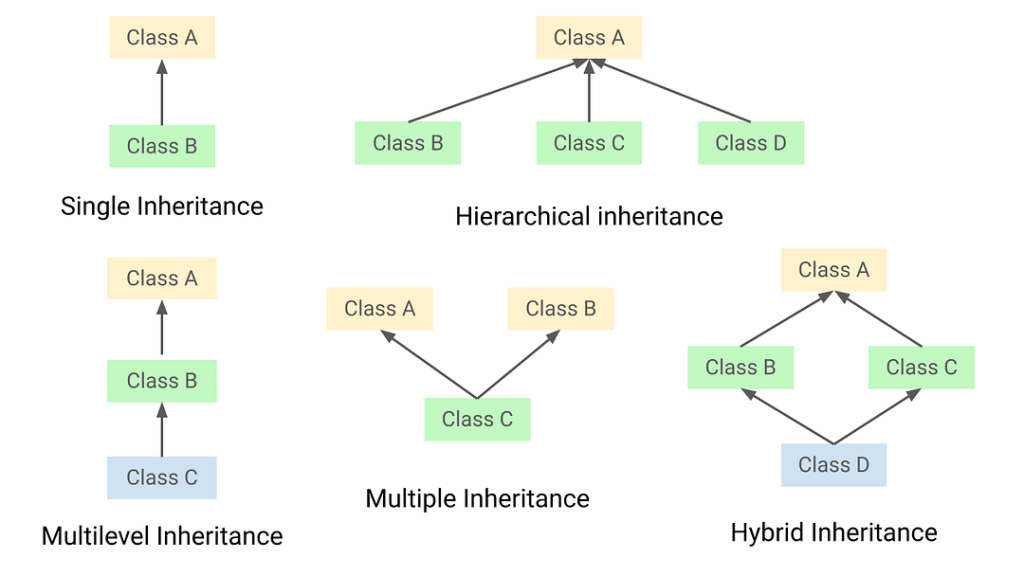
Inheritance means one class can inherit the properties and methods of another class.
Simply put…
A child inherits qualities from parents.
Programming works the same way.
Real-Life Example
Imagine a Vehicle.
A vehicle has:
- Engine
- Wheels
- Speed
Now consider:
- Car
- Bike
- Bus
All of them are vehicles.
Instead of writing the same code repeatedly, Java allows these classes to inherit common features from the Vehicle class.
That’s inheritance.
Advantages
- Reuse existing code
- Reduce duplication
- Save development time
- Make applications easier to maintain
Whenever I use inheritance, I don’t feel like I’m writing code from scratch. I feel like I’m building on something that’s already solid.
That’s one reason developers love this feature.
3. Polymorphism in Java 🎭
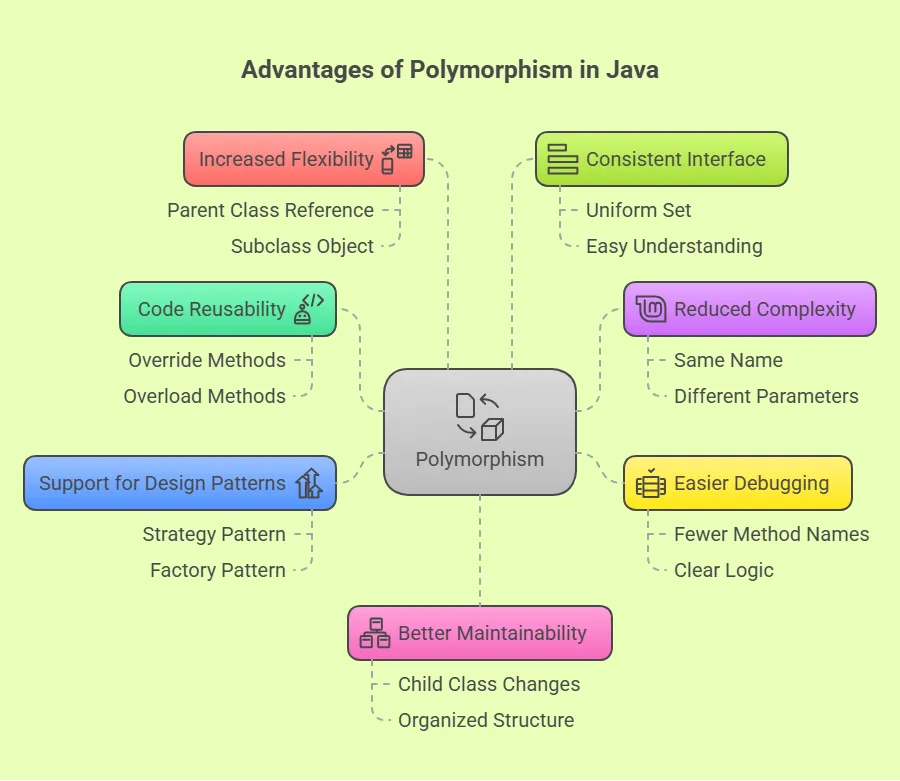
This was the hardest concept for me initially because the word sounded intimidating.
But the meaning is surprisingly simple.
Polymorphism means “one thing, many forms.”
The same action can behave differently depending on the situation.
Real-Life Example
Think about the word Run.
A human runs.
A dog runs.
A car runs.
The word is the same.
The behavior changes.
That’s polymorphism.
Another simple example is your TV remote.
The Power button performs the same action, but it works for different TV models.
Benefits
- Flexible programming
- Cleaner code
- Easier maintenance
- Better scalability
Polymorphism mainly appears in Java through:
- Method Overloading
- Method Overriding
Among the OOPs Concepts in Java – 4 Basic Concepts, this one gives Java much of its flexibility.
4. Abstraction in Java 🎨
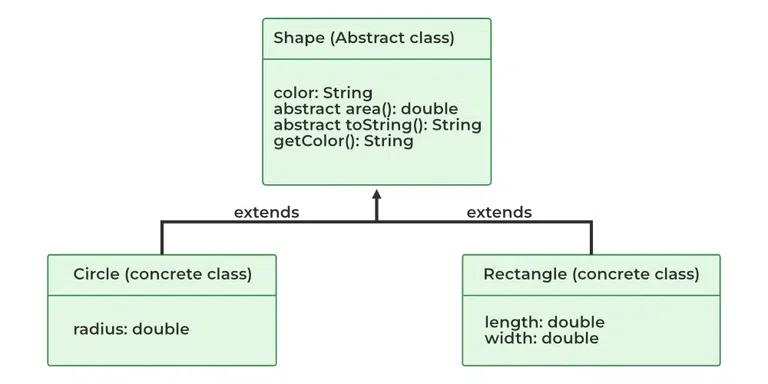
Abstraction means showing only the important details while hiding unnecessary implementation details.
This is probably the easiest concept once you think about everyday objects.
Real-Life Example
When I drive a car, I don’t need to know:
- How the engine burns fuel
- How the gearbox changes gears
- How thousands of mechanical parts work together
I simply:
- Start the car
- Press the accelerator
- Drive
The complicated work stays hidden.
That’s abstraction.
Another example is an ATM.
You insert your card and enter your PIN.
You withdraw cash.
You don’t see the complex banking system working behind the scenes.
Benefits
- Reduces complexity
- Makes software easier to use
- Improves readability
- Keeps code clean
Java mainly implements abstraction using:
- Abstract Classes
- Interfaces
Abstraction is another essential part of the OOPs Concepts in Java – 4 Basic Concepts because it helps developers focus on what an object does instead of how it does it.
Real-Life Example Combining All Four Concepts 🚗
Let’s take a Car.
Encapsulation
The engine’s internal details are hidden.
Inheritance
A Sports Car inherits features from a Car.
Polymorphism
Different cars start differently:
- Key Start
- Push Button
- Voice Command
Abstraction
You simply drive.
You don’t worry about how the engine operates internally.
Once I connected these four ideas to a car, understanding OOP became much easier.
Why Are OOPs Concepts Important?
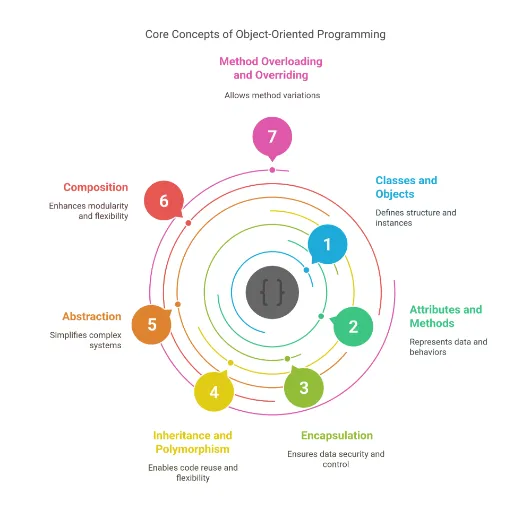
The OOPs Concepts in Java – 4 Basic Concepts are not just theory.
They’re used in almost every Java application.
Examples include:
- Banking software
- Hospital management systems
- E-commerce websites
- Mobile applications
- School management systems
- Online booking platforms
If you plan to become a Java developer, mastering these concepts is essential.
Tips to Learn OOP Faster 💡
When I was learning Java, I realized that reading definitions wasn’t enough. What helped me most was connecting each concept to something familiar.
Here are a few tips that made a difference:
- Think of real-life examples before looking at code.
- Practice by creating simple classes like Student, Car, or Employee.
- Draw diagrams to understand how classes and objects relate.
- Write small Java programs every day.
- Don’t just memorize—understand why each concept exists.
Learning OOP is much easier when you focus on understanding rather than memorization.
Final Thoughts
When I first encountered OOPs Concepts in Java – 4 Basic Concepts, they seemed confusing and full of technical jargon. Over time, I realized that these ideas mirror the way we interact with real-world objects every day.
To recap:
- 🔒 Encapsulation protects data.
- 👨👩👧 Inheritance helps us reuse code.
- 🎭 Polymorphism lets one action have many forms.
- 🎨 Abstraction hides unnecessary complexity.
Once you understand these four pillars, learning advanced Java topics becomes much smoother. Instead of memorizing definitions, relate each concept to something you already know. That’s the approach that worked for me, and it might work for you too.
Happy coding! ☕🚀
Frequently Asked Questions (FAQs)
What are the 4 basic OOPs concepts in Java?
The four basic OOPs Concepts in Java – 4 Basic Concepts are Encapsulation, Inheritance, Polymorphism, and Abstraction.
Why are OOPs concepts important in Java?
They help developers write clean, reusable, secure, and maintainable code, especially for large applications.
Is OOP mandatory for learning Java?
Yes. While you can write simple Java programs without using all OOP features, understanding OOP is essential for building real-world Java applications.
Which OOP concept is easiest to understand?
Many beginners find Encapsulation and Inheritance easier because they closely relate to everyday examples like bank accounts and family relationships.
Want to Learn More About Java ?, Kaashiv Infotech Offers, Full Stack Java Course, Java Course, Data Science Course, Internships & More, Visit Their Website www.kaashivinfotech.com.
![Full Stack Developer Roadmap [2026]](https://www.wikitechy.com/wp-content/uploads/2026/06/Full-Stack-Developer-Roadmap-2026-380x220.png)