
Animation is one of the most exciting creative careers for people who enjoy storytelling, design, technology, and visual creativity. From animated movies and video games to advertisements, educational videos, social media content, and product demonstrations, animation is used across many industries.
With modern animation software and online learning resources, you don’t necessarily need to start with an expensive degree to become an animator. What matters most is developing strong creative skills, understanding animation principles, practicing consistently, and building a portfolio that demonstrates what you can do.
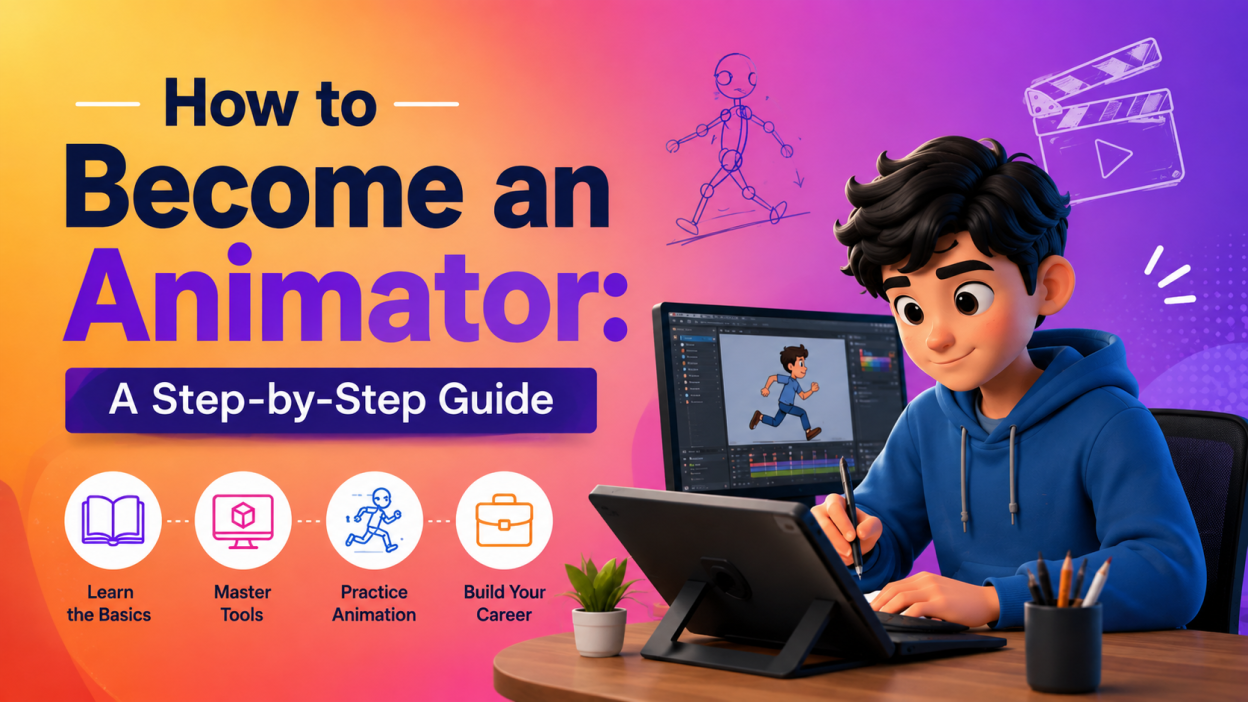
If you’re wondering how to become an animator, this step-by-step guide will explain the skills, education, software, career paths, and practical steps you can follow to start your animation career.
What Does an Animator Do?
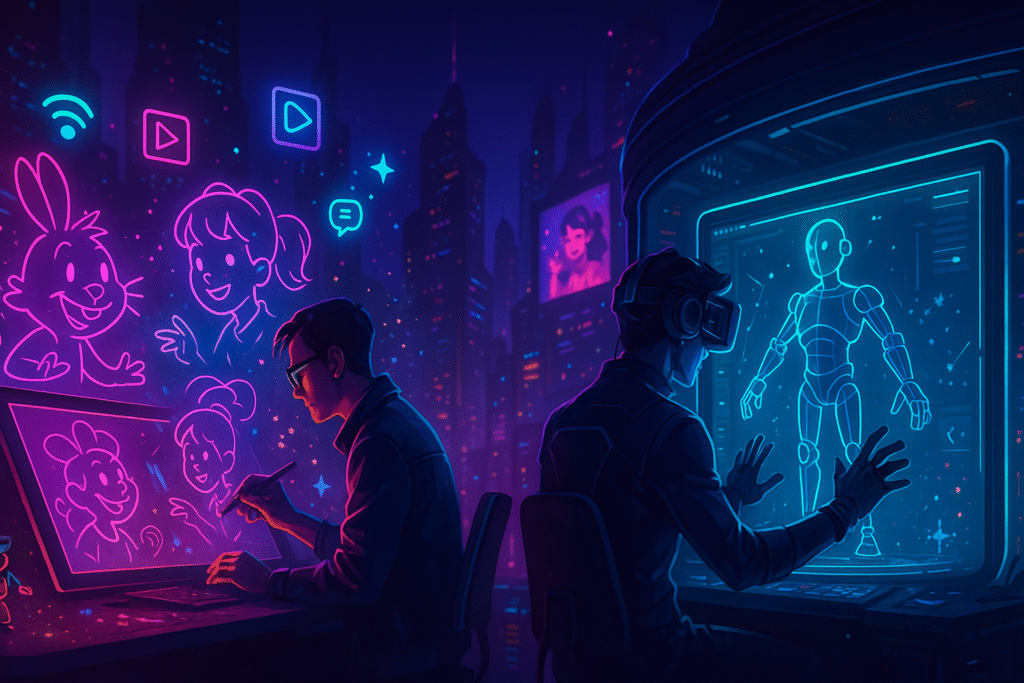
An animator creates the illusion of movement by designing a sequence of images, illustrations, characters, or 3D models. Animators can work on everything from individual character movements to complete animated scenes.
Depending on their specialization, animators may create:
- Characters and environments
- 2D animations
- 3D models and animations
- Motion graphics
- Visual effects
- Game animations
- Explainer videos
- Animated advertisements
- Film and television content
Animators often work closely with designers, illustrators, writers, directors, game developers, and visual-effects artists to bring creative ideas to life.
Step 1: Understand the Different Types of Animation
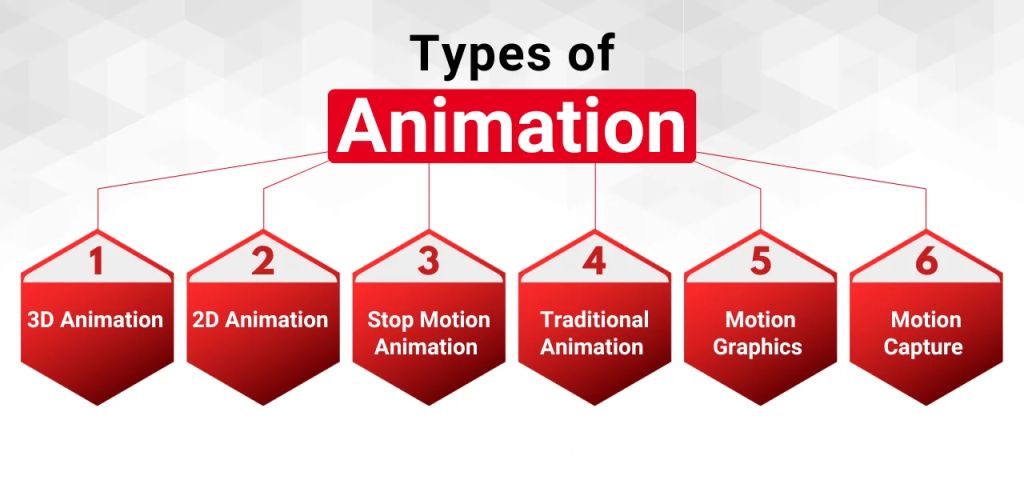
Before learning animation, it is important to understand the major types of animation. Choosing an area that matches your interests can make your learning journey easier.
1. 2D Animation
2D animation involves creating movement in a two-dimensional environment. Characters, backgrounds, and objects are generally designed using height and width.
It is widely used in cartoons, advertisements, educational content, social media videos, and web animations.
2. 3D Animation
3D animation creates characters, objects, and environments in a three-dimensional space. It is commonly used in movies, games, advertisements, architecture, and simulations.
3D animation typically involves modeling, texturing, rigging, lighting, and rendering.
3. Motion Graphics
Motion graphics combines graphic design with animation. It is commonly used for logos, advertisements, presentations, title sequences, social media content, and explainer videos.
4. Stop-Motion Animation
Stop-motion involves physically moving objects or characters and photographing them frame by frame. When the images are played continuously, they create the appearance of movement.
5. Character Animation
Character animators specialize in making characters move and express emotions naturally. They work on body movements, facial expressions, gestures, and acting.
Step 2: Develop Your Drawing and Design Skills
You don’t have to be an excellent artist to become an animator, but understanding basic drawing and design concepts can be extremely useful.
Start by practicing:
- Basic shapes
- Human anatomy
- Facial expressions
- Body poses
- Perspective
- Lighting and shadows
- Composition
- Color theory
- Character design
Practice drawing regularly rather than trying to create perfect artwork immediately.
Even simple exercises such as drawing different poses or expressions can help you understand movement and proportions.
Step 3: Learn the Principles of Animation
Learning animation software is important, but understanding animation principles is even more important.
The classic 12 principles of animation are a great foundation:
- Squash and stretch
- Anticipation
- Staging
- Straight-ahead action and pose-to-pose
- Follow-through and overlapping action
- Slow in and slow out
- Arcs
- Secondary action
- Timing
- Exaggeration
- Solid drawing
- Appeal
These principles help animations feel natural, believable, and visually interesting.
For example, squash and stretch can make a bouncing ball feel more energetic, while anticipation prepares viewers for an upcoming movement.
Step 4: Choose the Right Animation Software
Once you understand the fundamentals, start learning professional animation tools.
For 2D animation, you can explore software such as Adobe Animate, Toon Boom Harmony, and other digital drawing and animation applications.
For 3D animation, popular tools include Blender, Autodesk Maya, and Cinema 4D.
For motion graphics, Adobe After Effects is widely used.
Don’t try to master every application at once. Choose one tool based on your career goal and become comfortable with it first.
For example, someone interested in 3D animation could begin with Blender because it provides modeling, rigging, animation, lighting, and rendering capabilities in one application.
Step 5: Learn the Complete Animation Workflow
Understanding the animation workflow will help you work on professional projects.
A typical workflow can include:
Idea → Script → Storyboard → Design → Modeling/Illustration → Rigging → Animation → Lighting → Rendering → Editing → Final Output
The exact process depends on the type of animation.
For example, a 3D character animation project may involve creating a character model, applying textures, creating a skeleton or rig, adding movements, setting up lighting, rendering the scene, and editing the final footage.
Understanding this pipeline can also help you decide which specialization you want to pursue.
Step 6: Start With Small Animation Projects

One of the best ways to learn animation is by creating projects.
Don’t begin by trying to create a 90-minute animated movie. Start with small exercises.
You could create:
- A bouncing ball animation
- A walking character
- A simple logo animation
- A short product animation
- A facial-expression animation
- A 10-second motion graphic
- A simple 3D environment
- A short animated story
Small projects allow you to practice specific skills without becoming overwhelmed.
As your skills improve, gradually increase the complexity of your projects.
Step 7: Learn Storytelling and Acting
Animation isn’t only about moving objects. Good animation communicates ideas, emotions, and stories.
A character’s body language, facial expression, timing, and movement can communicate emotions without dialogue.
Study how people move in real life. Observe walking, running, sitting, jumping, talking, and reacting to different situations.
You can also record yourself performing simple actions and use the footage as a reference.
This can help you understand timing, weight, balance, and body mechanics.
Step 8: Build a Strong Animation Portfolio
Your portfolio is one of the most important things when looking for animation opportunities.
Employers and clients usually want to see what you can actually create.
Your portfolio could include:
- Character animations
- 2D artwork
- 3D models
- Motion graphics
- Short films
- Game animations
- Visual effects
- Logo animations
Quality is more important than quantity.
Instead of uploading 30 unfinished projects, showcase a smaller collection of your strongest work.
Create a short demo reel that highlights your best animation work. Keep the strongest projects near the beginning because viewers may not watch the entire reel.
Step 9: Get Real-World Experience
After developing your skills, look for opportunities to work on real projects.
You can gain experience through:
- Internships
- Freelance projects
- College projects
- YouTube content
- Small business projects
- Animation competitions
- Game development projects
- Open-source creative projects
Working on real projects teaches you things that tutorials cannot always teach, such as meeting deadlines, communicating with clients, accepting feedback, and managing revisions.
Step 10: Choose an Animation Career Path
Animation offers several career options. You don’t necessarily have to become a general animator.
You could specialize in a particular role.
Character Animator
Character animators focus on movement, expressions, acting, and personality.
3D Animator
3D animators create movement for characters, objects, and environments using 3D software.
Motion Graphics Designer
Motion graphics designers create animated graphics for advertisements, presentations, social media, websites, and videos.
VFX Artist
VFX artists create or manipulate visual effects for films, television, advertisements, and games.
Game Animator
Game animators create character movements, environmental animations, combat animations, and interactive visual effects.
Storyboard Artist
Storyboard artists turn scripts and ideas into visual sequences that help directors plan scenes.
Animation Director
Animation directors supervise animation teams and help ensure that the final project matches the creative vision.
Step 11: Improve Your Skills Continuously
Animation technology continues to evolve. New software, rendering techniques, AI tools, game engines, and production workflows are constantly changing.
Therefore, learning shouldn’t stop after you get your first job.
Continue improving your knowledge of:
- Animation principles
- 3D modeling
- Rigging
- Texturing
- Lighting
- Rendering
- Video editing
- Visual effects
- Storytelling
- Game engines
- AI-assisted creative tools
At the same time, don’t rely entirely on new technology. Strong fundamentals remain valuable regardless of which software is popular.
Step 12: Network With Other Creative Professionals
Networking can help you discover opportunities that may not be publicly advertised.
Connect with:
- Animators
- Designers
- Game developers
- Filmmakers
- VFX artists
- Creative directors
- Content creators
Participate in online communities, attend workshops, join animation events, and share your work on professional platforms.
When you consistently share high-quality work, people can discover your skills and potentially contact you for projects.
Do You Need a Degree to Become an Animator?
A degree in animation, graphic design, visual communication, multimedia, or a related field can provide structured education and access to mentors and facilities.
However, a degree isn’t the only path.
Many aspiring animators learn through:
- Online courses
- Tutorials
- Self-study
- Workshops
- Personal projects
- Internships
- Freelancing
For many creative roles, a strong portfolio can be extremely important because it demonstrates your practical abilities.
If you choose formal education, focus not only on completing the course but also on building a portfolio throughout your studies.
Skills Required to Become an Animator
A successful animator generally needs a combination of creative and technical skills.
Creative Skills
You should develop:
- Creativity
- Storytelling
- Visual design
- Observation
- Drawing
- Character development
- Understanding of movement
Technical Skills
You may need to learn:
- 2D or 3D animation software
- Modeling
- Rigging
- Texturing
- Lighting
- Rendering
- Video editing
- Compositing
Soft Skills
Don’t overlook communication and teamwork.
Animators often receive feedback and work as part of a larger production team. Time management, patience, communication, and the ability to accept constructive criticism can significantly improve your professional growth.
How Long Does It Take to Become an Animator?
The timeline depends on your goals and the amount of time you dedicate to practice.
Someone learning animation as a hobby may take several months to understand the basics. Becoming job-ready can take significantly longer because professional animation requires a combination of technical knowledge, artistic ability, and project experience.
A consistent practice routine is more valuable than simply counting the number of months you’ve been learning.
For example, you could spend your first few months learning fundamentals, then create increasingly complex projects and build a portfolio over time.
Common Mistakes Beginners Should Avoid
Many beginners make the mistake of focusing too much on software and not enough on animation fundamentals.
Avoid these common mistakes:
Learning too many tools at once: Master one primary tool before moving to another.
Skipping fundamentals: Software skills alone won’t automatically make your animation good.
Not practicing regularly: Consistency is essential for developing animation skills.
Copying tutorials without creating original work: Tutorials are useful for learning techniques, but personal projects demonstrate your creativity.
Creating a weak portfolio: Showcase your strongest work instead of everything you’ve created.
Ignoring feedback: Constructive criticism can reveal weaknesses you may not notice yourself.
Final Thoughts
Becoming an animator is a combination of creativity, technical knowledge, practice, and patience. You don’t need to master everything on day one.
Start by understanding the fundamentals of animation, choose a specialization, learn the appropriate software, and create small projects. As your skills improve, work on more complex animations and build a professional portfolio.
Whether you want to work in movies, games, advertising, education, social media, or freelance animation, there are many opportunities to turn animation skills into a career.
The most important step is simply to start creating. Watch, practice, experiment, learn from your mistakes, and keep improving. Over time, your collection of projects can become the portfolio that opens the door to your animation career.
Want to learn more, Kaashiv Infotech Offers, UI UX Course, Front End Development Course, Full Stack Development Course & More, Visit Their Website www.kaashivinfotech.com.