
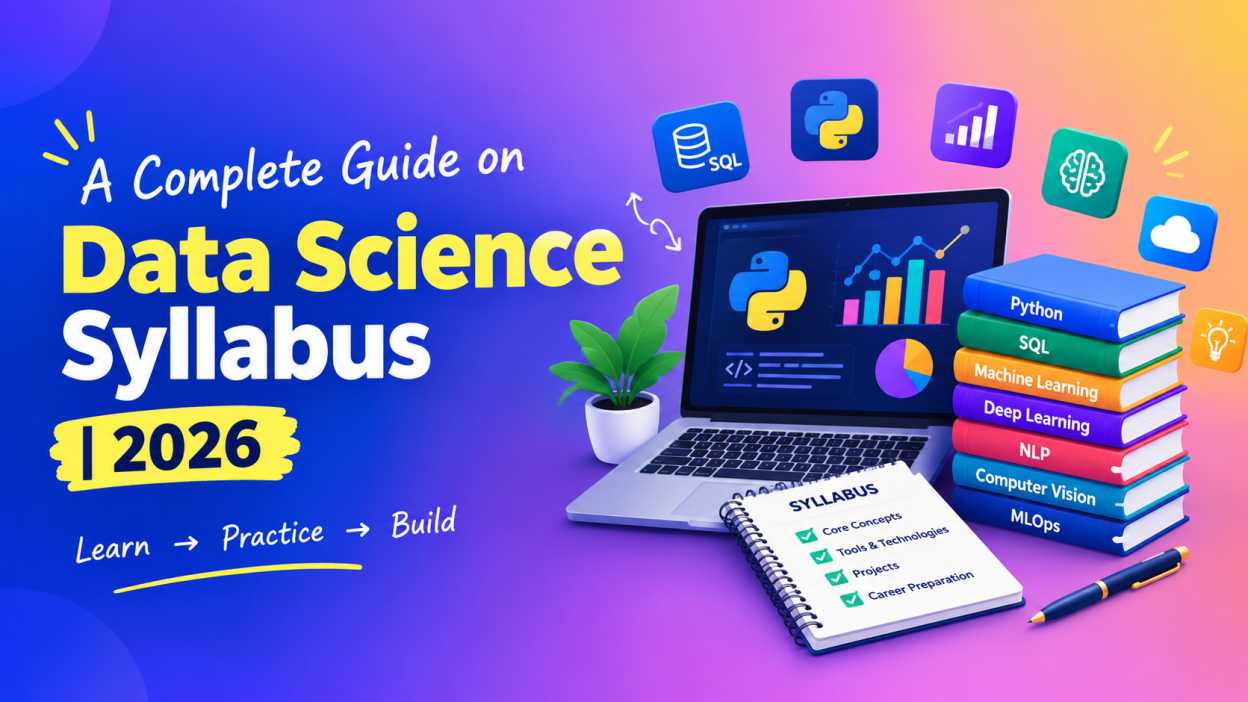
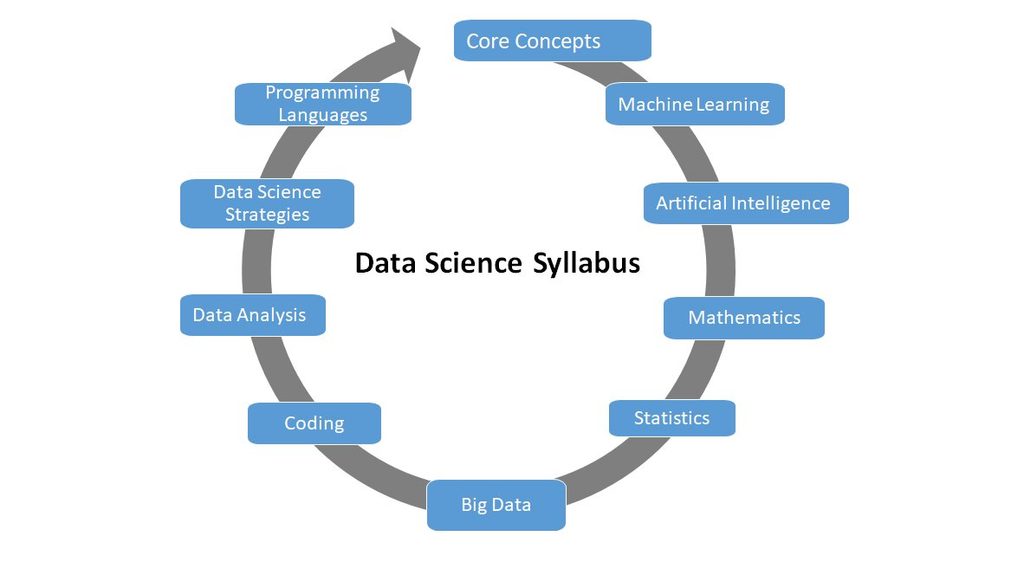
Data Science Syllabus is the roadmap I would recommend to anyone who wants to enter the world of data, analytics, machine learning, and AI in 2026. Data Science Syllabus usually covers statistics, Python, SQL, data analysis, visualization, machine learning, and practical projects.
If you’re wondering, “What exactly should I learn to become a data scientist?” — this guide gives you the complete picture.
I’ve arranged the Data Science Syllabus 2026 in the order I’d personally learn it, starting with the basics and gradually moving toward advanced topics. You don’t need to become an expert in mathematics before you begin. Start small, practice regularly, and let the concepts build on each other. 😊
🔑 Key Highlights of the Data Science Syllabus 2026
Here are the main areas I would focus on:
- 🐍 Python Programming
- 🗄️ SQL and Database Management
- 📊 Statistics and Probability
- 🧮 Mathematics for Data Science
- 🧹 Data Cleaning and Preprocessing
- 📈 Data Analysis
- 📊 Data Visualization
- 🤖 Machine Learning
- 🧠 Deep Learning
- 💬 Natural Language Processing
- 👁️ Computer Vision
- ☁️ Big Data and Cloud Technologies
- 🚀 Model Deployment and MLOps
- 💼 Real-world Data Science Projects
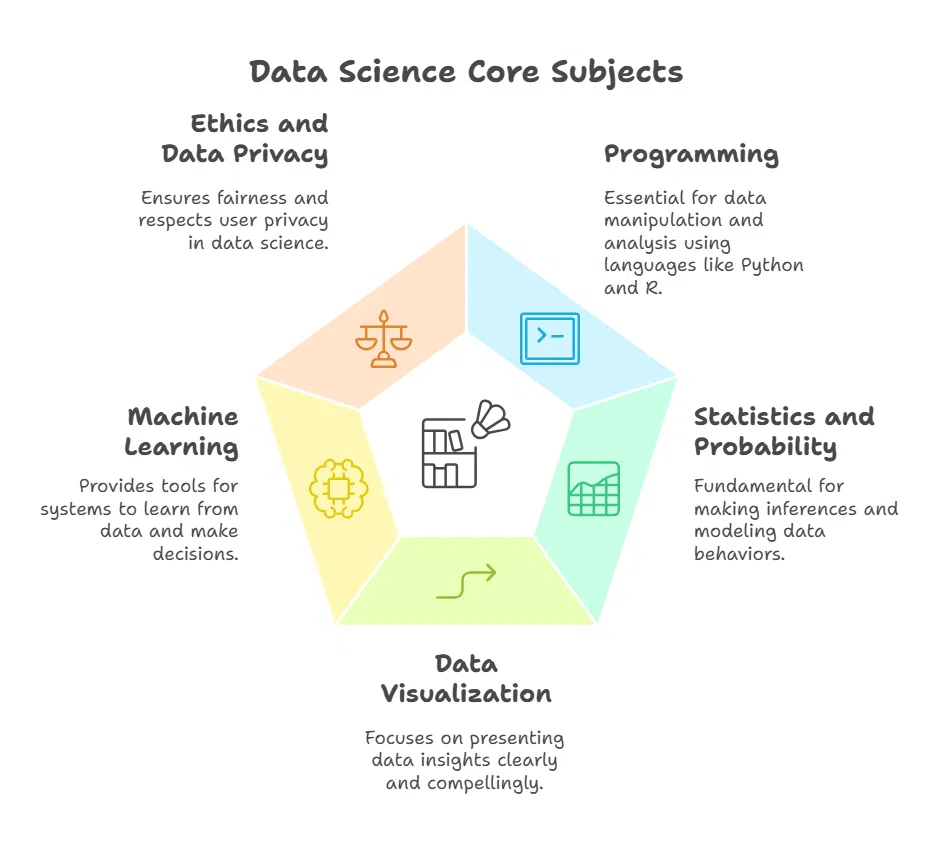
What Is Data Science?
Before jumping into the Data Science Syllabus, let’s understand what data science actually means.
In simple terms, data science is the process of using data to understand problems, discover patterns, make predictions, and support better decisions.
Think about an online shopping website.
You search for a pair of shoes. You look at a few products, add one to your cart, and maybe leave without buying it.
Behind the scenes, the company can study millions of similar customer activities.
Which products are people viewing?
Which products are frequently purchased together?
Which customers are likely to buy?
That’s where data science becomes useful.
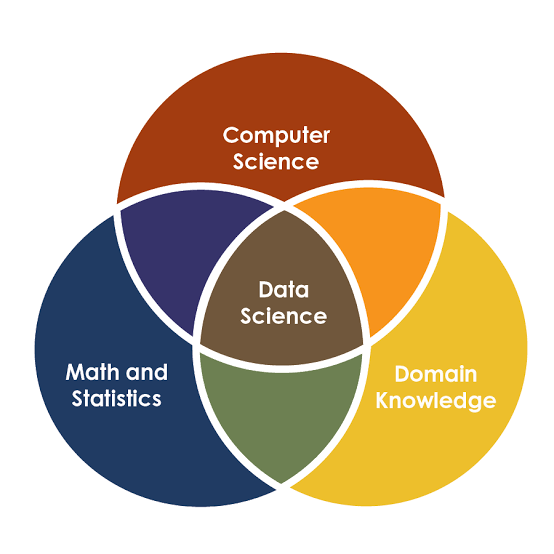
Data scientists combine programming, statistics, mathematics, business understanding, and machine learning to answer these kinds of questions.
Complete Data Science Syllabus 2026
Now let’s get into the actual syllabus.
I recommend learning these topics step by step rather than trying to study everything at once.
1. Data Science Fundamentals
The first section of the Data Science Syllabus 2026 should introduce you to the basic concepts.
You should understand:
- What is Data Science?
- What is Big Data?
- What is Artificial Intelligence?
- What is Machine Learning?
- Difference between AI, ML, and Data Science
- Data Scientist vs Data Analyst
- Data Engineer vs Data Scientist
- Types of data
- Structured and unstructured data
- Data Science lifecycle
- Data collection
- Data processing
- Data analysis
- Data visualization
- Model building
- Model evaluation
One thing I learned while exploring this field is that Data Science isn’t just machine learning.
That’s a common misunderstanding.
Machine learning is one part of the larger data science workflow.
2. Python Programming for Data Science
If you’re following a modern Data Science Syllabus, Python is difficult to avoid.
The good news?
You don’t need to learn every single Python feature before starting data science.
I would concentrate on the Python concepts that are actually useful for working with data.
Python Basics
Learn:
- Variables
- Data types
- Operators
- Strings
- Lists
- Tuples
- Sets
- Dictionaries
- Conditional statements
if,elif,elseforloopswhileloops- Functions
- Lambda functions
- Exception handling
- File handling
- Modules and packages
- Object-oriented programming basics
Important Python Libraries
After learning Python basics, move into the libraries used in data science.
NumPy is useful for numerical operations and arrays.
Pandas is one of the most important libraries for data manipulation and analysis.
You should learn:
- NumPy arrays
- Array operations
- Indexing and slicing
- Pandas Series
- Pandas DataFrame
- Reading CSV files
- Reading Excel files
- Filtering data
- Sorting data
- Grouping data
- Merging datasets
- Handling missing values
- Removing duplicates
- Data transformation
I personally recommend spending extra time with Pandas. You will use it again and again.
3. SQL for Data Science
Here’s something beginners sometimes overlook.
You can learn machine learning models, but if you don’t know how to retrieve and understand data, you’re going to struggle in real projects.
That’s why SQL is an important part of the Data Science Syllabus.
You should learn:
- What is SQL?
- Databases
- Tables
- Rows and columns
- Primary keys
- Foreign keys
SELECTWHEREORDER BYGROUP BYHAVING- Aggregate functions
COUNT()SUM()AVG()MIN()MAX()- Joins
- Subqueries
- CTEs
- Views
- Window functions
- CASE statements
Example
Suppose I have a customer table containing:
| Customer | City | Purchase |
|---|---|---|
| Arun | Chennai | ₹2,000 |
| Priya | Bangalore | ₹3,500 |
| Rahul | Chennai | ₹1,500 |
I could use SQL to answer:
“How much did customers from Chennai spend?”
That’s the kind of simple question that becomes extremely useful when the dataset grows from three customers to three million.
4. Statistics and Probability
This is probably the section that makes many beginners nervous.
Don’t panic. 😄
You don’t need to become a mathematician.
You need to understand how statistics helps you interpret data and make decisions.
The Data Science Syllabus 2026 should include:
Descriptive Statistics
- Mean
- Median
- Mode
- Range
- Variance
- Standard deviation
- Percentiles
- Quartiles
- Interquartile range
Probability
- Basic probability
- Conditional probability
- Independent events
- Dependent events
- Bayes’ theorem
- Probability distributions
Important Distributions
- Normal distribution
- Binomial distribution
- Poisson distribution
- Uniform distribution
Statistical Concepts
- Population
- Sample
- Sampling
- Hypothesis testing
- Null hypothesis
- Alternative hypothesis
- P-value
- Confidence intervals
- Correlation
- Covariance
- Regression
This knowledge becomes particularly important when you’re trying to determine whether a pattern in your dataset is meaningful or simply happened by chance.
5. Mathematics for Data Science
The mathematics section of the Data Science Syllabus generally focuses on three major areas.
Linear Algebra
Learn:
- Scalars
- Vectors
- Matrices
- Matrix operations
- Matrix multiplication
- Transpose
- Determinants
- Eigenvalues
- Eigenvectors
Calculus
You should understand:
- Functions
- Limits
- Derivatives
- Partial derivatives
- Gradients
- Gradient descent
Optimization
Learn:
- Cost functions
- Loss functions
- Gradient descent
- Learning rate
- Local and global minima
You don’t necessarily need advanced mathematical proofs. Focus on understanding why the mathematics is used.
6. Data Cleaning and Data Preprocessing
This is one of my favorite sections because this is where the dataset starts becoming useful.
Real-world data is rarely clean.
You might receive a dataset containing:
- Missing values
- Duplicate records
- Incorrect formats
- Spelling mistakes
- Outliers
- Invalid values
- Different date formats
- Inconsistent categories
For example:
Chennai
chennai
CHENNAI
Chennai
Technically, these may be treated as different strings.
A data scientist needs to identify and clean these inconsistencies.
Important topics include:
- Handling missing data
- Removing duplicates
- Outlier detection
- Data transformation
- Encoding categorical variables
- Feature scaling
- Normalization
- Standardization
- Feature engineering
7. Exploratory Data Analysis
Once your data is reasonably clean, it’s time to explore it.
This is called Exploratory Data Analysis (EDA).
In EDA, I would ask questions like:
- What does the dataset contain?
- Which columns are important?
- Are there missing values?
- What patterns exist?
- Are there unusual values?
- Which variables are related?
- What trends can I find?
EDA Topics
- Univariate analysis
- Bivariate analysis
- Multivariate analysis
- Distribution analysis
- Correlation analysis
- Outlier analysis
- Feature relationships
EDA is often where interesting discoveries begin.
8. Data Visualization
Numbers can tell us a story, but charts often tell that story faster.
The Data Science Syllabus 2026 should therefore include data visualization tools.
Matplotlib
Learn:
- Line charts
- Bar charts
- Histograms
- Scatter plots
- Pie charts
- Box plots
Seaborn
Learn:
- Statistical plots
- Heatmaps
- Distribution plots
- Pair plots
- Categorical plots
You can also explore tools such as Power BI and Tableau if you’re interested in analytics and business intelligence.
9. Machine Learning
Now we reach the part many beginners are waiting for. 🤖
Machine Learning is a major component of the Data Science Syllabus.
Machine learning allows computers to learn patterns from data and use those patterns to make predictions or decisions.
The syllabus generally includes three major categories.
Supervised Learning
You train a model using labelled data.
Important algorithms include:
- Linear Regression
- Logistic Regression
- Decision Trees
- Random Forest
- K-Nearest Neighbors
- Support Vector Machines
- Naive Bayes
- Gradient Boosting
- XGBoost
Unsupervised Learning
Here, the data doesn’t have predefined labels.
Important topics:
- K-Means Clustering
- Hierarchical Clustering
- DBSCAN
- Principal Component Analysis (PCA)
Model Evaluation
You also need to learn how to determine whether your model is actually performing well.
Topics include:
- Train-test split
- Cross-validation
- Confusion matrix
- Accuracy
- Precision
- Recall
- F1-score
- ROC-AUC
- Mean Absolute Error
- Mean Squared Error
- Root Mean Squared Error
And please don’t make the mistake of thinking “higher accuracy always means a better model.”
It doesn’t.
The right metric depends on the problem.
10. Deep Learning
Once you are comfortable with machine learning, you can move into Deep Learning.
The Deep Learning syllabus commonly includes:
- Neural networks
- Perceptron
- Activation functions
- Forward propagation
- Backpropagation
- Loss functions
- Optimizers
- Epochs
- Batch size
- Overfitting
- Dropout
You may also learn:
- CNN
- RNN
- LSTM
- Transformers
Popular frameworks include TensorFlow and PyTorch.
11. Natural Language Processing
If you’ve ever wondered how computers understand text, you’re entering the world of Natural Language Processing (NLP).
The Data Science Syllabus can include:
- Text preprocessing
- Tokenization
- Stop words
- Stemming
- Lemmatization
- Bag of Words
- TF-IDF
- Word embeddings
- Sentiment analysis
- Text classification
- Named Entity Recognition
- Transformers
- Large Language Models
A simple example is a company analyzing customer reviews.
If thousands of customers write reviews every day, NLP can help classify them as positive, negative, or neutral.
12. Computer Vision
Computer Vision focuses on helping machines understand images and videos.
You can learn:
- Image processing
- Image classification
- Object detection
- Image segmentation
- CNNs
- Transfer learning
- OpenCV
Think about applications such as:
Face detection → Medical image analysis → Self-driving systems → Quality inspection
That’s computer vision in action.
13. Big Data
When datasets become too large for traditional tools, we enter the world of Big Data.
Topics may include:
- Big Data concepts
- Hadoop
- HDFS
- MapReduce
- Apache Spark
- Spark SQL
- Distributed computing
- Data pipelines
You don’t necessarily need to master every Big Data technology as a beginner.
Learn the fundamentals first.
14. Cloud Computing for Data Science
Modern data science increasingly involves cloud platforms.
You can explore:
- AWS
- Microsoft Azure
- Google Cloud
- Cloud storage
- Cloud databases
- Cloud-based machine learning
- Data processing services
Cloud skills can become especially useful when you move from small personal projects to production-level systems.
15. MLOps and Model Deployment
This is where the Data Science Syllabus 2026 becomes more practical.
Building a model is one thing.
Actually putting that model into an application is another.
You can learn:
- Model deployment
- APIs
- Flask
- FastAPI
- Docker
- Git
- GitHub
- CI/CD basics
- Model monitoring
- Model versioning
- MLOps fundamentals
For example, imagine I build a model that predicts whether a customer is likely to leave a subscription service.
That’s useful.
But if the company can’t actually use that prediction inside its application, the model is sitting on my laptop doing nothing.
Deployment closes that gap.
16. Generative AI in Data Science
In 2026, I would also keep Generative AI somewhere on the learning roadmap.
You can explore:
- Generative AI basics
- Large Language Models
- Prompt engineering
- Embeddings
- Vector databases
- Retrieval-Augmented Generation (RAG)
- AI agents
- LLM APIs
- Generative AI applications
However, I wouldn’t recommend starting here.
Learn Python → SQL → Statistics → Data Analysis → Machine Learning first.
Then move toward Generative AI.
That foundation makes the newer concepts much easier to understand.
17. Data Science Projects
Here’s the part I would never skip.
You can watch 100 tutorials and still feel lost when someone gives you a blank dataset.
Projects fix that.
Try building projects such as:
Beginner Projects
- Student performance analysis
- Sales data analysis
- Netflix data analysis
- Supermarket sales analysis
- COVID-19 data visualization
Intermediate Projects
- House price prediction
- Customer churn prediction
- Credit risk prediction
- Customer segmentation
- Fraud detection
Advanced Projects
- Recommendation system
- Sentiment analysis
- Image classification
- Demand forecasting
- NLP chatbot
- End-to-end machine learning application
For every project, try to document:
- Problem statement
- Dataset
- Data cleaning
- EDA
- Feature engineering
- Model selection
- Model training
- Evaluation
- Results
- Deployment
That’s much more valuable than simply writing “Machine Learning project” on a resume.
Data Science Tools You Should Know
Here’s a practical list of tools that frequently appear in a modern Data Science Syllabus:
| Area | Tools |
|---|---|
| Programming | Python |
| Database | SQL |
| Data Analysis | Pandas, NumPy |
| Visualization | Matplotlib, Seaborn |
| Machine Learning | Scikit-learn |
| Deep Learning | TensorFlow, PyTorch |
| NLP | NLTK, spaCy, Transformers |
| Version Control | Git, GitHub |
| Deployment | Flask, FastAPI |
| Containers | Docker |
| Big Data | Spark |
| BI | Power BI, Tableau |
| Cloud | AWS, Azure, Google Cloud |
Data Science Syllabus: Beginner to Advanced Roadmap
If the complete syllabus looks overwhelming, don’t try to learn everything simultaneously.
I’d follow this order:
Step 1: Python basics
↓
Step 2: NumPy + Pandas
↓
Step 3: SQL
↓
Step 4: Statistics + Probability
↓
Step 5: Data Cleaning
↓
Step 6: EDA
↓
Step 7: Data Visualization
↓
Step 8: Machine Learning
↓
Step 9: Advanced Machine Learning
↓
Step 10: Deep Learning
↓
Step 11: NLP / Computer Vision
↓
Step 12: Generative AI
↓
Step 13: Deployment + MLOps
↓
Step 14: Real-world projects
This order keeps the learning curve manageable.
How Long Does It Take to Learn Data Science?
There isn’t one magic number.
Your timeline depends on your previous experience and how many hours you can study each day.
As a rough learning plan:
- 1–2 months: Python + SQL basics
- 2–3 months: Statistics + Pandas + NumPy + EDA
- 3–5 months: Machine Learning
- 5–7 months: Advanced ML + projects
- 7–10+ months: Deep Learning, NLP, deployment, and advanced topics
You don’t have to wait until you “finish” the entire Data Science Syllabus before building projects.
Actually, I recommend the opposite.
Learn → Practice → Build → Make mistakes → Fix → Repeat.
That’s how the concepts stick.
Skills You Need Beyond the Data Science Syllabus
Technical knowledge matters, but I wouldn’t stop there.
A good data scientist also needs:
- Problem-solving skills
- Communication
- Critical thinking
- Business understanding
- Curiosity
- Presentation skills
- Ability to explain technical results simply
Imagine finding an interesting pattern in a dataset.
If you can explain it only using complicated technical terms, your work may not have much impact.
But if you can tell the marketing manager: “Customers who buy X are much more likely to buy Y, so we could test recommending Y immediately after they purchase X.”
Now you’ve connected data with a business decision.
That’s the real skill.
Final Thoughts on the Data Science Syllabus 2026
The Data Science Syllabus 2026 may look huge at first. Python, SQL, statistics, mathematics, machine learning, deep learning, NLP, cloud, MLOps… yes, it’s a lot.
But here’s what I’d remind myself if I were starting today:
You don’t have to learn everything in one week.
Start with Python.
Then learn SQL.
Work with real datasets.
Make ugly charts.
Build a model that gives terrible predictions.
Fix it.
Build another project.
Slowly, the pieces start connecting.
And that’s when data science becomes much less intimidating.
If you’re a complete beginner, my biggest advice is simple: don’t chase every new AI tool you see online. Build a strong foundation first. The tools will keep changing. The fundamentals will stay useful.
📌 Frequently Asked Questions
1. Is Python compulsory for Data Science?
Python is not theoretically compulsory, but it is one of the most widely used programming languages for data science. I strongly recommend learning it.
2. Is SQL included in the Data Science Syllabus?
Yes. SQL is an important skill for data scientists, particularly when working with databases and large datasets.
3. Is mathematics difficult in Data Science?
You need mathematics, but you don’t need to be a mathematics expert. Focus on understanding the concepts and how they support algorithms.
4. Can a beginner learn Data Science?
Absolutely. Start with Python, SQL, statistics, and data analysis, then gradually move into machine learning.
5. What should I learn first in Data Science?
I’d start with Python basics, followed by SQL and statistics, then move into Pandas, NumPy, data visualization, and machine learning.
6. Is Machine Learning the same as Data Science?
No. Machine Learning is a part of Data Science, while data science covers a wider process involving data collection, cleaning, analysis, visualization, modeling, and communication.
7. Are projects important for Data Science jobs?
Yes. Projects help demonstrate that you can actually apply what you’ve learned. Try to build projects that solve realistic problems rather than simply copying tutorials.
Want to learn more ??, Kaashiv Infotech Offers Data Analytics Course, Data Science Course, Cyber Security Course & More Visit Their Website www.kaashivinfotech.com.