
History of Blockchain
History of Blockchain
Stuart Haber and W. Scott Stornetta
- The blockchain technology was described in 1991 by the research scientist Stuart Haber and W. Scott Stornetta. They wanted to introduce a computationally practical solution for time-stamping digital documents in order that they might not be backdated or tampered.Their first work involved on cryptographically secured chain of blocks to store the time-stamped documents.

Stuart Haber

W Scott Stornetta
Read Also
- In 1992, Merkle Trees were incorporated into the design, which makes blockchain more efficient by enabling the collection of more documents on a single block. Merkle Trees are used to create a 'secured chain of blocks'. It stored a series of data records, and every data records connected to the one before it. The newest record during this chain contains the history of the whole chain. This technology become unused, and therefore the patent lapsed in 2004.
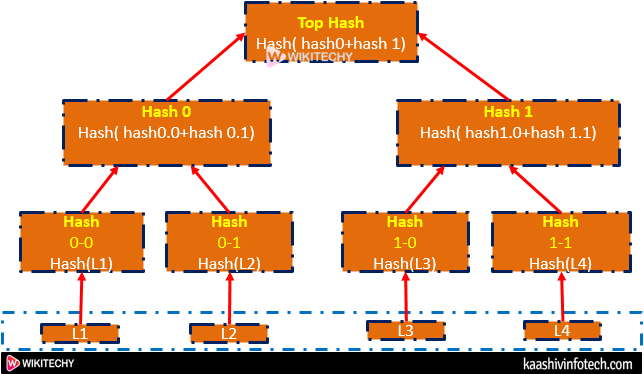
Merkle Trees
- In 2004, scientist and cryptographic activist Hal Finney introduced a system called Reusable Proof of Work (RPoW) as a prototype for digital cash. The RPoW system is non-exchangeable or a non-fungible Hashcash based proof of work token in return, created an RSA-signed token that further might be transferred from person to person.
- RPoW solved the double-spending problem by keeping the ownership of tokens registered on a trusted server. This is designed to permit users throughout the planet to verify its correctness and integrity in real-time.

Hal Finney
- In 2008, Satoshi Nakamoto conceptualized the idea of distributed blockchains. He improves the design during a unique idea to add blocks to the initial chain without requiring them to be signed by trusted parties. The modified trees would contain a secure history of data exchanges. It utilizes a peer-to-peer network for timestamping and verifying each exchange. It might be managed autonomously without requiring a central authority. These improvements are beneficial that creates blockchains because the backbone of cryptocurrencies. The design is the general public ledger for all transactions within the cryptocurrency space.
- Satoshi launches Bitcoin in January 2009 as an alternative to current financial system and centres of power
- The evolution of blockchains has been steady and promising. The words block and chain were used separately in Satoshi Nakamoto's original paper but were eventually popularized as one word, the Blockchain, by 2016. The file size of cryptocurrency blockchain containing records of all transactions occurred on the network has grown from 20 GB to 100 GB.

Satoshi Nakamoto