
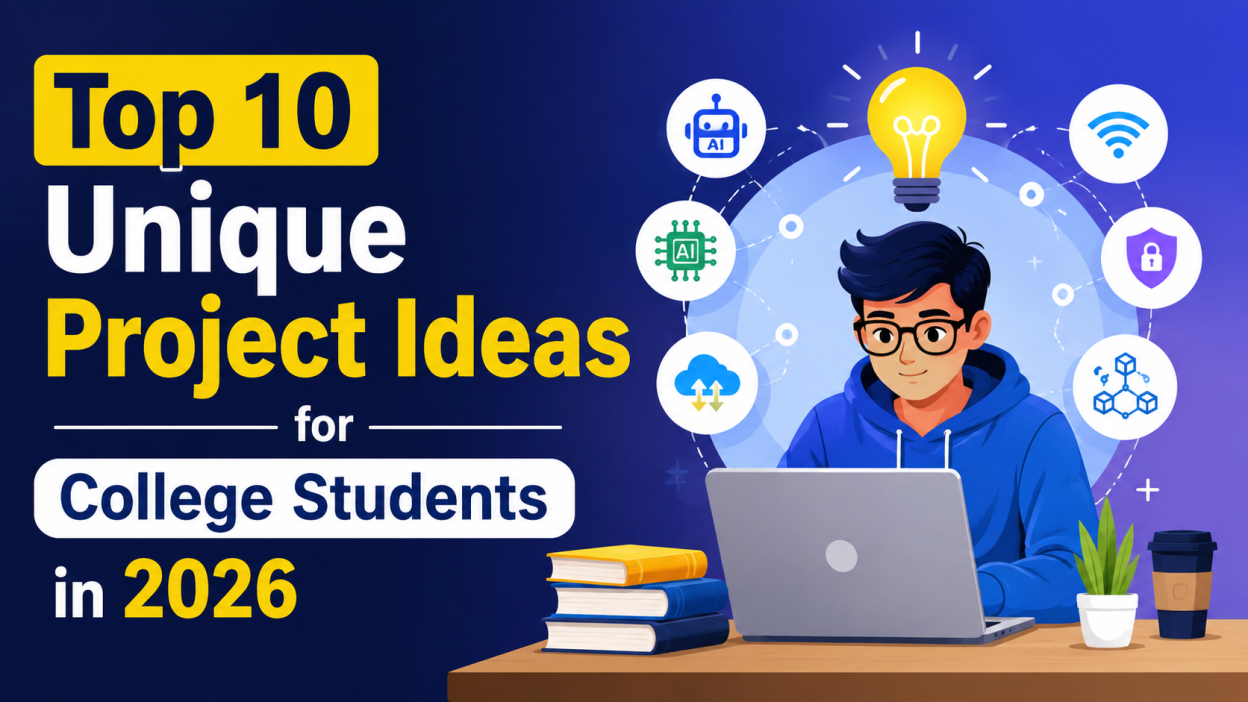
Choosing a college project is not just about getting marks. A good project can help you build practical skills, strengthen your resume, improve your GitHub profile, and explain real-world problem-solving during interviews.
In 2026, projects combining areas such as Artificial Intelligence, Generative AI, IoT, cybersecurity, blockchain, data analytics, and cloud computing are especially relevant.
Instead of building another basic calculator, library management system, or simple CRUD application, students can choose a project that solves a practical problem and demonstrates multiple technical skills.
Here are 10 unique project ideas for college students in 2026.
1. AI-Powered Resume Skill Gap Analyzer
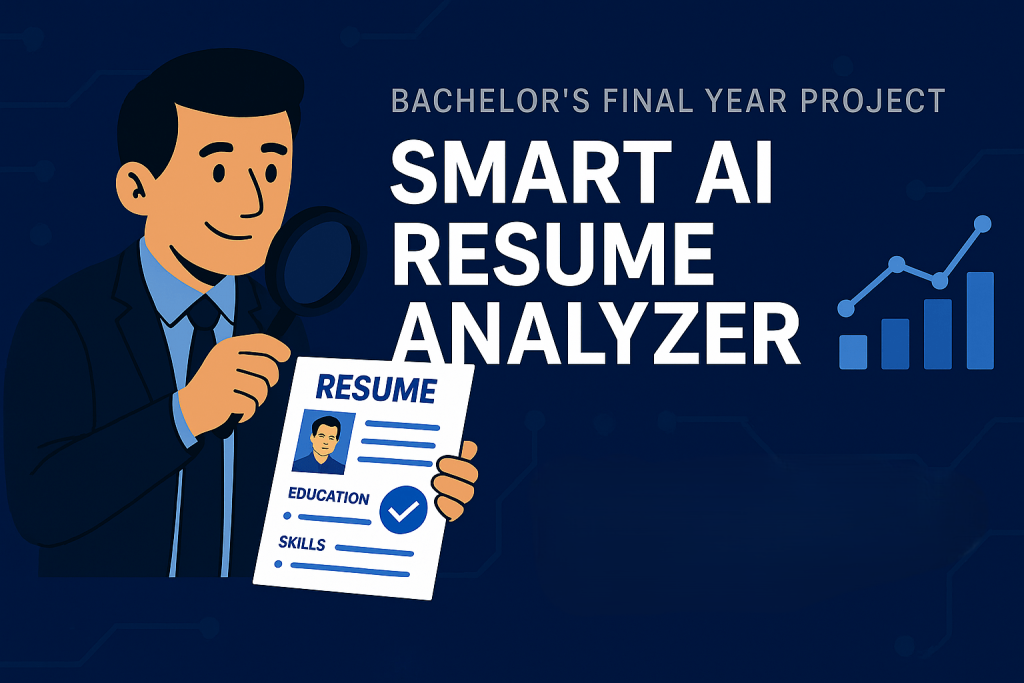
An AI Resume Skill Gap Analyzer helps students understand how well their resume matches a particular job description.
The user uploads a resume and enters or uploads a job description. The system analyzes both and identifies matching skills, missing skills, relevant keywords, and areas that could be improved.
Key Features
- Resume upload
- Job description analysis
- Skill extraction
- Missing skill identification
- Resume-job matching score
- Suggested skills to learn
- Keyword recommendations
Suggested Tech Stack
Python, NLP, FastAPI, React, PostgreSQL, and an LLM API
Why It Is Unique
Instead of simply creating a resume builder, students can demonstrate NLP, AI, document processing, and full-stack development in one project.
2. RAG-Based College Helpdesk Chatbot
A normal chatbot can answer general questions, but a RAG (Retrieval-Augmented Generation) college chatbot can answer questions using specific college documents.
For example, students could upload academic calendars, placement information, department notices, examination guidelines, and other approved documents. The chatbot retrieves relevant information before generating an answer.
Example Questions
- “When is the next semester exam?”
- “What documents are required for placement registration?”
- “What is the attendance requirement?”
- “Where can I find the project submission guidelines?”
Key Features
- PDF/document upload
- Question answering
- Semantic search
- Source-based responses
- Admin document management
- Chat history
Suggested Tech Stack
Python, FastAPI, React, vector database, embeddings, and an LLM
Why It Is Unique
It demonstrates modern Generative AI and RAG concepts while solving a problem that colleges can actually face. RAG-based document Q&A is also among the project areas being explored for student projects in 2026.
3. Smart Campus Navigation System
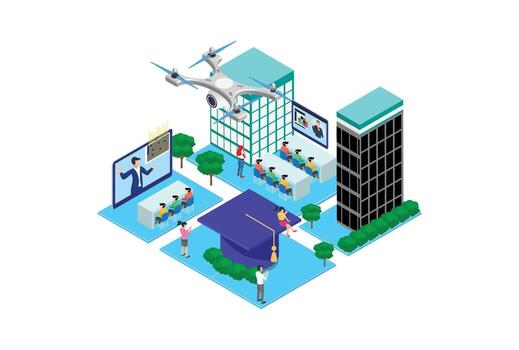
Large colleges and universities can have multiple buildings, laboratories, departments, libraries, offices, and event locations.
A Smart Campus Navigation System can help students find a particular location quickly.
Key Features
- Interactive campus map
- Building search
- Classroom navigation
- Department locations
- Event location mapping
- Shortest-route suggestions
- Mobile-friendly interface
You can make the project more advanced by adding QR codes, GPS, Bluetooth beacons, or indoor positioning.
Suggested Tech Stack
React Native, Firebase, Google Maps API, Node.js, and PostgreSQL
Why It Is Unique
It combines mobile development, mapping, databases, and location-based services instead of being just another standard mobile application.
4. AI Mock Interview and Feedback System
Interview preparation is a common challenge for college students. This project can create a virtual interview environment where students answer questions through text or voice.
The system can analyze the responses and provide feedback.
It Can Evaluate
- Answer relevance
- Communication clarity
- Keywords
- Answer structure
- Speaking speed
- Frequently repeated words
- Technical knowledge
Key Features
- Job-role selection
- AI-generated interview questions
- Voice recording
- Speech-to-text
- AI feedback
- Performance score
- Progress tracking
Suggested Tech Stack
Python, Speech-to-Text API, React, FastAPI, PostgreSQL, and an LLM API
Why It Is Unique
It combines AI, NLP, speech processing, and web development into a project that has direct value for students.
5. Smart Agriculture Monitoring System
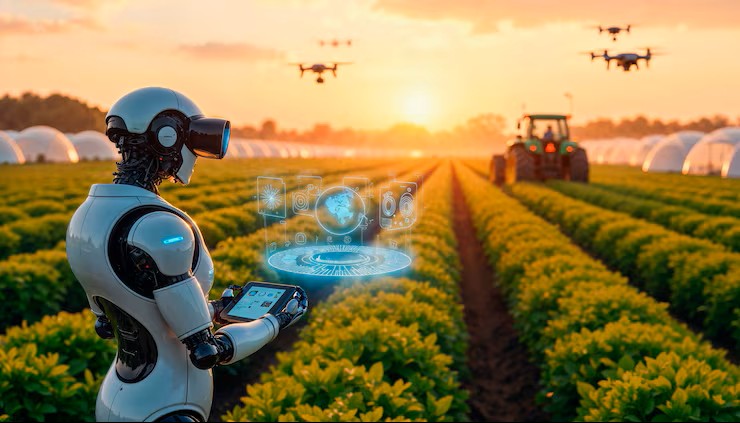
Agriculture is another excellent area for a college project, especially when combining IoT and AI.
The system can monitor environmental conditions such as soil moisture, temperature, and humidity using sensors.
The collected information can then be displayed on a web dashboard.
Key Features
- Soil moisture monitoring
- Temperature monitoring
- Humidity monitoring
- Automatic irrigation
- Real-time dashboard
- Sensor alerts
- Historical data analysis
You can make it more advanced by using machine learning to identify unusual environmental conditions or predict irrigation requirements.
Suggested Tech Stack
ESP32/Arduino, sensors, Python, MQTT, Firebase/AWS, and React
Why It Is Unique
It connects hardware, cloud computing, IoT, data analytics, and potentially machine learning in a single project. IoT-based agriculture and smart monitoring remain common practical project directions for 2026.
6. AI-Based Waste Segregation System
Waste management is a real-world problem where computer vision can be applied.
In this project, a camera captures an image of waste and an AI model identifies its category.
Possible Categories
- Plastic
- Paper
- Metal
- Glass
- Organic waste
- Electronic waste
Key Features
- Image capture
- Waste classification
- Confidence score
- Waste statistics
- Classification history
- Dashboard
Suggested Tech Stack
Python, OpenCV, TensorFlow/PyTorch, React, and FastAPI
Why It Is Unique
This project demonstrates computer vision and AI while addressing an environmental problem. It can also be extended into a physical smart-bin prototype.
7. Blockchain-Based Certificate Verification System
Fake or modified certificates can create problems for educational institutions and recruiters.
A Blockchain-Based Certificate Verification System can provide a tamper-resistant way to verify whether a certificate was issued by an authorized institution.
How It Works
- College generates a certificate.
- Certificate information is recorded securely.
- A unique verification ID or QR code is generated.
- A recruiter scans the QR code.
- The system verifies the certificate information.
Key Features
- Certificate generation
- QR-code verification
- Student verification
- Institution dashboard
- Certificate status
- Tamper detection
Suggested Tech Stack
Solidity, Web3.js, React, Node.js, and a blockchain network
Why It Is Unique
The project introduces students to blockchain, smart contracts, web development, and digital verification. Blockchain certificate verification is also frequently suggested for student projects in 2026.
8. Cybersecurity Log Analyzer
Students interested in cybersecurity can build a Cybersecurity Log Analyzer that analyzes system or network logs and highlights suspicious activities.
Instead of manually checking thousands of log entries, the application can automatically categorize events.
It Can Detect
- Multiple failed login attempts
- Suspicious IP addresses
- Unusual access patterns
- Repeated authentication failures
- Potential brute-force behavior
- Abnormal traffic patterns
Key Features
- Log upload
- Real-time log monitoring
- Event classification
- Suspicious activity alerts
- Search and filtering
- Security dashboard
Suggested Tech Stack
Python, Pandas, Scikit-learn, FastAPI, React, Elasticsearch, and PostgreSQL
Why It Is Unique
It gives students practical exposure to cybersecurity, log analysis, data processing, and security monitoring. Student cybersecurity project ideas in 2026 commonly include intrusion detection, phishing detection, port scanning, and vulnerability analysis.
9. Smart Energy Monitoring System for College Hostels
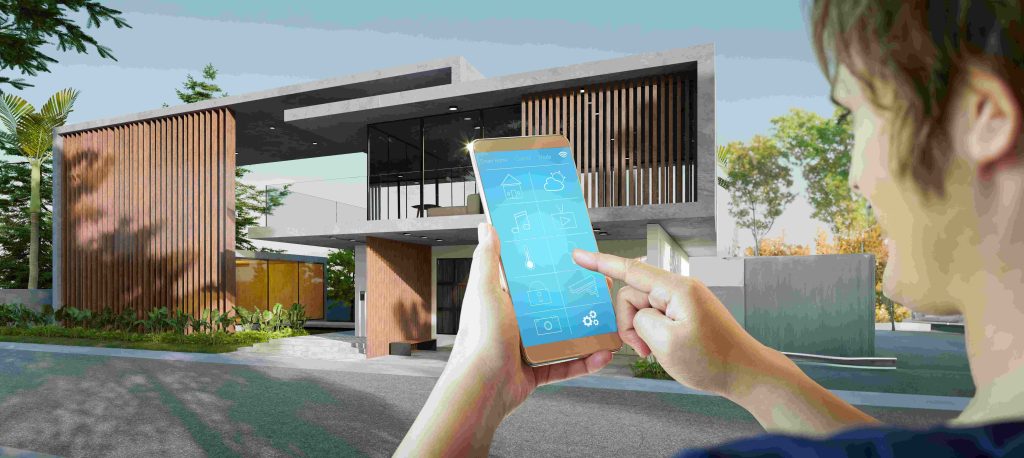
Electricity consumption in hostels and campus buildings can be monitored using IoT devices.
The system can collect electricity usage data and display it through a dashboard.
Key Features
- Real-time energy monitoring
- Room/floor-wise consumption
- Daily and monthly reports
- High-usage alerts
- Usage comparison
- Energy-saving recommendations
Machine learning can also be added to predict future electricity consumption.
Suggested Tech Stack
ESP32, energy sensors, MQTT, Python, React, Firebase, and cloud services
Why It Is Unique
This project combines IoT, cloud computing, data analytics, and sustainability. It can be demonstrated with a small hardware prototype while still having scope for a larger campus implementation.
10. AI-Powered Student Skill Portfolio Builder
Many students have certificates, projects, internships, GitHub repositories, and technical skills scattered across different platforms.
A Student Skill Portfolio Builder can bring everything into one place.
The system can also use AI to analyze the student’s information and recommend skills or projects that could improve their profile.
Key Features
- Student profile
- Project portfolio
- Certificate management
- GitHub integration
- Skill assessment
- Resume generation
- AI-based skill recommendations
- Shareable portfolio link
Suggested Tech Stack
React, Node.js, PostgreSQL/MongoDB, Python, FastAPI, and GitHub API
Why It Is Unique
It combines full-stack development, APIs, AI, resume management, and portfolio building. It is also easy to demonstrate during a project review or placement interview.
Comparison of the Top 10 Projects
| Project | Main Technology | Difficulty | Resume Value |
|---|---|---|---|
| AI Resume Skill Gap Analyzer | AI + NLP | Medium | ⭐⭐⭐⭐⭐ |
| RAG College Helpdesk | GenAI + RAG | Advanced | ⭐⭐⭐⭐⭐ |
| Smart Campus Navigation | Mobile + Maps | Medium | ⭐⭐⭐⭐ |
| AI Mock Interview | AI + Speech | Advanced | ⭐⭐⭐⭐⭐ |
| Smart Agriculture Monitor | IoT + AI | Medium | ⭐⭐⭐⭐⭐ |
| AI Waste Segregation | Computer Vision | Advanced | ⭐⭐⭐⭐⭐ |
| Blockchain Certificate Verification | Blockchain | Advanced | ⭐⭐⭐⭐ |
| Cybersecurity Log Analyzer | Cybersecurity + ML | Advanced | ⭐⭐⭐⭐⭐ |
| Smart Energy Monitoring | IoT + Cloud | Medium | ⭐⭐⭐⭐ |
| Student Skill Portfolio | Full Stack + AI | Medium | ⭐⭐⭐⭐⭐ |
How to Choose the Right College Project
Don’t select a project only because its technology sounds advanced. A good project should have a clear problem, target users, working prototype, measurable output, and scope for future improvements.
Before finalizing your topic, ask yourself:
- What real problem does this project solve?
- Who will use it?
- Can I build a working prototype?
- What technologies will I learn?
- Can I demonstrate it during the viva?
- Can I explain every component of the project?
- Can I add future features later?
A smaller project that you completely understand is usually better than a complicated project where most of the code is copied from online sources.
Tips to Make Your Project Stand Out
1. Build a Working Demo
Don’t stop with documentation and screenshots. A working prototype makes your project much stronger.
2. Add One Unique Feature
For example, instead of building a basic resume builder, add AI-based skill-gap analysis.
3. Use Realistic Data
Use appropriate datasets or properly generated sample data instead of showing only manually entered records.
4. Create a Good GitHub Repository
Include:
- Project description
- Features
- Tech stack
- Installation steps
- Screenshots
- Architecture diagram
- Demo instructions
5. Prepare for the Viva
You should be able to explain:
Problem → Solution → Architecture → Technologies → Implementation → Results → Limitations → Future Scope
Final Thoughts
The best college project in 2026 is not necessarily the most complicated one. It is the project that solves a meaningful problem and demonstrates what you have actually learned.
If you’re interested in AI, consider the Resume Skill Gap Analyzer, RAG College Helpdesk, or AI Mock Interview System. For IoT, Smart Agriculture and Smart Energy Monitoring are strong choices. Cybersecurity students can explore the Log Analyzer, while students interested in blockchain can build the Certificate Verification System.
Most importantly, choose a project that you can build, test, demonstrate, and confidently explain during your final presentation and interview.
Want to Learn More About Python & Artificial Intelligence ?, Kaashiv Infotech Offers Full Stack Python Course, Artificial Intelligence Course, Data Science Course & More Visit Their Website course.kaashivinfotech.com.
Related Reads:
Artificial Intelligence vs Human Intelligence: A Deep Dive into Minds Made and Minds Born
Top 10 AI Tools for Content Creation in 2026 You Shouldn’t Miss.