
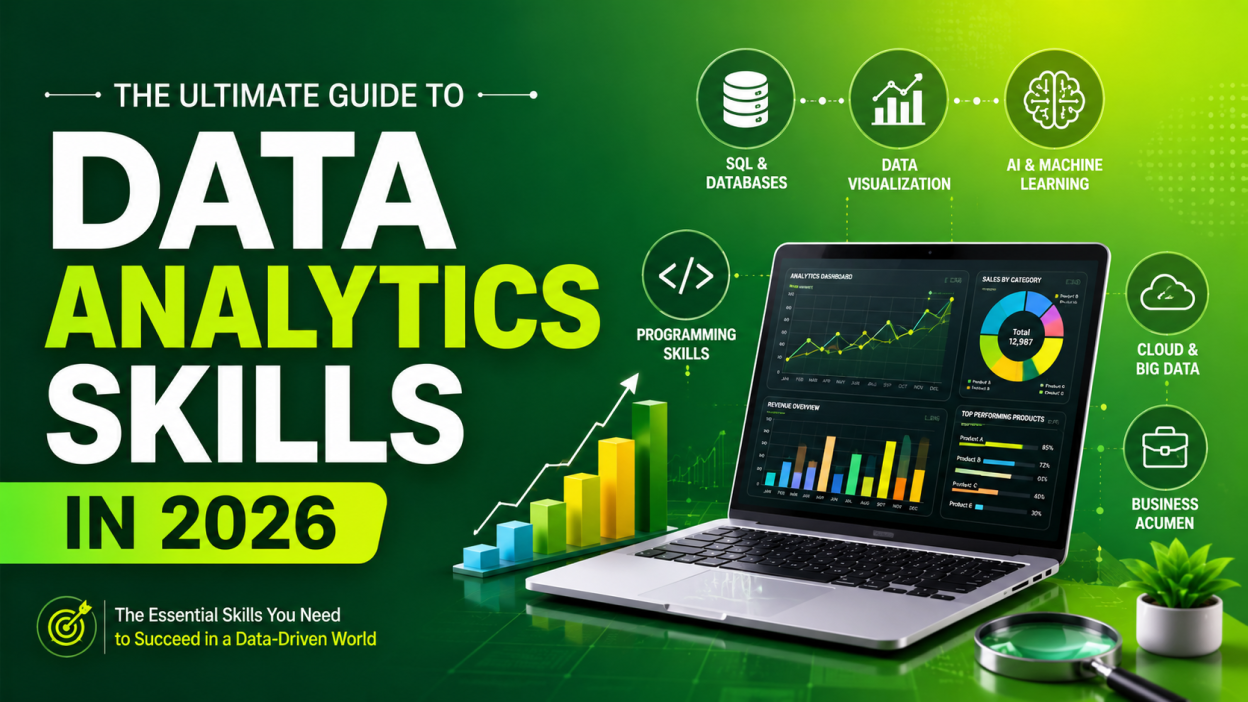
Data analytics skills in 2026 is no longer a niche skill—it has become a core capability across every industry, from startups to global enterprises. Organizations are collecting more data than ever before, but the real challenge is no longer gathering data—it’s making sense of it and turning it into decisions that drive growth.
This shift has changed what it means to be a data analyst. Today, companies are not just looking for technical experts; they want professionals who can blend analytical thinking, technology, and business understanding into one powerful skill set.
If you’re aiming to build a strong career in data analytics, this in-depth guide will walk you through the seven most critical skills you must master in 2026—explained in a practical, real-world context.
🔍 1. Advanced Data Analysis & Critical Thinking

At its heart, data analytics is about asking the right questions and finding meaningful answers. While tools and technologies continue to evolve, the ability to think critically about data remains timeless.
In 2026, analysts are expected to go beyond surface-level insights. It’s no longer enough to say “sales increased by 20%.” The real value comes from understanding why it happened, what influenced it, and what should be done next.
This requires a mindset that constantly challenges assumptions. Strong analysts examine data from multiple angles, question inconsistencies, and dig deeper when something doesn’t add up. They are comfortable dealing with ambiguity and can connect different data points to uncover patterns that are not immediately obvious.
Critical thinking also plays a key role in problem-solving. Businesses often come with vague questions like “Why are customers leaving?” or “How can we improve performance?” Turning these into structured analytical problems is a skill in itself—and one that separates average analysts from exceptional ones.
📊 2. Data Visualization & Storytelling

Even the most powerful insights are useless if they cannot be communicated effectively. This is why data visualization and storytelling have become essential skills in modern analytics.
In 2026, analysts are expected to act as translators between data and decision-makers. Stakeholders may not understand raw numbers or complex queries, but they do understand clear visuals and compelling narratives.
Tools like Tableau, Power BI, and Looker have made it easier to create dashboards, but tools alone are not enough. What truly matters is how you design those visuals—choosing the right charts, highlighting key metrics, and guiding the viewer toward meaningful conclusions.
Storytelling adds another layer of impact. Instead of presenting disconnected charts, skilled analysts build a narrative: they start with a problem, introduce data as evidence, and conclude with actionable recommendations. This approach makes insights memorable and drives better decision-making.
In many organizations, the ability to present data clearly can have as much influence as the analysis itself.
🧠 3. AI & Machine Learning Awareness

Artificial Intelligence is reshaping the analytics landscape. While not every analyst needs to become a machine learning engineer, having a working understanding of AI concepts is becoming increasingly important.
In 2026, many analytics workflows are enhanced by AI. From predicting customer behavior to detecting fraud and automating reports, machine learning models are deeply integrated into business operations.
Analysts who understand how these models work can collaborate more effectively with data scientists and engineers. They can interpret model outputs, evaluate their accuracy, and ensure that insights are used responsibly.
More importantly, AI enables a shift from descriptive analytics (what happened) to predictive and prescriptive analytics (what will happen and what should be done). This evolution allows analysts to play a more strategic role within organizations.
Being AI-aware doesn’t mean mastering complex algorithms—it means understanding how to use AI as a tool to enhance decision-making.
🗄️ 4. Data Management & SQL Expertise

Behind every great analysis is well-structured and reliable data. This is why data management remains a foundational skill.
In 2026, organizations deal with massive volumes of structured and semi-structured data. Analysts must know how to access, clean, and organize this data efficiently. SQL continues to be one of the most important tools in this process.
Writing efficient queries, joining multiple datasets, and transforming raw data into usable formats are everyday tasks for analysts. A strong grasp of SQL not only improves productivity but also ensures accuracy in analysis.
Data quality is another critical aspect. Poor data can lead to misleading insights, which can ultimately harm business decisions. Skilled analysts pay close attention to data integrity, validating sources and handling missing or inconsistent values carefully.
Additionally, the rise of cloud platforms has changed how data is stored and processed. Familiarity with cloud-based systems allows analysts to work with scalable data environments and collaborate more effectively within teams.
🐍 5. Programming Skills for Modern Analytics

Programming has become a key component of data analytics. While earlier roles relied heavily on spreadsheets, 2026 demands more advanced capabilities.
Languages like Python and R allow analysts to perform complex data manipulation, automate repetitive tasks, and handle large datasets with ease. Python, in particular, has gained widespread adoption due to its simplicity and powerful ecosystem of libraries.
With programming, analysts can move beyond basic reporting and perform deeper analysis. They can build custom data pipelines, create predictive models, and generate dynamic visualizations.
Another advantage is efficiency. Tasks that would take hours manually can be automated in minutes using code. This not only saves time but also reduces the risk of human error.
Learning programming may seem challenging at first, but it significantly expands what you can achieve as a data analyst.
☁️ 6. Big Data & Cloud Technologies
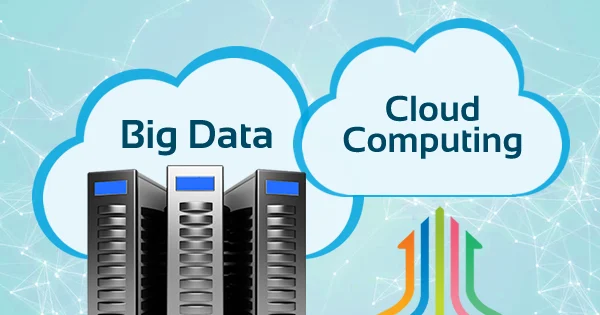
The scale of data in 2026 is unprecedented. From user interactions to IoT devices, data is being generated at a massive rate. Handling such volumes requires knowledge of big data and cloud technologies.
Modern organizations rely on distributed systems to process and analyze data efficiently. Technologies like Hadoop and Spark are commonly used for large-scale data processing, while cloud platforms provide flexible and cost-effective infrastructure.
Understanding how these systems work allows analysts to operate in data-rich environments without being overwhelmed. They can process large datasets, run complex queries, and deliver insights faster.
Cloud-based analytics has also improved accessibility. Teams can collaborate in real time, access data from anywhere, and scale resources based on demand. For analysts, this means working in a more dynamic and efficient ecosystem.
As data continues to grow, the ability to work with scalable technologies will become increasingly important.
💼 7. Business Acumen & Domain Expertise

Technical skills alone do not guarantee success in data analytics. The most impactful analysts are those who understand the business context behind the data.
In 2026, companies value professionals who can connect insights to real-world outcomes. This requires knowledge of industry trends, customer behavior, and organizational goals.
For example, analyzing customer data in an e-commerce company requires an understanding of buying patterns, marketing strategies, and user experience. Without this context, even accurate analysis may fail to deliver meaningful results.
Business acumen also helps in prioritizing tasks. Not all insights are equally valuable, and knowing what matters most to the organization ensures that your work has a direct impact.
Ultimately, this skill transforms analysts from data processors into strategic contributors.
🔮 The Evolving Role of Data Analysts
The role of a data analyst is changing rapidly. In the past, analysts were primarily responsible for generating reports. Today, they are expected to influence decisions, guide strategies, and drive innovation.
This evolution is driven by technology, but also by business needs. Organizations want faster insights, more accurate predictions, and better outcomes. As a result, analysts must continuously adapt and expand their skill sets.
In 2026, the most successful professionals are those who can combine multiple skills—technical, analytical, and business—into a cohesive approach. They are not limited to a single role; they act as connectors between data, technology, and decision-making.
🏁 Final Thoughts
Data analytics is one of the most exciting and rewarding career paths in 2026. However, success in this field requires more than just learning tools or languages. It demands a holistic skill set that includes critical thinking, communication, technical expertise, and business understanding.
By mastering these seven essential skills, you position yourself not just as a data analyst, but as a valuable asset in any data-driven organization.
The future belongs to those who can turn data into insight—and insight into action.
Want to learn more ??, Kaashiv Infotech Offers Data Analytics Course, Data Science Course, Cyber Security Course & More Visit Their Website www.kaashivinfotech.com.