

Telecom operators are heavily dependent on signaling systems to route calls, messages, and data across global networks. The protocols in question, including Diameter, SS7, and SIP, are vital for communication between telcos.
Table Of Content
Unfortunately, although the technology is vital for modern telecommunication, it comes with its fair share of flaws. A large attack surface and different-era technologies make it almost impossible to patch all the blind spots. Attackers usually try to exploit the network’s control layer rather than its services, altering billing, routing, and subscriber data.
To make matters worse, the number and complexity of fraud cases have significantly increased in recent years. In fact, these malicious attacks are the main reason telecom companies are losing money. This is why operators must become familiar with the various types of sgianling fraud to protect their reputations and revenues.
What Is Signaling-Level Fraud?
Signaling-level fraud involves exploiting signaling protocols to gain control over various telecom network functions. Many of these protocols, such as SS7, were planned as safe environments where operators can collaborate without fear of fraud.
But as time went on and technology changed, the model based on mutual trust became outdated. Attackers have become more savvy at exploiting different vulnerabilities, sending malicious signaling messages to users. Modern exploits involve triggering billing events, stealing subscriber information, and rerouting communication.
Unfortunately, many of these actions are hard to detect at first because signaling is concealed from end users. Another issue is that these types of activities are carried out at a large scale, affecting the entire network and even interconnected networks. Malicious actors can manipulate roaming, authentication, and call routing, all of which are directly related to operators’ profits.
What Makes Fraud So Dangerous?
The biggest issue with this type of telecommunication fraud is that it exploits the networks’ core infrastructure. Compared to surface-level attacks, signaling fraud bypasses standard security measures and focuses on billing and routing systems.
It doesn’t help that older protocols such as SS7 lack the same encryption and authentication as modern systems, making them highly susceptible to exploitation. Another issue is that most telecommunications networks are now interconnected, meaning a single breach can endanger the entire system.
The complex nature of signaling traffic makes it hard to detect attacks, especially since these operators blend seamlessly with standard calls and messages. In many situations, fraud will keep on going for months, slowly draining the company’s resources. So, the only way for telcos to address the issue is by introducing modern security solutions, such as a signal transfer point.
Direct Impact on Revenues
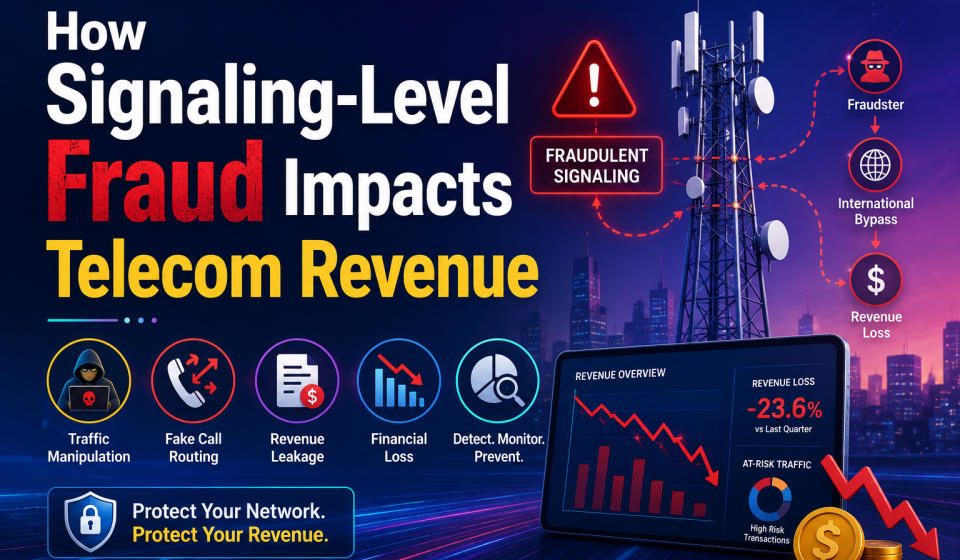
Telecommunication fraud affects revenues directly and indirectly, occurring silently in the background. A comprehensive attack will drain your resources by changing or introducing new billing and routing processes, allowing perpetrators to steal your money without triggering alarms. These losses tend to accumulate, especially if a telco doesn’t notice the issues right away.
Some of the most common issues are as follows:
- Bypass Fraud: Calls go through unauthorized channels, circumventing the official billing process and reducing termination and interconnect revenue.
- SMS Grey Routes: Similar to calls, messages can be rerouted through unofficial channels, eroding messaging income and bypassing A2P billing.
- Artificial Traffic Generation: The attacker sends large volumes of calls to premium numbers. This results in enormous payouts without real usage.
- Roaming Fraud: Manipulating signaling results in unauthorized usage, forcing telcos to cover uncollected charges.
Whether they’re used together or in isolation, these tactics can lead to major revenue losses for operators.
Indirect Impact on Revenues
Besides direct financial losses, signaling fraud can also indirectly affect telcos’ operations. Many of these factors are not visible at first, but they may accumulate over time. Little by little, they will deteriorate the operator’s reputation and efficiency.
Some of the most common issues are as follows:
- Higher Operational Costs: As operators invest more in defensive measures, specialized teams, and infrastructure, they will incur higher operational costs.
- Lower Reputation: Certain types of fraud can adversely affect users, such as unauthorized activity and data theft. This will slowly lead to clients’ dissatisfaction, especially lowering retention among high-value users.
- Revenue Instability: Volatile external factors can significantly impact financial forecasting and alter traffic patterns.
- Regulatory Exposure: Data breaches often lead to different types of legal actions, fines, and compliance challenges.
All these issues will eventually weaken a telco in a particular market, potentially affecting the business’s viability.
Advanced Attack Tactics
Today’s telecommunications exploits are highly sophisticated, relying on multi-layered attacks that take advantage of several vulnerabilities at once. Each attack was carefully created to maximize disruptions and steal as much money as possible. This made them extremely hard to spot and mitigate.
Some of the most common attacks are:
- Call and Message Rerouting: Calls and messages are redirected through channels controlled by attackers. As such, malicious actors have full control over traffic and, specifically, billing.
- SMS Interception: By appropriating authentication messages and one-time passwords, attackers can take over accounts and execute financial fraud.
- Denial-of-Service: Attackers overload signaling channels to block legitimate traffic, disrupt services, and cause outages.
- Subscriber Identity Hijacking: Criminals impersonate network users to generate fake messages, calls, and data usage.
As time went on, the complexity of these exploits increased significantly. Attackers take advantage of different vulnerabilities while covering their tracks whenever they can. Even with great security measures, operators often take time to identify the issue.
The Impact of Network Fraud in the Future
Despite telcos’ many efforts to mitigate these risks, the number and complexity of attacks keep growing. One of the biggest issues is heavy reliance on legacy infrastructure, which comes with numerous flaws that attackers can exploit. While modernization seems like an obvious solution, transitioning to modern systems is costly and disrupts operations.
Improved connectivity of global networks also doesn’t help, as it increases the attack surface. The best way for operators to tackle some of these problems is by introducing around-the-clock monitoring. Improving collaboration between companies is also important, especially when it comes to sharing fraud data.