


Starting your trading journey can feel a little like walking into a huge supermarket without a shopping list. There are dozens of brokerage platforms, different account types, unfamiliar terms, and plenty of promises about spreads, markets, and trading tools.
Table Of Content
- 1. Trading Sphere
- MT4 particularly popular
- 2. Interactive Brokers
- 3. IG
- 4. CMC Markets
- 5. XTB
- What should beginners look for in a brokerage platform?
- 1. Is the broker regulated?
- 2. What will trading actually cost?
- 3. What can you trade?
- 4. Is the platform easy to understand?
- 5. What leverage is available?
- Summary
So, how do you know where to start?
The truth is that there is no single best brokerage platform for every trader. A beginner looking to learn forex trading may have completely different needs from an experienced investor building a diversified portfolio.
The good news is that comparing a few important features can make the decision much easier. Below, we look at several brokerage platforms traders may want to consider, starting with Trading Sphere broker.
Let’s dive deeper into it, shall we?
1. Trading Sphere
Trading Sphere is a multi-asset brokerage platform that provides access to markets including forex, metals, indices, commodities, futures, shares, and cryptocurrencies. Its offering is primarily based around CFD trading, meaning traders speculate on an asset’s price movement without directly owning the underlying asset.
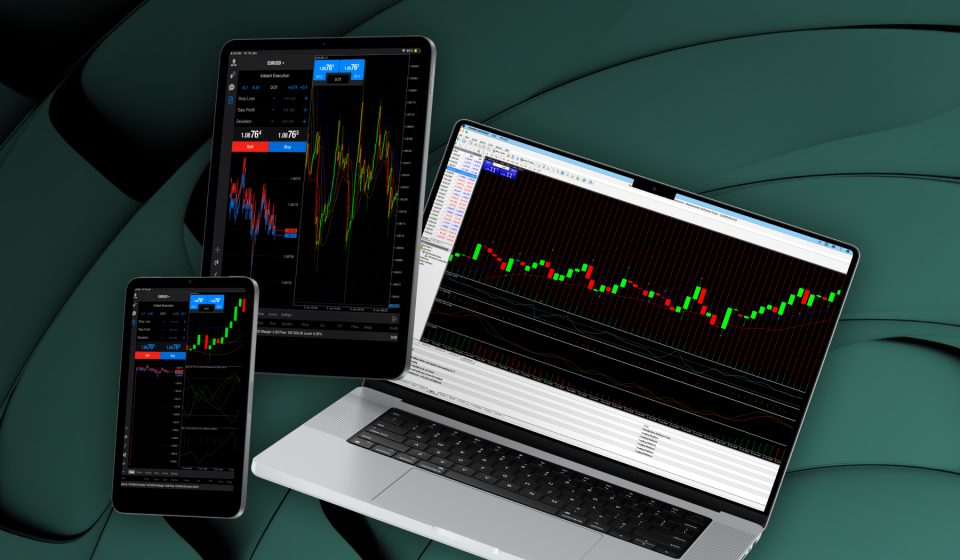
For beginners, one useful starting point is understanding the platform rather than immediately focusing on advanced trading strategies. Trading Sphere supports MetaTrader 4 (MT4) and MetaTrader 5 (MT5), two platforms widely used by retail traders.
MT4 particularly popular
MT4 is particularly popular for forex trading and provides charts, technical indicators, multiple order types, and automated trading through Expert Advisors. MT5 expands on many of these capabilities and supports a broader selection of markets and analytical tools.
Trading Sphere also offers several account types, including Core, Core Plus, Core Prime, and Core Elite. The different structures mean traders can examine the conditions associated with each account and determine which, if any, is appropriate for their experience and trading style.
The company states that it is regulated by the Seychelles Financial Services Authority under licence SD172 through TOB Trading Ltd. Because regulatory protections can differ between jurisdictions, beginners should always check which legal entity would hold their account and what protections apply to them before depositing funds.
For someone comparing platforms, Trading Sphere can therefore be considered alongside other brokers based on its market selection, available platforms, account structure, costs, and regulatory framework.
2. Interactive Brokers
If Trading Sphere represents one option for multi-asset CFD trading, Interactive Brokers takes a somewhat different approach.
Interactive Brokers provides access to a broad range of global markets, including stocks, ETFs, options, futures, bonds, currencies, and funds.
Its range of products can be attractive to traders and investors who want to explore several asset classes from one account. However, beginners may initially find its extensive functionality a little overwhelming.
Interactive Brokers offers several platforms, including IBKR Desktop, Trader Workstation, IBKR Mobile, and GlobalTrader. Trader Workstation, in particular, is designed for users who want detailed market analysis and advanced trading functionality.
The lesson for a beginner is simple: more features do not necessarily mean a better experience. A platform should provide the tools you actually understand and need.
3. IG
IG is another well-known brokerage group with a long history in online trading.
Its offering includes forex, indices, commodities, shares, cryptocurrencies, and other financial markets, although availability depends on the trader’s jurisdiction.
IG provides its own trading platform alongside options such as MetaTrader 4, ProRealTime, and TradingView in relevant markets.
For a beginner, having several platform choices can be useful because traders can find an interface that suits their preferred way of analyzing markets. At the same time, beginners should avoid opening an account simply because a broker offers a large number of instruments. Start with markets you understand and learn how pricing and risk work before expanding.
4. CMC Markets
CMC Markets is another established name in online trading, particularly within the CFD space.
Its proprietary platform combines charting, market analysis, order management, and other trading tools. This can be useful for traders who prefer having research and execution features available within one environment.
For beginners, CMC Markets can be worth investigating as part of a wider comparison. The important step is to look beyond the platform’s appearance and investigate the actual trading costs, available instruments, account requirements, and protections applicable in your country.
5. XTB
XTB is another brokerage platform that combines trading and investing services, with the exact products available varying between jurisdictions.
Its proprietary xStation platform is designed to bring charting, market information, trading and portfolio management together in one interface.
This can make it appealing to beginners who prefer a relatively straightforward environment instead of switching between several applications.
As always, traders should check the terms available in their particular country before opening an account.
What should beginners look for in a brokerage platform?
Choosing a broker becomes much easier when you know what questions to ask.
1. Is the broker regulated?
This should be one of your first checks. Regulation does not eliminate trading risk, but it can determine what rules, client protections and complaint procedures apply to your account.
2. What will trading actually cost?
Don’t look only at the advertised spread. Consider commissions, overnight financing, currency-conversion charges and other potential fees.
A platform that looks inexpensive at first glance may have different costs that become important once you start trading regularly.
3. What can you trade?
Do you want to trade forex? Stocks? Gold? Indices? Cryptocurrency?
Make sure the broker offers the markets you are interested in and check whether the products are available in your jurisdiction.
4. Is the platform easy to understand?
A beginner-friendly platform should not require you to become an expert before you can place a basic order.
Look for clear charts, understandable order windows, useful educational resources and risk-management features. A demo account can also be useful for learning how the platform works without immediately putting real money at risk.
5. What leverage is available?
Leverage allows traders to control a larger position with a smaller amount of capital. However, it can magnify losses just as quickly as profits.
Beginners should treat leverage with particular caution and understand margin requirements before using it.
Summary
Finding a brokerage platform is not about discovering a magic button that guarantees successful trades. It is about finding an environment that matches your goals, knowledge and risk tolerance.
Trading Sphere, Interactive Brokers, IG, CMC Markets, and XTB are examples of platforms traders can research, but they differ in their products, technology, pricing structures and regulatory arrangements.
If you are new to trading, start with the basics. Compare regulation, costs, available markets and platforms, learn how orders and leverage work, and consider practicing with a demo account before committing significant capital.
The best brokerage platform for a beginner is ultimately not the one with the longest list of features. It is the one whose conditions you understand, whose risks you have considered, and whose tools genuinely fit the way you intend to trade. Good luck!