

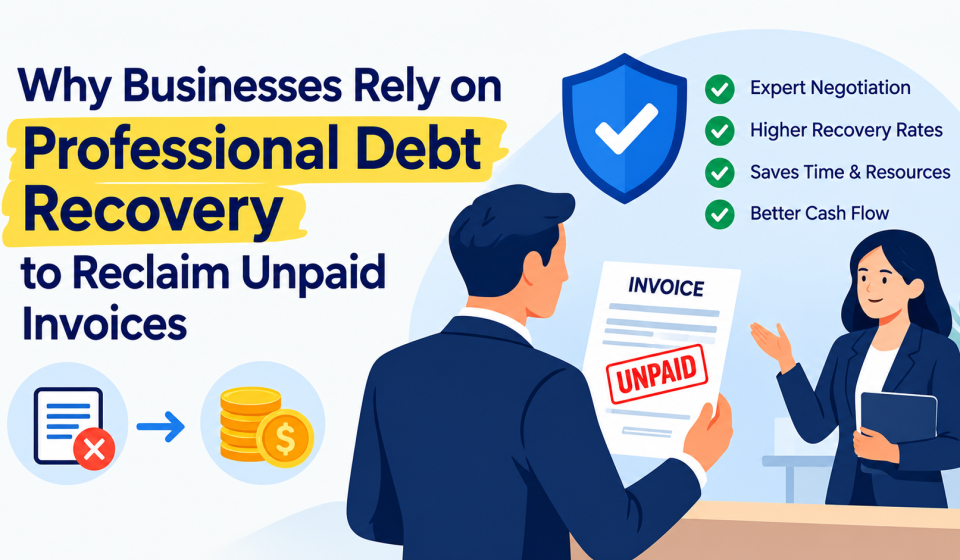

Accounts receivable are one of the most troublesome aspects of business and have far more severe consequences than many business owners might imagine. They impact cash flow, prevent future growth strategies from being developed, and take up too much time, which will most likely never be included anywhere in the budget.
Table Of Content
The use of a collection agency allows the firm to ensure its cash flow remains positive, as employees can spend their time on things that help grow the business. As soon as the level of defaults starts increasing, it becomes clear that hiring a debt collection service provider (Inkassodienstleister) helps the firm recover its money without needing any legal action taken.
The Real Cost of Letting Debt Sit
An unpaid balance isn’t just a temporary hole in revenue. It diverts capital from growth projects, uses up the company’s credit line, and silently devours employees’ time, which should be used elsewhere.
Data from the Federal Reserve Bank of St. Louis shows the trend: the longer the overdue debt sits on the books, the less likely it is that the company will get paid for its troubles.
| Age of Receivable | Probability of Value | Primary Collector |
| 1 – 30 Days | 95.3% Recovery Rate | Internal Billing |
| 31 – 90 Days | 73.6% Recovery Rate | Internal Follow-up |
| 91 – 180 Days | 51.2% Recovery Rate | Third-Party Agency |
| 180+ Days | 21.4% Recovery Rate | Specialized Legal |
Keeping Client Relationships Intact
Any confrontation with an established client regarding payment of overdue accounts is likely to cause tension and damage business relations. A professional collection agency like NOE Inkasso steps in as a neutral third party, taking on the awkward part while the underlying business relationship stays protected.
- Objective mediation – keeps sales and account teams out of uncomfortable payment conversations
- Structured escalation – starts with polite reminders and only escalates to formal notices when needed
- Brand protection – keeps every communication compliant with consumer protection rules
Staying on the Right Side of Regulation
Debt collection rules shift depending on where you operate, and getting them wrong — even by accident — can mean fines or a counter-lawsuit nobody saw coming.
Guidance from the European Commission shows just how much specialized legal knowledge cross-border collection actually requires. Agencies that do this full-time stay on top of every regulatory change, which takes that liability off the client’s plate entirely.
Leveraged Technology and Traceability Systems
Debt recovery organizations use advanced technology such as analytics, skip-tracing software, and automatic communication systems in order to locate debtors and determine their probability of repayment. Building that kind of infrastructure in-house simply isn’t realistic for most finance teams — the cost rarely justifies it.
The U.S. Consumer Financial Protection Bureau (CFPB) points out how important clean audit trails and standardized digital records are when a dispute needs to be verified later. That’s exactly the kind of groundwork these platforms are built to handle.
For businesses looking to free up liquidity, a structured outside partnership is often the simplest fix. Choosing to commission a debt collection agency (inkasso beauftragen) turns receivables that have been sitting idle into capital you can actually use, without putting financial stability at risk.
Freeing Up Capital and Focus
Outsourcing collections turns a fixed internal cost into something success-based instead — you’re not paying for labor and software regardless of outcome; you’re paying for results.
- Lower overhead – no need for dedicated collection software or in-house staff
- More predictable cash flow – shorter Days Sales Outstanding (DSO) makes forecasting easier
- Fees tied to results – collection costs scale with what’s actually recovered, not what’s owed
Frequently Asked Questions
What is the part played by the Inkassodienstleister in the management of cash flows within the corporation?
The Inkassodienstleister collects overdue payments faster than the in-house team could handle by themselves, saving on administrative work while still meeting the legal guidelines for collecting debts.
What is the effect on the business-client relationship when the professional debt recovery agency gets hired?
A mediator is put into place. It deals with the difficult conversations, leaving the business with the ability to continue a good relationship with the client.
At what point should the company give the debt to an outside debt collector?
The best time to do this would be around 60-90 days after the deadline has been passed. Any later, and the chances of collecting drop drastically.
Are professional debt collection methods legally compliant?
Yes — licensed agencies operate under strict consumer protection and fair collection laws, which shield the hiring business from compliance headaches down the line.
How do success-based fee structures work in debt recovery?
Most agencies today work on contingency: they take a percentage only when they actually recover the money. No recovery means no fee.
Protecting Working Capital the Smart Way
Steady growth depends on keeping operating capital out of reach of default risk. Bringing in dedicated recovery specialists turns receivables that have been sitting still into money the business can actually use again, all while internal teams stay focused on their own work. Done through proper legal channels and modern data tools, debt recovery doesn’t have to be messy — it can be handled ethically, quickly, and with full transparency. And that’s really the point: a solid recovery partnership isn’t just about getting paid faster; it’s about building the kind of financial footing that keeps a business steady for the long run.