

Creating an application for mobile devices is a complex process that requires appropriate financial planning on behalf of businesses. Organizations should adequately assess the needed expenditures on design, development, operation tests, and maintenance to set realistic budgets for custom software development projects. However, it is common for firms to make mistakes while allocating costs that are to be spent on bespoke application development solutions. As a consequence, businesses may experience unplanned expenses deriving from poor communication, increased maintenance issues, extensive rewrites, or delays in development. Addressing the identified problems in budget planning is crucial for firms that seek to develop an efficient, effective, and profitable application.
Incomplete Project Requirements
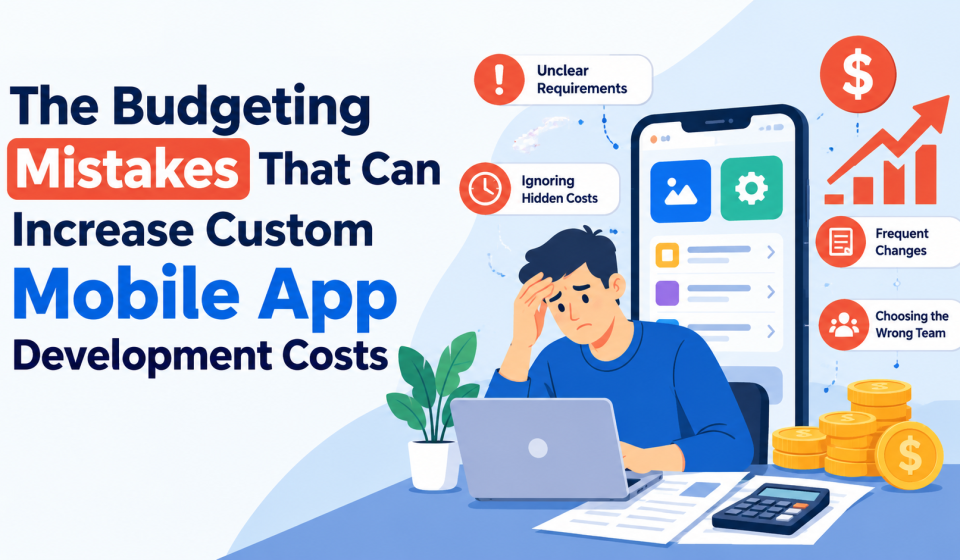
The first issue that may occur while budgeting for application creation is the absence of a comprehensive list of requirements. An organization may have a vague idea of what it expects from its application but fail to deliver a clear vision and guidelines for individual functions. Developers may have to update application components multiple times while waiting for clients to respond to their requests for comment and amendments. Therefore, an unclear vision may result in developers’ increased workloads and longer deadlines.
In addition, the absence of a clear list of necessities may lead to misunderstandings between two parties, which increases the likelihood of additional expenses. For example, companies may assume that applications will provide diverse payment methods, inform users about the current state of transactions, and give customers an opportunity to build personal accounts. However, such functions should be discussed and scheduled in advance, as their addition may require developers to make numerous changes to the code. For this reason, businesses should create a comprehensive list of individual software component requirements.
Frequent Changes in Project Scope
Another mistake that may make custom mobile app development more costly is change or addition to project requirements. Such revisions may significantly impact the application’s architecture, which, in turn, increase costs associated with rewriting and debugging codes while integrating application elements. Although changes to the project should be considered and discussed prior to budget approvals, companies should minimize their impact on code and system structure as much as possible.
Businesses may utilize the approach of progressive development that allows staying within the originally-allocated budget. For example, companies can prioritize features and functionalities of choice before launching the basic version of the application. Thereafter, businesses can use customer feedback and data analysis reports to define the necessary updates and additions to the application. The progressive approach will enable firms to avoid spending much on unnecessary functions.
Underestimating Testing and Quality Assurance
A common budgeting mistake is the allocation of the majority of funds to designing and developing the application while planning to finish the software testing at the very end of development. It may be a costly mistake on the part of the organizations, as errors in code and inadequate performance on different devices and platforms may require additional expenditures.
A more comprehensive solution is to include itemized quality assurance (QA) and software testing within the allocated budget for custom application development. Developers should have ample time to debug code and analyze the application’s performance in terms of navigation ease and security. Application speed may also be impacted by regional server locations, which is why companies should specifically designate funds to test features and the application as a whole under diverse conditions prior to its launch.
Overlooking Integration and Infrastructure Expenses
Custom software development involves the use of multiple infrastructural and auxiliary tools, which increases the likelihood of infrastructure costs-related issues. For example, businesses may fail to plan for the costs associated with payment processing, relation management, or accounting tools, or miscalculate the expenditures. Auxiliary program applications may require additional maintenance and infrastructure support, which may also make independent support costs unpredictable. Developers may have to debug code and optimize application parts to ensure the stable functioning of the application. To avoid unexpected costs, companies should consult with developers regarding the range of tools that should be integrated into the application and the expected expenses associated with their installation and continued use.
Ignoring Maintenance and Post-Launch Support
The budget planning mistake that can make custom mobile application development more costly is failure to designate funds for routine maintenance. Application stability, data security, and overall performance are crucial for ensuring the application’s profitability. Operating system (OS) updates, evolving end-user demands, security threats, and critical bugs are some of the issues that require revision of the software and additional expenditures. Independent support costs on infrastructure, application maintenance, and security are unpredictable, which is why additional funds should be designated for them.
The size of the additional allocation should depend on the application’s size and the intricacies of the underlying software architecture. Prior to choosing a development company, organizations should ask for the costs associated with the continued operation of the application. A detailed list of additional support-related expenses should also be reviewed with the development partner, as a fixed-price contact option can include all additional services. Alternatively, an hourly billing plan option can also be negotiated with the development partner. In addition, application maintenance and support can be outsourced to another provider.
Choosing Developers Based Only on Price
While choosing the most affordable application development agency from the available options is tempting on the part of the business, such a decision can lead to unexpected financial issues. Some agencies specialize in the provision of reduced-price application development, but such options typically come with shortcomings that make the development process longer and more expensive.
Businesses should ask for proposals, terms, and conditions prior to budget approval to ensure that all aspects of the projected application development cost structure within the designated budget. The companies should also analyze the general reputation and customer reviews of the selected development agency. In addition, the terms and conditions of budget planning and the possibility of additional agreements should be analyzed to identify if there are hidden costs or alternative compensation options for revisions and additional alterations to the application. The detailed analysis of the selected budget option and developer expectations will reduce the likelihood of last-minute revisions and costs.