
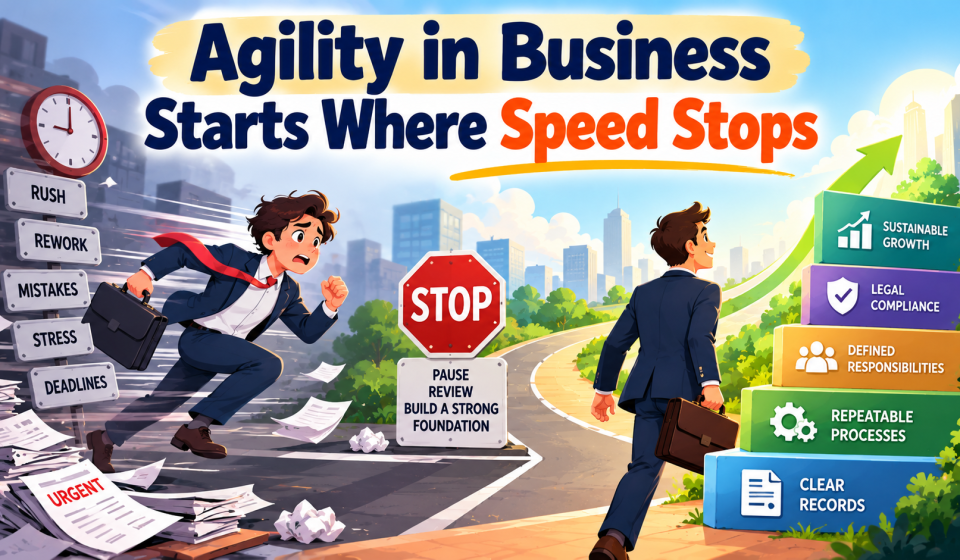

Real agility in business does not come from moving faster all the time. It comes from removing the friction that makes every decision feel urgent. Teams that chase speed alone often end up redoing work, fixing preventable errors, and reacting to problems that should have been anticipated. What looks fast in the moment can become slow over a quarter, a year, or a growth cycle.
A more durable kind of agility starts when a company builds a stable base for action. That base includes clear responsibilities, clean records, repeatable processes, and a basic understanding of legal standing. Even simple checks, like a Delaware corp search, fit into that picture because they help founders and operators confirm core business details before those details become roadblocks.
This is the part of agility that gets less attention. Everyone likes the language of pivots, rapid launches, and quick decisions. Fewer people talk about the quiet systems that make those moves safe. Yet those systems are often what allow a business to change direction without losing time, trust, or control.
Speed without structure creates hidden drag
When leaders say they want a nimble company, they usually mean shorter response times. They want fewer delays between an idea and execution. That goal makes sense. But speed alone can hide a deeper problem. If a business has unclear ownership, inconsistent documentation, or scattered approval steps, every urgent move gets more expensive.
Think about a simple example. A company wants to enter a new market, sign a vendor, or raise capital. If no one is fully sure which entity is active, who can sign, or whether required filings are current, the move stalls. Not because the team lacks energy, but because the organization lacks reliable footing.
That is why agility often begins with limits. A business that defines decision rights, filing responsibilities, and review steps may feel slower at first. In practice, it usually becomes faster because fewer decisions need to be relitigated. People know where to look, who approves what, and what must be checked before action is taken.
Compliance is not the enemy of adaptability
Many founders treat compliance as a chore that competes with growth. In reality, basic compliance often supports growth by reducing interruptions. The U.S. Small Business Administration notes that legal obligations depend on business type and location, and that businesses need to meet federal, state, and local tax obligations to stay in good standing. That is not just paperwork. It is operational continuity. Reviewing guidance on staying legally compliant can help clarify how much routine business activity depends on this foundation.
Good standing matters because business opportunities rarely wait for internal cleanup. A lender, partner, buyer, or enterprise customer may want documentation on short notice. If records are disorganized, a promising opportunity can turn into a scramble. In that moment, a company is not being agile. It is being forced into reactive labor.
The same pattern shows up with internal workflows. A team that keeps accurate records and standard operating procedures does not lose flexibility. It gains the ability to make exceptions deliberately, instead of by accident.
Operational calm is a competitive advantage
There is another reason speed should stop somewhere. Human beings do not make their best decisions in constant chaos. If every task is urgent, people stop distinguishing between a real priority and a loud distraction. Work becomes shallow. Meetings multiply. Errors spread quietly.
Operational calm is not laziness. It is capacity. It means the business has enough order to notice problems early, test ideas cleanly, and respond without panic. In that environment, adaptability becomes a habit rather than a dramatic event.
This idea is visible even outside legal and administrative work. The Occupational Safety and Health Administration says proactive safety and health programs help businesses improve compliance, reduce costs, engage workers, and increase productivity and overall operations. The point is broader than workplace safety alone. Preventive systems often create the space that makes better performance possible. OSHA’s recommended practices for safety and health programs show how a basic, goal driven approach can strengthen day to day operations.
In other words, agility is often the reward for disciplined maintenance. When a company regularly checks its records, roles, and risks, it is less likely to be surprised by avoidable issues. That leaves more energy for product work, customer service, hiring, and strategy.
What this looks like in practice
Businesses that want real agility usually benefit from a few unglamorous habits:
- Keep core entity and ownership information easy to verify.
- Assign one owner for filings, renewals, and status checks.
- Create simple approval paths for contracts and spending.
- Document recurring processes before growth makes them messy.
- Review risks early, while fixes are still small.
None of this sounds dramatic. That is the point. Agility is strongest when it does not require drama.
The companies that adapt well are not always the ones moving the fastest today. They are often the ones that built enough structure yesterday to move confidently tomorrow. Speed has value, but only up to the point where it starts creating confusion. Once that happens, the smartest move is to stop, tighten the foundation, and let clarity do the accelerating.