Campaign Without Borders: How Multilingual Subtitles Turn Local Ads Into Global Hits

Imagine this: a tiny Karachi bakery shoots a 30-second commercial for its pistachio croissants. The ad is catchy, the atmosphere is cozy, and the croissants appear buttery enough to crash the internet. But there is one catch—the advertisement is in Urdu. Without subtitles, it remains local. With multilingual subtitles? Croissant fanatics in Paris, New York, and Tokyo are salivating as well.
Table Of Content
- Why subtitles are the secret sauce of global campaigns
- From local charm to global resonance
- Going beyond text
- 3 surprisingly fun steps to translate your videos with Pippit
- Step 1: Open video generator and quick cut
- Step 2: Add your video, then auto-caption and translate
- Step 3: Text-to-speech, audio cleanup, and export
- The unsung hero: Video translator
- Why it’s too expensive for brands to remain monolingual
- Wrapping it up through Pippit
This is the force of language in advertising: not only to say something, but to say it to the world. With technology such as Pippit at the forefront of this revolution, video translation has never been easier. From uploading your video into an AI video generator to exporting a multilingual masterpiece, companies are discovering that global does not have to equal generic—it simply equals open.
Let’s get into how subtitles aren’t footnotes but passports for your campaigns.
Why subtitles are the secret sauce of global campaigns
It’s easy to assume subtitles are a nicety for viewers who can’t keep up with original language. But in marketing, subtitles are more like superpowers. They make your ad readable in an instant, but they also:
- Multiply reach: One campaign, a dozen languages, unlimited audiences.
- Increase retention: Individuals are 80% more apt to recall your ad if they read and hear the message at the same time.
- Enhance accessibility: Subtitles address not only language gaps but also hearing-impaired listeners.
When an advertisement communicates multiple languages, it has a sense of inclusiveness. And inclusivity sells.
From local charm to global resonance
A great ad is always hometown at its core—it has the aroma of the local bakery, the look of the corner café, or the sound of a local radio tune. The secret isn’t to lose that magic in going global; it’s to subtitle it so the entire world gets to enjoy it.
Consider Coca-Cola’s “Share a Coke” initiative. Personalization succeeded worldwide not because everybody was fond of the same design, but because each market recognized their names. Subtitles act in the same manner: they maintain your essential self while localizing your voice.
Going beyond text
Now, let’s be a bit geeky. Subtitles are wonderful, but sometimes you just want your video to appear as though it was filmed in another language. That’s where lip sync AI steps in. It resynchronizes mouth movements with the translated voiceover so that your actor appears to be speaking Spanish, Japanese, or Swahili.
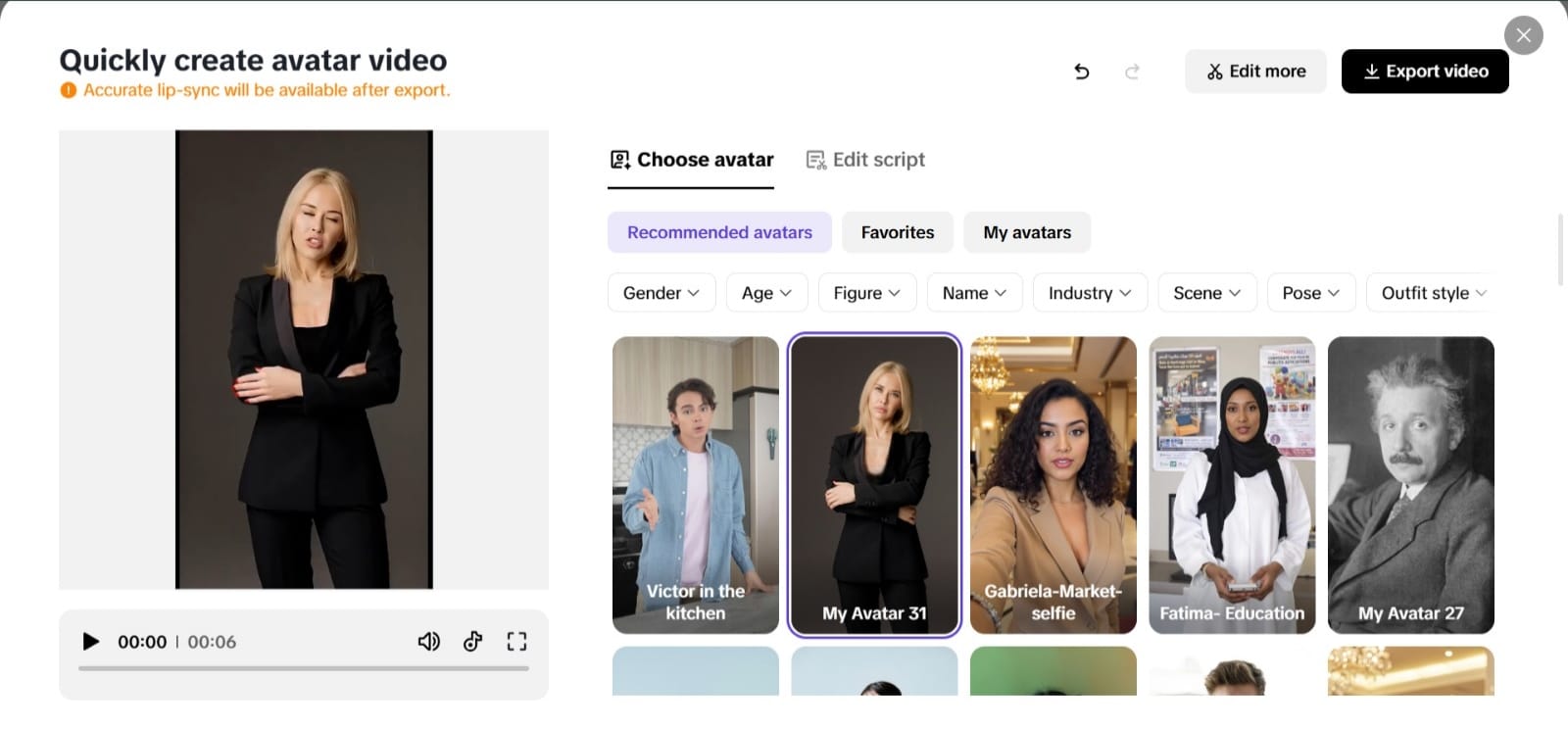
For commercials, this can be a game-changer. Picture one brand ambassador addressing several nations without re-filming a single frame. It maintains production budgets small and global reach broad.
3 surprisingly fun steps to translate your videos with Pippit
Translating videos sounds complicated, but using Pippit, it’s almost a creative hack. Here’s how the magic works:
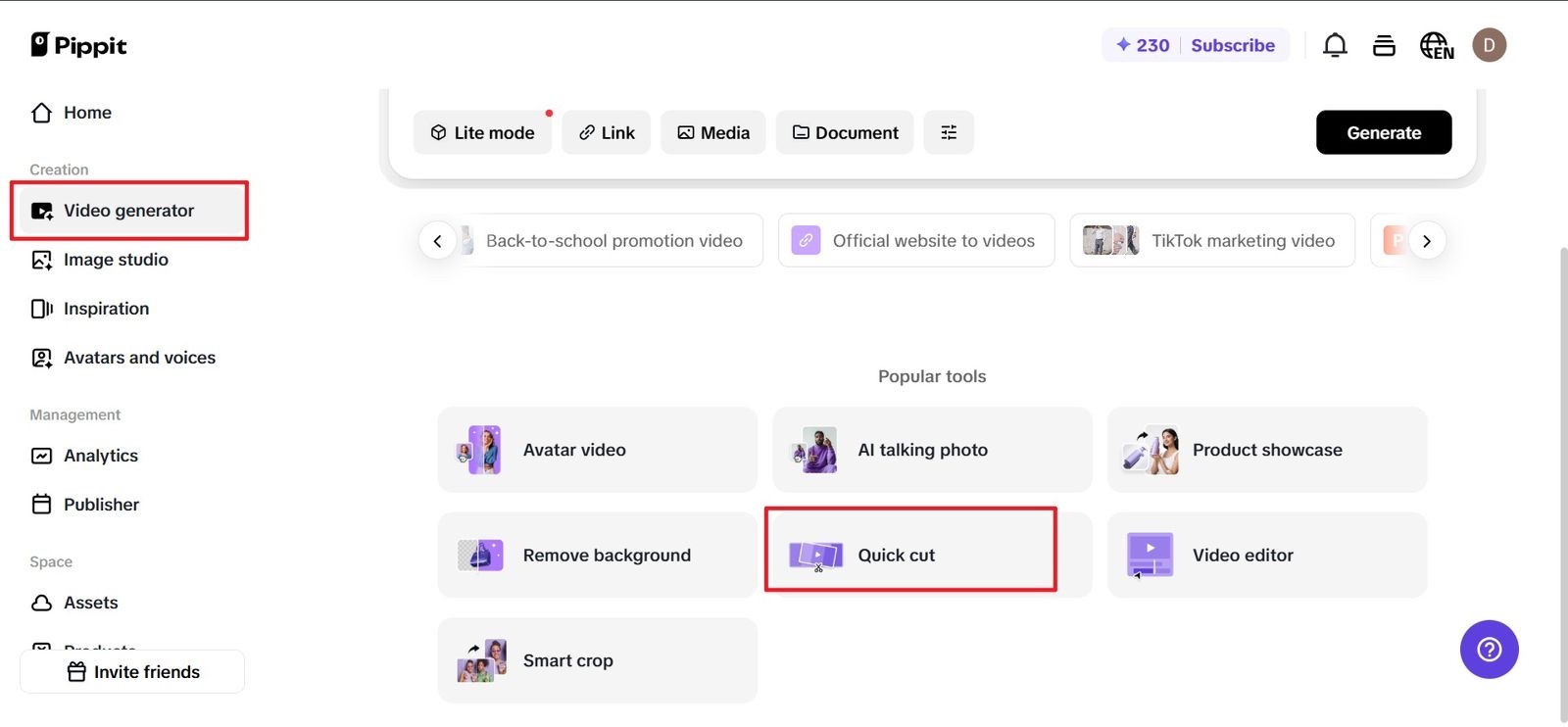
Step 1: Open video generator and quick cut
Begin by logging in to your workspace and going to the Video Generator. From the left-hand menu, select Quick Cut in order to load the editing studio. It’s where all your language magic happens.
Step 2: Add your video, then auto-caption and translate
Upload your video file and let Pippit do the hard work. Tap Auto Captions to create subtitles instantly, then tap Translate to translate them into your preferred language. It’s quick, tidy, and voice-ready.
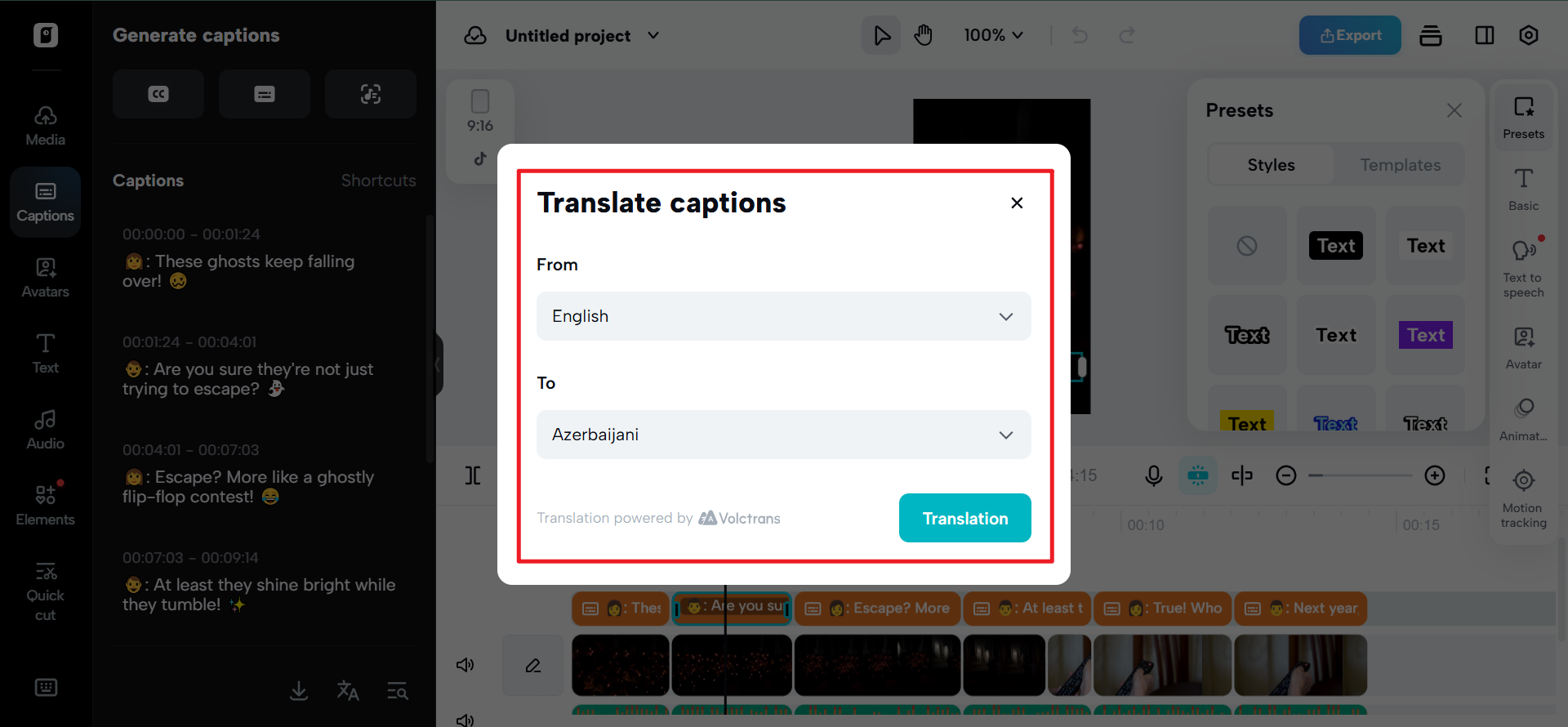
Step 3: Text-to-speech, audio cleanup, and export
Now click Text to Speech and choose Apply to All so all translated lines are voiced. Go to the audio tab, split the original audio, and remove it to prevent overlap.

When your new multilingual translation is done, just click Export to download or share with the world.

The unsung hero: Video translator
Here’s a fact that most marketers tend to forget: the video translator is not only a tool but a strategy. It’s not word-swapping; it’s cultural nuance adaptation.
For example, an American fast food advert would read “get a burger on game night.” Put it in Japan literally, and it doesn’t work. Clever video translation puts it as “watch baseball while enjoying a burger” and it works locally while retaining the feel.
That little adjustment is what makes the difference between “meh” subtitles and “wow” campaigns.
Why it’s too expensive for brands to remain monolingual
Audiences around the world demand choice. They anticipate linguistic alternatives for their media, just as they do for the size of their coffee. As said in a monolingual campaign, “This advertisement wasn’t intended for you.” “Pull up a chair—you’re welcome here,” reads one with subtitles. The worst part is that the goal is to make each individual feel as though they were the focus of your ad’s creation, not to reach a larger audience. The difference between scrolling past and clicking “share” is that emotional detail.
Wrapping it up through Pippit
Nowadays, an advertisement no longer needs to reach a boundary where it needs to change languages. With subtitles, translation, and technology that turns the process fun instead of anguish, your brand story can go wherever.
Pippit makes it laughably simple to transition from “local sensation” to “global icebreaker.” With its combination of AI-driven translation, editing, and export functionalities, you don’t create ads—you create bridges.
So the next time you create a campaign, you can ask yourself: why limit yourself to your city when you can be speaking to the world? Use Pippit, and see your message travel across borders—without diluting its heart.