
Organizations produce gems of digital information every day, both in terms of documenting transactions and media files, and system logs. With the increase in data volume, it becomes more complicated to manage storage costs and continue to perform. Lifecycle policy data archive can provide a methodical process of migrating older or lower frequency access data to lower cost levels automatically.
Table Of Content
The application of cloud lifecycle policies will need adequate planning, technical design, and continuous review. These policies are useful in enforcing compliance and maximizing expenditure in addition to ensuring that important information is accessible and data that is not in use is well stored in archives. Knowledge of the process in stages can assist teams in not misconfiguring and realizing long term value.
Understanding Lifecycle Policy Concepts
Rule based policies Cloud lifecycle policies specify the way data flows between data storage levels with time. Such rules normally cause actions, which depend on an age of the file, last access date, or custom metadata. The example is that files that are more than a specified number of days may automatically change to an archival tier with a reduced frequency of retrieval.
Lifecycle management is commonly built into cloud storage services provided by most cloud providers. Organizations do not have to manually identify files to archive, and instead, they can set up policies that run continuously in the background. This method will decrease the operational burden on the administration and will lower the chance of human error in big data management.
Assessing Data and Retention Requirements
Organizations have to consider the nature of their data before setting up any lifecycle rule. This involves determining the mission critical datasets and those required to be retained by the regulations and those that are not frequently used after a specific duration. The absence of this analysis might cause automated archiving to transfer data before its due time or even fail to comply with its standards.
The retention requirements vary depending on the industry and jurisdictions. Financial, healthcare and legal industries usually have records that need to be kept over a certain period of time. The mapping of such requirements to the storage levels and timelines will help an organization to synchronize the lifecycle rules with operational and legal requirements. This is to make sure that archiving contributes to better governance and no risk is taken.
Designing Tiered Storage Strategies
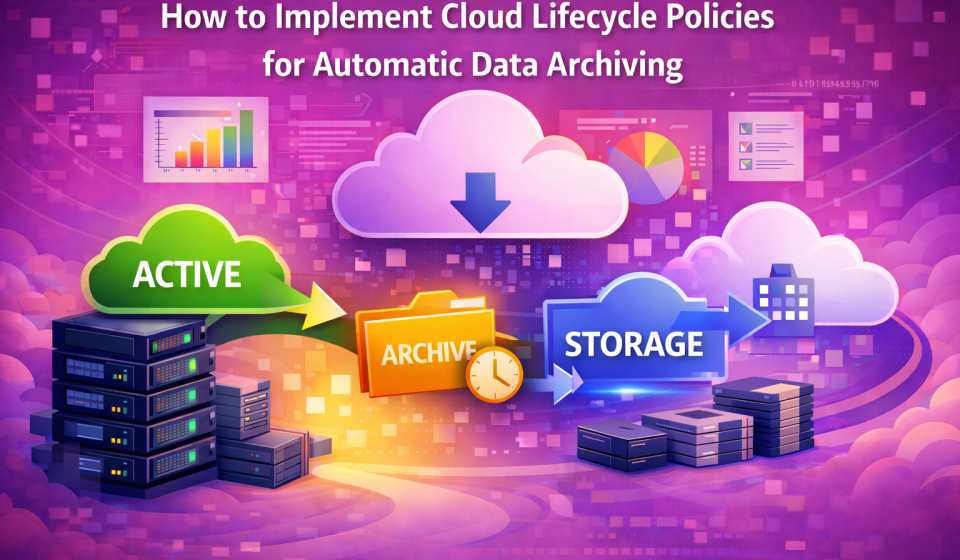
An effective lifecycle policy usage is supported by a well designed tiered storage strategy. A majority of the providers have several layers, including hot, cool, and archive, each having varying cost and performance performance characteristics. Data that are frequently accessed must be maintained in higher performance levels whereas the old or idle data can be moved to lower cost options.
Retrieval patterns and cost implications are the other issues that organizations ought to take into consideration. The tiers in the archives can be associated with the increased access time and extra retrieval costs. As such, lifecycle requirements should be realistic in use. Teams can balance cost reduction and business efficiency by determining the policy thresholds in relation to the business requirement.
Configuring Lifecycle Policies
After understanding requirements and storage levels, the other thing to do is setting lifecycle policies in the cloud platform. Administrators usually develop policies that define the conditions and activities, including shifting objects that are above 90 days to an archive level. There are also other platforms where it can automatically be deleted after some specific retention time.
Before full deployment is needed, testing policies in a controlled environment is necessary. Using a sample data set to apply rules is useful in ensuring a smooth transition of files and that there is no critical information that will be compromised. This validation step decreases the chances of an unintended data movement or loss after the policies are implemented on a large scale.
Monitoring and Governance Practices
Once in place, lifecycle policies should be effective and this can be ensured by continued monitoring. Analytics tools of storage can give insight on the transition of the tier, cost savings and activity of retrieval. Such periodic review is used to ensure that the data archived is compliant with the business need and requirement.
The policy of governance should also determine the right lifecycle rule modification. The unauthorized changes may interfere with the retention strategies or raise the costs. Accountability is supported by clear documentation and access controls and thereby lifecycle management is maintained throughout time.
Managing Cost Optimization
Cost control is one of the major objectives of automatic data archiving. Organizations are able to reduce costs by transferring inactive data to lower priced tiers without losing the valuable information. There is, however, a need to carefully project the growth of storage and the rate of retrieval in order to optimize its costs.
There are cases of businesses starting with free cloud storage services when limited sets of data are needed or pilot projects. Although these can be used to support testing, production environments need to be supported by scalable and secure solutions. Lifecycle policies are particularly useful when the data volumes go beyond entry level constraints and need to be managed in larger repositories in a structured way.
Ensuring Security and Compliance
Where lifecycle policy is to be implemented, security must be observed. The encryption standards and access controls used on active data should be applied to archived data. The transfer of files between the layers should not compromise protection and reveal sensitive information.
In compliance audits evidence of retention and archiving procedures may be necessary. Correctly established lifecycle policies can offer automated records of when information was transferred or removed based on established policies. This traceability promotes regulatory audit and proves coherent compliance with data governance models.
Conclusion
The establishment of a cloud lifecycle policy of automatic data archiving is a technical and strategic project. Companies can handle increasing volumes of data by learning about levels of storage, estimating the retention needs, and prudently setting up transitioned rules. Automated archiving saves on manual work and makes the storage practices meet long term operation objectives.
Policies are effective because there is continuous monitoring and governance to guarantee that they are in line with changing needs of the business. Lifecycle management can turn cloud storage into more than a mere repository, through careful planning and execution, the lifecycle management is able to provide a structured system that balances performance, compliance, and cost control.