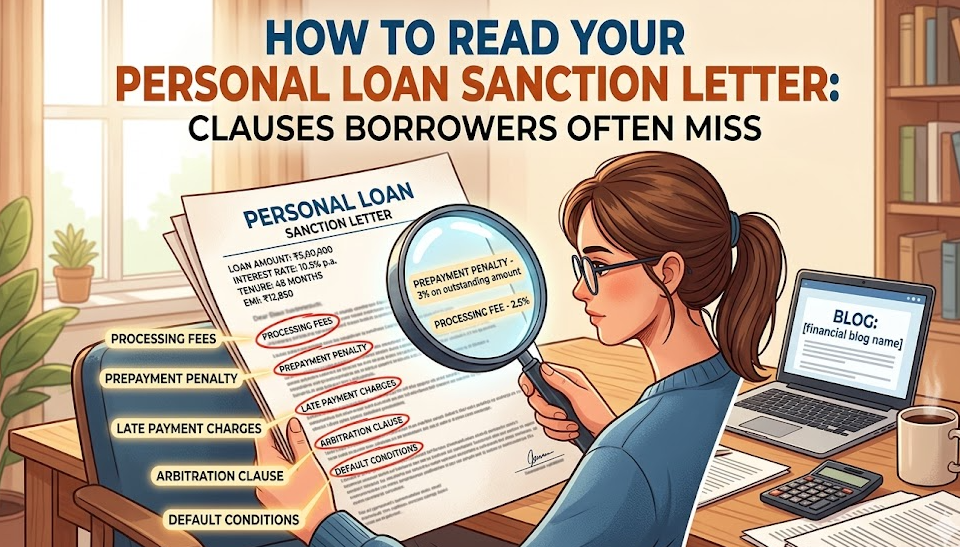

A personal loan sanction letter is often treated as a formality. Once approval comes through, many borrowers skim the document, check the loan amount and EMI, and move on. This is a mistake. The sanction letter is not just confirmation. It is a binding summary of the loan terms that will govern repayments, charges, and lender rights for years. Knowing how to read this document carefully can prevent unpleasant surprises later.
Table Of Content
- What A Personal Loan Sanction Letter Actually Is
- Interest Rate Type and Reset Conditions
- Processing Fees and Upfront Charges
- Prepayment and Foreclosure Clauses
- EMI Structure and Repayment Schedule
- Penal Charges and Default Conditions
- Loan Cancellation and Cooling Off Periods
- Clauses Borrowers Commonly Overlook
- Matching The Letter with What Was Promised
- Conclusion
What A Personal Loan Sanction Letter Actually Is
A sanction letter is an official document issued after a loan is approved. It confirms the loan amount, tenure, interest rate, and key conditions under which the loan is granted.
For borrowers applying through personal loan online channels, this letter may arrive digitally. The format may look simple, but the content carries legal and financial weight.
Once accepted, the terms become binding, even if the borrower later claims they did not notice certain clauses.
When you opt for options like FIRSTmoney Personal Loan by IDFC First Bank, the process is 100% digital. Here, sanction letters, terms and acceptance are all completed online, making it even more important to review every clause carefully before final confirmation. You can also easily access all loan related documents directly via the mobile app anytime you need to refer to them.
Interest Rate Type and Reset Conditions
Many borrowers check the interest rate but miss whether it is fixed or floating. This distinction matters over time.
Some sanction letters specify conditions under which the interest rate may change, even if the loan appears fixed initially.
Borrowers should read this section carefully to understand whether EMIs can change during the tenure.
Processing Fees and Upfront Charges
Processing fees are usually mentioned clearly, but what often gets missed is how and when they are charged.
Some lenders deduct fees from the disbursed amount rather than collecting them separately. This means the amount credited may be lower than the sanctioned amount.
Before accepting a personal loan online, borrowers should check whether processing fees, documentation charges, or insurance premiums are included.
FIRSTmoney Personal Loan by IDFC FIRST Bank offers low processing fees starting at just 0% on select loan amounts, making the loan more affordable.
Prepayment and Foreclosure Clauses
One of the most overlooked sections relates to early repayment. Many borrowers assume they can repay the loan early without cost.
Sanction letters often include prepayment or foreclosure conditions. These may involve minimum lock in periods or percentage based charges on the outstanding principal.
Some loan options like FIRSTmoney personal loan by IDFC FIRST Bank offer easy foreclosure via their app along with zero foreclosure charges.
EMI Structure and Repayment Schedule
The EMI amount is usually highlighted, but the repayment structure may include additional details.
Borrowers should check the exact EMI start date, repayment frequency, and whether EMIs are due monthly or follow a different schedule.
Using a personal loan eligibility calculator before applying helps estimate EMIs, but the sanction letter confirms the final structure.
Penal Charges and Default Conditions
Penal charges for missed EMIs are clearly stated, but many borrowers do not read the fine print around default classification.
Sanction letters often define how many days of delay trigger penalties, reporting to credit bureaus, or escalation to recovery processes.
Loan Cancellation and Cooling Off Periods
Some sanction letters include a cooling off period during which the borrower can cancel the loan after disbursal, subject to conditions.
This clause is easy to miss but useful if circumstances change suddenly. It usually comes with timelines and cost implications.
Clauses Borrowers Commonly Overlook
To avoid missing key details, borrowers should pay close attention to the following.
- Change In Terms Clause
Allows the lender to revise certain conditions under defined circumstances. - Recovery and Jurisdiction Clause
Specifies how and where disputes will be handled. - Insurance Linkage
Indicates whether loan protection insurance is bundled or optional. - Auto Debit Mandate Conditions
Explains consequences of mandate failure or account change.
Matching The Letter with What Was Promised
Borrowers should compare the sanction letter with what was discussed or shown during application. Differences should be clarified before acceptance.
A personal loan eligibility checker provides estimates, not final terms. The sanction letter is the final authority.
Any mismatch in interest rate, tenure, or charges should be questioned immediately.
Conclusion
A personal loan sanction letter is more than an approval note. It is a detailed contract that defines your financial obligations and rights as a borrower. While applying for a personal loan online platforms or traditional channels, careful reading of all documents is essential for informed borrowing.