
With the growing number of devices connecting to their household networks, the security of personal information and the stable operation of the connections are becoming more significant. The same network is commonly used by smart televisions, gaming consoles, computers, phones, and smart home devices. In cases when all the devices work with the same network segment, it is easier to spread the vulnerability in case one of the devices is compromised. VLANs or Virtual Local Area Networks are an efficient means of isolating devices into networked units.
VLANs are common in corporations, yet they can be applicable in homestead networks. Homeowners can gain better control and enhanced security by separating devices into various logical segments of the network. VLANs do not allow communication between all devices, but they form boundaries of control between groups of devices. This is a risk mitigation strategy that assists in guaranteeing improved operation of various forms of network activity.
Understanding The Concept Of Network Segmentation
The segmentation of a network into parts that are independent of each other is known as network segmentation. Devices with similar functions or security requirements can be located in each segment. As an illustration, one of the segments can be occupied by personal computers and work equipment whereas cameras and speakers that are part of smart home devices can be situated on a different segment. This isolation is used to avoid unauthorized access among groups of devices.
The VLANs are used to provide segmentation in that network traffic is allocated to a given virtual channel in the identical physical infrastructure. Although devices can share a router or switch, they exist as though they are part of entirely different networks. This rational isolation implies that should one device within a segment be compromised there can be no easy interaction between that device and another segment of devices without express authorization.
Equipment Required For Vlan Configuration
The construction of VLANs at home needs compatible networking devices. A router with a VLAN set up is necessary since it determines the movement of traffic between network segments. The administrative settings of many modern routers that are built with advanced networking capabilities have the option to create VLANs. It can also be required that a managed network switch is used to extend VLAN segmentation across more than one wired connection.
The choice of trustworthy equipment is a significant move toward the creation of a safe and stable network. There are also households which seek the services of their local providers when selecting compatible networking devices or upgrading their connections. In other areas where individuals consider alternative choices in the internet, a research of plans offered by internet providers London Ontario can be used to verify that the connection provided can offer high networking capabilities and reliable bandwidth to support segmented networks.
Planning Network Segments For Household Devices
It is also good to organize the way devices are organized before forming VLANs. The security requirements and traffic patterns of different devices tend to be different. Work devices and personal computers are usually very insecure and have free access to the internet. In the meantime, intelligent appliances, streaming devices, and Internet of Things devices might require minimal connectivity.
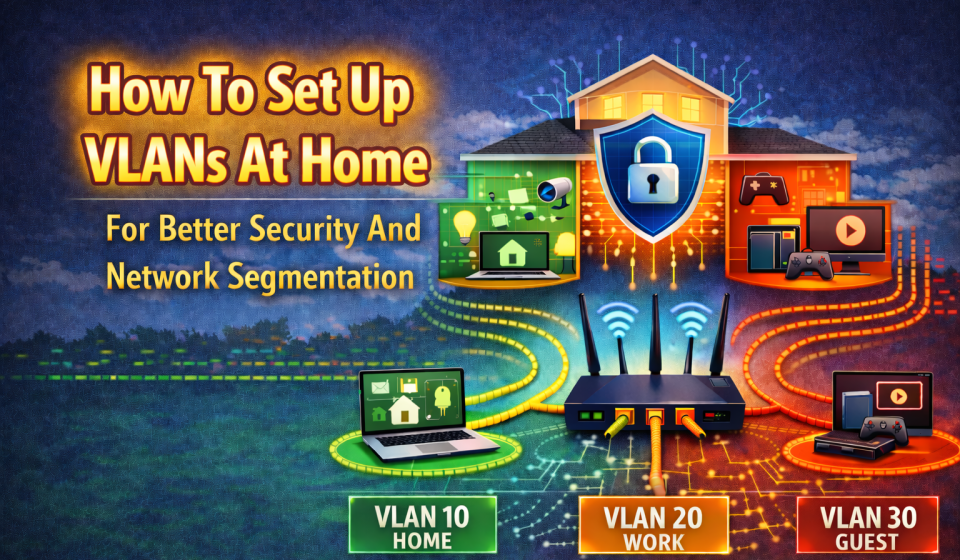
One of the most frequent tactics would be to establish personal devices, guest devices, and smart home equipment separate VLANs. Guest networks enable visitors to use the internet with no interaction with personal files or common storage devices. Isolation of smart home equipment is also possible, to minimize the possible security risks without losing functionality. Proper planning will make sure that every group of devices gets the proper access level.
Steps For Configuring Vlans On Home Networking Equipment
After the planning, it is possible to make VLANs using the router or managed switch interface. The majority of routers have a web based control panel, which allows the administrators to log in and adjust the network settings. In such environments, users are able to develop VLAN identifiers and designate them to particular ports or wireless networks. VLANs are independent network paths that exist on the same hardware.
Devices can be attached to their respective segments either by using wired ports or special wireless networks after establishing VLANs. Other routers will support broadcasting of more than one wireless network which identifies different VLANs. Indicatively, a personal network can be one wireless network and another can be used by connecting smart appliances. This configuration enables users of the homes to control security and traffic without having entirely distinct hardware of both networks.
Managing Traffic And Maintaining Network Security
The monitoring network performance and security is relevant once VLANs have been implemented. Firewall rules are commonly built into routers, and they regulate the movement of traffic between segments. These policies can permit certain communication and prohibit unwarranted connections. As an example, a smart device network may only be allowed to use the internet but not the personal computers.
There is also proper management, which is also used to guarantee the consistency of performance throughout the home internet environment. Separation will decrease traffic congestion since devices that do extensive downloads or updates will not disrupt sensitive tasks like video conferencing or online gaming. Periodic audit of router setting and software update assists in keeping security intact, and network segmentation operational.
Maintaining Long Term Network Organization
VLANs are long term beneficial when the households keep on increasing the number of devices in their ecosystem. New devices can be added without interfering with any existing configurations to be integrated into the respective network segment. This is flexible, and this enables the homeowners to take control as the use of technology increases.
Segmentation can be maintained through regular maintenance. Connection audit of devices, router software updates, and firewall rule changes are possible to maintain the network in order and security. Being designed with care, VLANs enable a homeowner to create an organized network that is capable of supporting the current digital lifestyle, as well as safeguarding sensitive information and enhancing performance in general.