

Managing your HR needs for a growing company often takes some serious untangling of many spreadsheets, manual processes and databases. As your company grows its staff size, opens more regions and adopts hybrid working practices, managing your HR can get tedious.
To make managing your complex HR needs easier, you need to bring all of your processes into one place. With high-capacity HRMS software that incorporates automation and integrated payroll, your complex processes will become simple.
Table Of Content
- 1. Unified Employee Database (Single Source of Truth)
- 2. Automated Payroll Processing and Calculation Engines
- 3. Real-Time Statutory and Tax Compliance Management
- 4. Mobile-First Employee Self-Service (ESS)
- 5. Automated Time, Attendance, and Roster Integration
- 6. Configurable Multi-Level Approval Workflow
- 7. Digital Onboarding/Pre-Boarding
- 8. Ongoing Performance & Goal Management
- 9. Comprehensive Audit Trails and Security Controls
- 10. Real-Time Workforce Analytics and Reporting Dashboards
- Conclusion
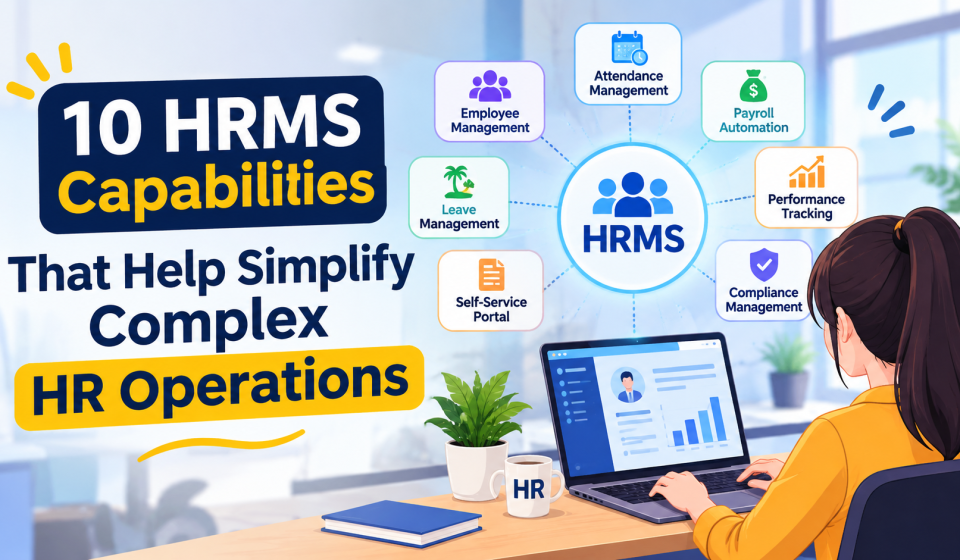
Here are 10 key capabilities your HRMS can offer you to make managing your complex HR needs simpler for your enterprise.
1. Unified Employee Database (Single Source of Truth)
When employee data is scattered across separate files for payroll, benefits, performance, and attendance, administrative errors multiply. A unified database consolidates every stage of the employee lifecycle into a single record. Whenever a detail is updated, such as a title change, address update, or bank account modification, IT synchronises instantly across all modules, eliminating manual data entry and reconciliation delays.
- Streamlined Data Management: Ensures no duplicate data across different departments within your organisation.
- Instant Record Retrieval: Allows HR teams to locate complete employee history in seconds during audits or reviews.
2. Automated Payroll Processing and Calculation Engines
Running a payroll manually can take up a lot of time. With an advanced HRMS solution, your payroll software will be integrated with your core HR and attendance data. This means your system will calculate your complicated salary details, shift pay, overtime and backdating automatically.
- No Errors: No errors due to copying data from your attendance logs.
- Faster Monthly Payroll Runs: Saves you hours running your monthly payroll.
3. Real-Time Statutory and Tax Compliance Management
Labour laws, tax regulations, and statutory reporting requirements shift continuously across different operating regions. Keeping track of these changes manually exposes enterprises to severe financial penalties. Modern HRMS platforms feature automated cloud updates that adjust tax calculations, pension contributions, and local filing formats natively, ensuring the business stays compliant without constant IT intervention.
- Proactive Regulatory Updates: Automatic backend patches keep tax tables and labour rules up to date.
- Risk Mitigation: Protects the organisation from costly fines, legal liabilities, and audit failures.
4. Mobile-First Employee Self-Service (ESS)
HR departments are frequently overwhelmed by routine employee enquiries regarding leave balances, tax certificates, and pay slips. Mobile-first ESS portals empower employees to handle these tasks independently. Staff can apply for leave, submit expense claims, view pay stubs, and update personal details directly from their smartphones, freeing HR teams to focus on strategic initiatives.
- 24/7 Accessibility: Gives remote and field workers instant access to essential HR documents on the go.
- Reduced Administrative Enquiries: Cuts down the volume of routine email requests directed at human resource personnel.
5. Automated Time, Attendance, and Roster Integration
Managing attendance across distributed teams, shift workers, and remote staff is notoriously difficult. Modern HRMS platforms integrate biometric devices, geotagged mobile check-ins, and flexible shift schedulers directly into the system. Approved attendance records and overtime hours flow seamlessly into the payroll engine, preventing discrepancies before pay runs occur.
- Accurate Time Tracking: Eliminates buddy-punching and manual timesheet tampering through biometric and digital verification.
- Seamless Roster Management: Simplifies complex shift scheduling for manufacturing plants, retail outlets, and customer support hubs.
6. Configurable Multi-Level Approval Workflow
Every business has different processes in place to approve various expenses, claims, promotions and leave. With rigid software, users may have to adjust their processes, but with flexible HRMS, you can easily customise your multi-level workflows to ensure they fit with your company policies.
- Custom workflows: Customise your workflows to fit with your department structure.
- Improved time to completion: Processes are kept moving with automated reminders.
7. Digital Onboarding/Pre-Boarding
Impressions matter! Many employees can become frustrated with lengthy processes around onboarding. Enterprise HRMS solutions provide digital pre-boarding processes to make it easier for new starters. Tax, ID and handbooks can be uploaded securely.
- No paper: All legal and tax documents can be collected.
- Improved experience for new hires: Everything will be set up for your employees.
8. Ongoing Performance & Goal Management
Annual performance reviews can sometimes be quite subjective. With modern HR solutions, you can manage performance throughout the year. Company objectives can be cascaded down to individual Objectives & Key Results (OKRs). With automated reminders, peer feedback features, and templates, employees can be reminded to review their performance.
- Business objectives: Ensure employees know what they need to focus on every day to meet company goals.
- Positive performance culture: Replace stressful annual performance reviews with performance coaching and peer recognition.
9. Comprehensive Audit Trails and Security Controls
Data security should be one of the first considerations due to the sensitive nature of employee data within enterprise HR databases. Comprehensive data security tools allow for role-based access control (RBAC) within modern platforms. This means managers, HR partners & executives will only see data relative to their position. Fully automated audit logs will also keep complete records of any changes made to the platform, whilst showing the precise time and date they were made.
- Strict Data Privacy: Employees are unable to see compensation or personal data.
- Complete Accountability: With clear audit trails showing at what time data was changed, approved or deleted.
10. Real-Time Workforce Analytics and Reporting Dashboards
If reports are not up to date within the HR department, effective decisions will not be able to be made. Advanced HRMS systems will offer real-time analytics dashboards. CHROs and CFOs will have instant insight into labour costs, employee breakdown, absenteeism and turnover risk.
- Instant Data Visualisation: Critical workforce metrics will be shown on clear interactive dashboards.
- Proactive Talent Management: Leadership can identify the risk of staff leaving, labour costs & productivity changes per department.
Conclusion
Simplifying complex HR processes within your growing enterprise has become essential. With comprehensive HRMS software which integrates seamlessly with payroll software, automated compliance tools & simple self-service features, organisations can easily overcome any administrative delays.
By investing in these ten core capabilities, HR leaders will reduce back-office processes, reduce overheads and have a strong digital foundation in place.