
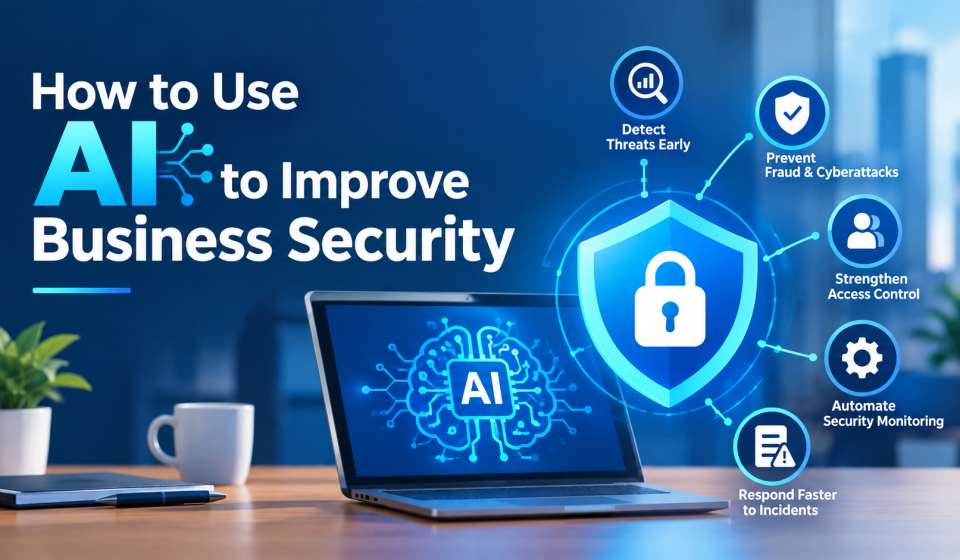

As technology advances, AI has become a powerful tool for improving security. It helps protect sensitive data and monitor physical locations, allowing businesses to stay ahead of potential threats. As more companies move online, knowing how to use AI security solutions is crucial for safety and smooth operations.
Table Of Content
Imagine having a partner that can analyze large amounts of data, predict risks, and manage responses. With AI, businesses can make security processes more efficient, helping them stay proactive instead of reactive. Let’s look at how you can use AI to create a safer business environment.
Real-Time Surveillance
One major security benefit of AI is real-time surveillance. While traditional cameras offer basic monitoring, AI systems provide much more. With advanced analytics, AI can spot unusual activities or behaviours that might indicate a breach or emergency.
Facial recognition technology is driving these advancements, enabling businesses to identify individuals entering their premises quickly. This boosts security and improves the customer experience by speeding access for known clients or staff. Furthermore, AI can distinguish everyday activities from suspicious behaviour, reducing false alarms and allowing security personnel to focus on what matters.
Weapon Detection System
Using the AI-powered weapon detection system adds an important layer of protection. These systems can identify firearms and other weapons in real time, helping to prevent threats before they escalate. With advanced computer vision and machine learning, these solutions can analyze crowd dynamics and detect weapons quickly and discreetly.
These systems play a vital role in busy places like airports or large events. They allow security personnel to act decisively without causing panic, helping keep everyone safe. The goal is to create a secure atmosphere that gives peace of mind to both employees and customers.
Threat Detection Systems
AI-driven threat detection systems are changing how businesses handle cybersecurity. These systems use machine learning algorithms to find patterns and unusual behaviour in network traffic. By constantly checking for vulnerabilities, AI protects sensitive information from increasingly sophisticated cyberattacks.
Additionally, AI weapon detection can automate responses to detected threats, allowing quick action without human input. If a data breach or cyber threat occurs, the system can isolate the affected areas and notify security teams right away, lowering potential damage. Keeping servers and customer data safe is essential, and AI helps make this a reality.
Access Control Solutions
Managing who can enter your business premises is key to security. AI can improve access control systems to make them smarter and more efficient. For example, biometric systems using fingerprints or retinal scans ensure that only authorized people can access restricted areas, reducing the risk of unauthorized entry.
Moreover, AI can learn from employee movement patterns, further improving access control. If someone tries to enter a restricted area, the system can alert security and capture evidence. This deters breaches and records incidents for the future, enhancing accountability.
Data Analytics and Reporting
To understand security incidents, businesses need data. AI is good at processing large amounts of information. AI-driven data analytics give companies valuable insights into patterns of theft, breaches, or weaknesses. By reviewing past incidents, businesses can identify security gaps and address them.
AI also provides easy-to-use reporting tools. These tools present insights through dashboards or notifications, keeping decision-makers informed about security. With clear information, organizations can make smart decisions to strengthen their security without second-guessing.
Incident Response Automation
Quick response is key during security incidents, and AI can help speed up this process. Automation can trigger immediate responses when it detects suspicious activity, such as locking doors or alerting security officers.
This fast action helps reduce damage and increases the chances of catching those involved in criminal activities. By automating response plans, businesses can manage incidents calmly and methodically, ensuring nothing is overlooked in emergencies.
As security threats keep changing, businesses must adapt to new challenges. AI-driven solutions enhance traditional security measures and provide new ways to protect assets and ensure safety. Using these technologies shows a commitment to creating secure environments, allowing businesses to grow while keeping people safe.
Cybersecurity Chatbots
In the evolving world of cybersecurity, AI-powered chatbots can improve business security. These virtual assistants offer quick support to employees and customers, answering common questions about security rules, threats, and how to handle incidents.
Chatbots help users report suspicious activity or breaches, ensuring important information reaches the right people quickly. They also educate employees on good cybersecurity practices, helping prevent human errors that often lead to security issues. By providing immediate help and maintaining open communication, these chatbots create a culture of security awareness in organizations.
Predictive Analytics for Threat Prevention
AI’s predictive analytics can help businesses anticipate security threats before they happen. By analyzing past data and current trends, AI can identify potential weaknesses and predict threats that may arise. This proactive approach lets organizations take steps to reduce risk.
For instance, AI can analyze user behaviour and spot unusual activities that may signal a cyber threat. It can also consider external factors, like political conditions or new technologies, that may pose risks. By using predictive analytics, organizations can develop strong security strategies and allocate resources wisely, preparing themselves for future challenges.