
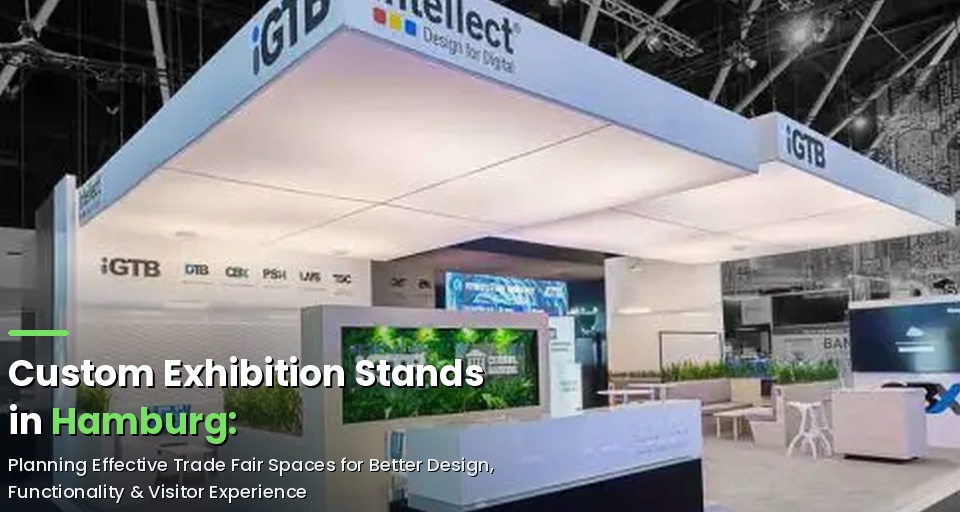
Custom Exhibition Stands in Hamburg: Planning Effective Trade Fair Spaces for Better Design, Functionality & Visitor Experience

Trade fairs provide businesses with opportunities to introduce new products, connect with industry professionals, understand market developments, and establish valuable partnerships. However, participating in an exhibition involves more than booking floor space and preparing promotional materials. Companies must carefully consider how their exhibition environment will represent their identity, communicate their message, and accommodate visitors. A well-planned stand combines practical design, effective branding, comfortable interaction areas, and suitable construction methods. Understanding these elements helps exhibitors make better decisions and create a productive presence at industry events.
Table Of Content
- The Role of Exhibition Spaces in Modern Business Events
- Important Factors to Consider Before Designing a Stand
- Understanding the Target Audience
- Evaluating Available Floor Space
- Selecting Suitable Materials and Lighting
- How Exhibition Stand Design Supports Brand Communication
- The Growing Importance of Reusable Exhibition Structures
- Understanding the Exhibition Stand Production Process
- Initial Briefing and Design Development
- Manufacturing and Quality Checks
- Transportation and On-Site Installation
- Why Location-Specific Planning Matters in Germany
- Preparing for a Successful Exhibition Experience
- Frequently Asked Questions
- 1. What should businesses consider before designing an exhibition stand?
- 2. What is the difference between custom and modular exhibition stands?
- 3. Why is three-dimensional stand visualisation important?
- 4. How can businesses make exhibition stands more sustainable?
- 5. When should exhibition stand planning begin?
- Conclusion
The Role of Exhibition Spaces in Modern Business Events
An exhibition stand acts as a physical representation of a company’s business identity. It gives visitors an opportunity to understand what an organisation offers without relying entirely on brochures or presentations. The arrangement of products, graphics, lighting, furniture, and demonstration areas influences how people experience the space.
Businesses participating in German trade fairs often operate in competitive industries where several exhibitors present similar products and services. A clear exhibition layout can help visitors recognise a company’s main offerings and understand its value.
Professional planning also helps organisations use their allocated floor space efficiently. Instead of filling every available area with displays, exhibitors should consider visitor movement, accessibility, staff requirements, and opportunities for meaningful conversations.
Important Factors to Consider Before Designing a Stand
The planning process should begin with a clear understanding of the exhibition objectives. Different businesses have different priorities, and the design should reflect those requirements.
Understanding the Target Audience
Knowing the expected visitors helps determine the appropriate presentation style. A business targeting technical specialists may require demonstration stations and detailed product information. Companies seeking distributors or business partners might benefit from dedicated meeting spaces.
Understanding visitor expectations also helps determine which information should receive the greatest attention.
Evaluating Available Floor Space
Stand dimensions influence almost every design decision. A smaller area requires careful organisation, while a larger exhibition space offers opportunities for separate demonstration, hospitality, and meeting zones.
Exhibitors should review the venue’s technical guidelines, including height restrictions, access requirements, electrical provisions, and fire safety regulations, before approving a final layout.
Selecting Suitable Materials and Lighting
Materials influence the appearance, durability, and practical performance of an exhibition structure. Wood, aluminium, glass, fabric, and reusable display components can serve different purposes depending on the design.
Lighting should highlight important products and graphics while maintaining comfortable visibility. A balanced combination of general and focused lighting can make displays easier to understand.
How Exhibition Stand Design Supports Brand Communication
Visual communication is an important part of exhibition planning. Visitors should be able to recognise the company, understand its main message, and identify relevant products without unnecessary effort.
This is why many organisations work with an experienced exhibition stand company in Germany when preparing for major industry events. Stand Builders GmbH, based in Berlin, provides exhibition stand design and construction services for businesses exhibiting across Germany and other European destinations.
Its four principal stand solutions address different exhibiting requirements:
- Custom exhibition stands: Individually designed structures developed around a company’s branding, products, floor space, and presentation objectives.
- Modular exhibition stands: Adaptable systems that can be reconfigured for different exhibition layouts and reused across multiple events.
- Double-decker exhibition stands: Two-level structures that provide additional functional space for meetings, hospitality, and presentations.
- Country pavilion exhibition stands: Coordinated exhibition environments that allow multiple organisations to present themselves within a shared national or regional identity.
Selecting between these options requires consideration of the exhibition budget, available space, event regulations, and expected frequency of participation.
The Growing Importance of Reusable Exhibition Structures
Sustainability and resource management have become important considerations for businesses planning repeated exhibition participation. Constructing an entirely new stand for every event may increase material consumption, transportation requirements, and project expenses.
Reusable exhibition components provide an alternative. Modular structures, for example, can be adapted to different floor dimensions while maintaining consistent branding.
However, reusability requires advance planning. Businesses should consider how components will be transported, stored, maintained, and modified between events. Materials should also be selected according to their durability and suitability for repeated assembly.
Custom structures can incorporate reusable elements as well. A carefully planned design does not necessarily mean that every component must be manufactured exclusively for one exhibition.
Understanding the Exhibition Stand Production Process
A completed exhibition stand involves several stages of work. Understanding this process helps businesses prepare information, coordinate decisions, and avoid unnecessary delays.
Initial Briefing and Design Development
The project generally begins with a discussion about business objectives, brand guidelines, exhibition details, stand dimensions, and budget expectations.
Designers then develop concepts that translate these requirements into a functional layout. Three-dimensional visualisations allow exhibitors to review the proposed structure before production begins.
Manufacturing and Quality Checks
Once the design receives approval, the production stage begins. Materials, structural components, graphics, and other elements are prepared according to the agreed specifications.
Quality checks are important because individual components must fit together correctly during installation. Proper preparation also helps identify potential construction issues before the materials reach the exhibition venue.
Transportation and On-Site Installation
Transport planning ensures that stand components arrive at the venue according to the organiser’s schedule. Packaging and handling arrangements help protect materials during transit.
Installation involves assembling the structure, positioning graphics, arranging furniture, and checking technical elements. On-site supervision can help coordinate these activities and address unexpected challenges.
After the exhibition, dismantling and storage arrangements should also be considered, particularly when the structure will be used again.
Why Location-Specific Planning Matters in Germany
Germany hosts major trade fairs across different industries and exhibition destinations. Cities such as Berlin, Hamburg, Frankfurt, Munich, Cologne, Düsseldorf, Hannover, and Nuremberg attract businesses from domestic and international markets.
Each venue can have different technical requirements, installation schedules, access arrangements, and construction guidelines. Therefore, exhibitors should review the relevant organiser information before finalising their stand plans.
For example, a company participating in a manufacturing exhibition may need specialised product demonstration facilities, while an organisation attending a consumer-focused event may prioritise accessible displays and visitor interaction.
Stand dimensions, transport arrangements, and installation deadlines should be confirmed well before the event to support smooth coordination.
Preparing for a Successful Exhibition Experience
Good preparation extends beyond the physical stand. Exhibitors should organise promotional materials, staff responsibilities, product samples, digital presentations, and lead collection methods before arriving at the venue.
A simple preparation checklist can include:
- Confirming the exhibition objectives and target audience.
- Checking the allocated floor dimensions and venue regulations.
- Approving the design and technical specifications.
- Preparing product displays and marketing materials.
- Coordinating transportation and installation schedules.
- Briefing staff about visitor engagement and lead management.
- Planning dismantling, storage, and post-event evaluation.
For businesses exhibiting in northern Germany, researching options for custom exhibition stands in Hamburg can also help when considering location-specific presentation requirements and suitable exhibition layouts.
Frequently Asked Questions
1. What should businesses consider before designing an exhibition stand?
Businesses should identify their objectives, target audience, available floor space, budget, branding requirements, and technical needs before approving a design.
2. What is the difference between custom and modular exhibition stands?
Custom stands are developed around specific business requirements, while modular stands use adaptable components that can be rearranged for different exhibition spaces and events.
3. Why is three-dimensional stand visualisation important?
Three-dimensional visualisation helps exhibitors understand the proposed layout, review branding placement, evaluate visitor movement, and request adjustments before manufacturing begins.
4. How can businesses make exhibition stands more sustainable?
Companies can consider reusable materials, modular components, efficient transportation, durable construction, and proper storage to reduce unnecessary material consumption.
5. When should exhibition stand planning begin?
Planning should begin several months before the event whenever possible. Early preparation provides sufficient time for design approval, manufacturing, transportation, technical coordination, and installation.
Conclusion
Effective exhibition planning requires a balance between visual communication, practical functionality, technical preparation, and visitor engagement. Businesses that establish clear objectives and consider their space requirements early can make more informed decisions about stand design and construction. From selecting suitable structures to coordinating manufacturing, transportation, installation, and dismantling, every stage contributes to the overall exhibition experience. A thoughtfully organised stand can help companies communicate their identity, present their offerings clearly, and develop meaningful professional relationships at trade fairs.