

Why does your business appear in local search results but still struggle to get calls and walk-ins? You may have a website and a Google Business Profile, but nearby customers might choose competitors with a stronger local presence. Without a clear plan, your business can miss opportunities to reach people searching for your services nearby.
Table Of Content
- What is a local SEO strategy?
- How do I create a local SEO strategy?
- Step 1: Your Present Situation
- Step 2: Competitor Research
- Step 3: Opportunities For Improvement
- How to Build a Local SEO Strategy: Step-by-Step Guide
- Optimize Your Google Business Profile Completely
- Drive Consistent Customer Reviews
- Do Local Keyword Research and On-Page Optimization
- Create Dedicated Local Landing Pages for Each Service Area
- Create Localized Content That Serves Your Community
- Local Link Building
- Implement Local Business Schema Markup
- Website Optimization
- Optimize for Voice Search and Conversational Queries
- Image Optimization
- Social Links
- Spam Fighting
- Common mistakes to avoid
- Wrapping Up
- FAQs
- 1. How long does Local SEO take to work?
- 2. What is the difference between Local SEO and regular SEO?
- 3. Can a business do Local SEO without a physical storefront?
- 4. Is local SEO worth it for small businesses?
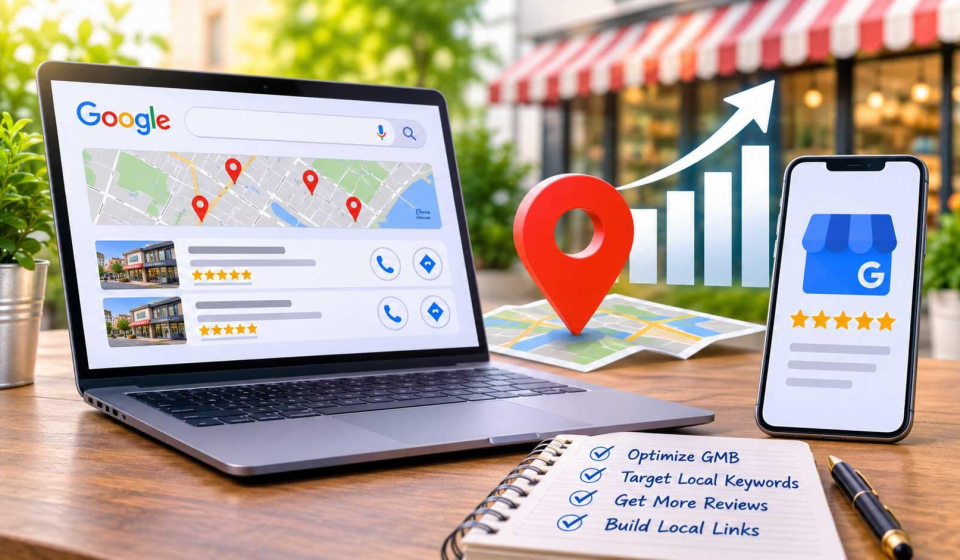
A well-planned local SEO strategy helps you improve your online visibility, reach the right audience, and build trust with potential customers. From optimizing your Google Business Profile and targeting local keywords to earning customer reviews and building local links, the right steps can help you turn local searches into more calls, store visits, and new customers.
What is a local SEO strategy?
Your local SEO strategy is a blueprint for success that helps local businesses build a stronger local search presence by following local SEO best practices. It gives you a clear plan to improve your business visibility in nearby searches and outrank other local businesses competing for the same customers. With the right time and resources devoted to local SEO strategy creation, you can focus on actions that attract more calls, visits, and potential customers.
How do I create a local SEO strategy?
Creating a local SEO strategy starts with understanding your local business, local consumers, and the local ranking factors that affect visibility. A methodical approach helps you use your time and resources wisely while applying local SEO best practices across the Local Pack, Local Finder, Maps, and local search results. By reviewing where you stand, studying competitors, and identifying areas for improvement, you can work toward ranking higher in search results and build a stronger local presence.
Step 1: Your Present Situation
Start by reviewing your Present Situation before choosing SEO tactics or making changes to your website. A Local Search Audit gives you an objective and data-led view of your site ranking, local search position, and current local SEO work. This audit process can include a manual audit, a keyword ranking report, and a review of your website, Google Business Profile, links, and customer feedback. Use the findings to identify urgent tasks and set a clear starting point for measuring progress.
During your audit, check these key areas:
- Website and On-Page Optimization: Review on-page optimization, page titles, slow-loading pages, broken links, and duplicate and low-quality content. Also, assess the mobile user experience to see how easily visitors can use your website on mobile devices.
- Google Business Profile: Check your business name, address, phone number, categories, and other profile details. Verified Business Profiles can track search terms, views, call-button clicks, website clicks, and direction requests, providing a baseline for measuring improvement.
- Link Report: Review your link report to understand your inbound links and anchor text. Check whether the links point to relevant pages and use suitable anchor text.
- Online Reviews: Review your online reviews across different review platforms. Look at both positive and negative reviews to understand customer feedback and identify areas that need attention.
- Local Citations: Check your local citations across online directories and business listings. Look for incorrect or outdated information, especially differences in your business name, address, and phone number.
Step 2: Competitor Research
Competitor Research helps you gather local SEO intel about other local businesses that appear in search results and understand which local SEO best practices they follow. Through a thorough analysis of specific competitors, competitor tracking, and the local search analysis from your Local Search Audit, you can learn how they rank, the keywords they use, the content they create, and their content creation timeline for publishing related content on their website. Use these findings when implementing local SEO best practices and selecting local SEO tactics for your own strategy. This review can show where your competitors are stronger and what changes may help your business rank higher in local searches.
Step 3: Opportunities For Improvement
After your competitor analysis, review your site performance and identify specific areas that need attention. These opportunities for improvement can help you shape your local SEO strategy and decide which tasks deserve priority. Conduct an on-page audit to find poor or outdated content, then replace or update it with useful and valuable content that meets the needs of a local reader. Also, check your Google reviews and make replying to them part of your review management process, then use these findings to shape your local SEO strategy.
How to Build a Local SEO Strategy: Step-by-Step Guide
Building a local SEO strategy can be difficult when you have several tasks to manage but no clear order, causing your digital marketing efforts to lose focus and miss nearby customers. Start by organizing your local SEO steps into a clear plan, from brainstorming keywords and claiming and creating your GBP to researching competitors, adding keywords to your website, and learning how to optimize your content.
When hiring an SEO specialist, consider the median total pay, including base salary, additional pay, profit-sharing, commissions, bonuses, and other forms of compensation, then review the steps below to decide which actions best fit your business goals and budget.
Optimize Your Google Business Profile Completely
Your Google Business Profile is a valuable local marketing tool that helps customers find your business and learn about your services. To optimize your Google Business Profile, claim and verify your listing, then keep your business information complete and accurate. An incomplete or poorly managed profile can limit your ranking potential and affect how your business appears in local search results. Use the following steps to support your local SEO strategy, improve local search rankings, and connect with your local audience.
- Verify Your Business Details: Check your Name, Address, and Phone Number (NAP) and keep them accurate across all platforms. Update your business hours, including holiday variations, and add your main website URL. Your Google Business website listing should direct customers to your own website.
- Choose the Right Categories and Services: Select relevant primary and secondary business categories that describe what your business offers. Add a full-service list so customers can see your available services. Complete relevant business attributes, including accessibility, payment methods, and ownership identifiers, where available.
- Write a Clear Business Description: Create a useful business description that explains your services, experience, and service areas. Include relevant keywords naturally, but keep the wording clear and helpful for customers.
- Add High-Quality Photos and Weekly Updates: Upload high-quality photos of your premises, team, products, and completed work. Share weekly updates about services, company news, or special offers. Active and engaged profiles give your local audience more reasons to interact with your business and can support higher visibility.
- Manage Customer Reviews and Q&A: Encourage customer reviews and respond to feedback in a helpful and timely manner. Use the Q&A section, where available, to answer common questions with natural language that reflects how people speak and search. Clear answers can help customers and support voice search results.
- Keep Your Profile Useful Across Search Features: A complete profile can help your business provide clear information across local search results, the local pack, Google Maps, and AI Overview results. However, profile updates alone cannot guarantee one of the top three local pack positions. Accurate details, customer feedback, and other trust signals all matter when building a strong local presence.
Drive Consistent Customer Reviews
Consistent customer reviews help build trust with potential customers, while review volume, average rating, and review frequency serve as primary trust signals and powerful ranking signals that can support your visibility in the local pack. Ask satisfied customers to leave feedback on Google after a service is delivered or a product is received, and make review generation easier with a review generation and management system, a direct link to your Google review page shared by text or email, or a QR code that encourages people to click your listing and contact you. Keep review management active and attentive across multiple platforms, including your GBP, Yelp, and Facebook; monitor positive and negative reviews about specific services or cities; and respond to every review professionally within 48 hours. Thank customers for positive reviews, address negative reviews, and offer to resolve it offline when needed; thoughtful responses to negative customer reviews can help salvage its reputation, rebuild these relationships, and encourage repeat custom, while the FTC’s U.S. review rule, effective October 21, 2024, prohibits buying fake reviews and providing incentives conditioned on positive or negative sentiment.
Do Local Keyword Research and On-Page Optimization
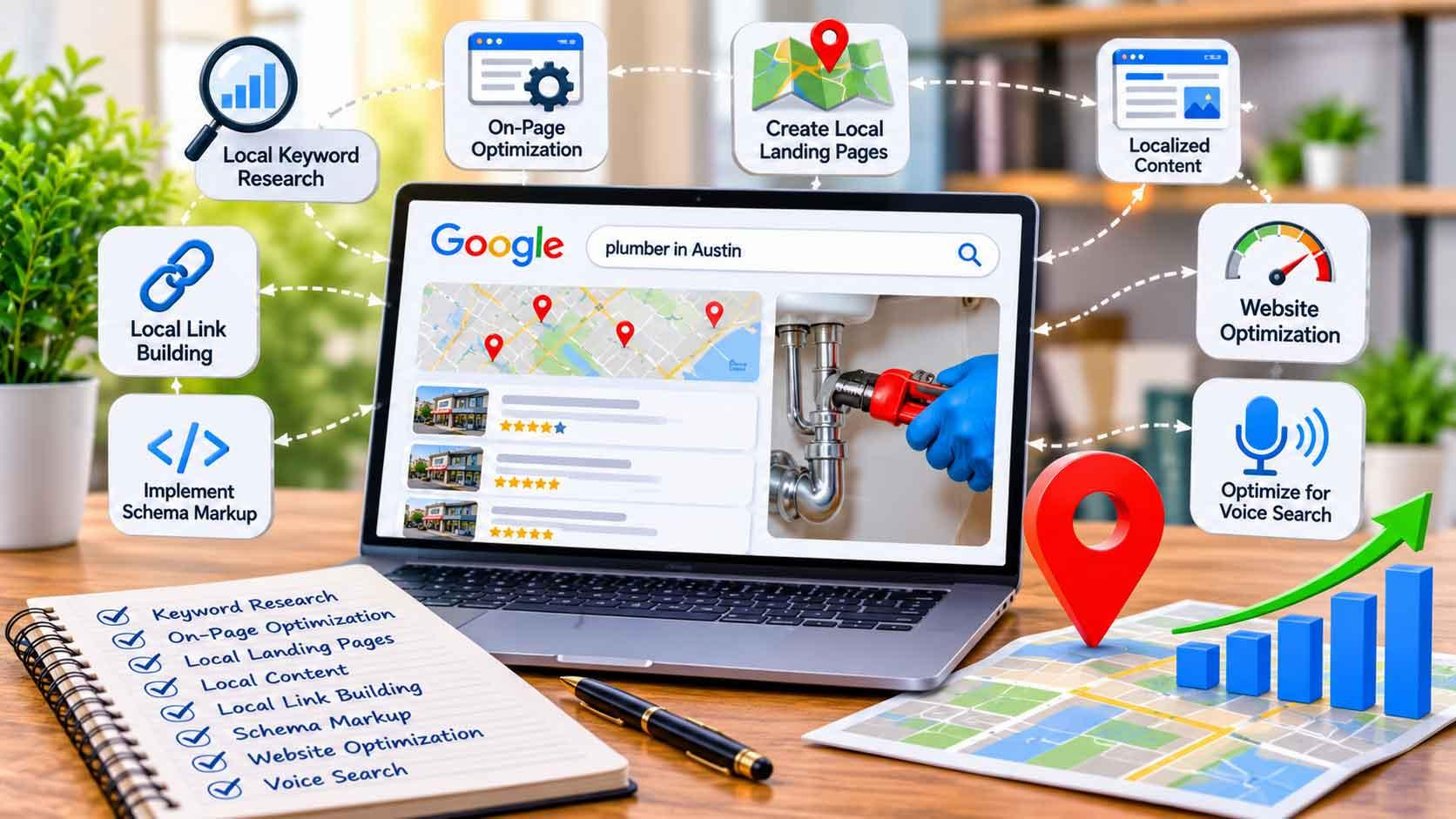
Start with Local Keyword Research and On-Page Optimization by matching each service or location to what local customers search, using service + location phrases such as plumber in Austin, best dentist Chicago, and emergency electrician Brooklyn, while considering purchase intent and local SEO optimization.
Use free tools like Google Autocomplete, People Also Ask boxes, question-format keywords for FAQ sections, Related Searches, and keyword variations to review 200 different keywords; check whether each exact match term and business name ranks on the first page or page two and beyond, and monitor monthly traffic for terms such as barber san francisco and best barbershop san francisco in localized search results.
Build a keyword-informed content strategy by incorporating keywords naturally into title tags, H1 headings, meta descriptions, page copy, website headers, subheadings, blog copy, and the site’s URL, then publish new content and update your website frequently to support your local SEO strategy.
Create Dedicated Local Landing Pages for Each Service Area
Create Dedicated Local Landing Pages for multiple cities, neighborhoods, and regions, using a service areas page to link each dedicated page and help your business rank locally in search engines. Give every page unique substantive content with genuine relevance, including localized content about area landmarks, community context, local regulations, customer testimonials, a Google Maps embed, a local phone number, and service-specific FAQs; avoid duplicate content, thin content, or simply reusing one page template, and make sure all local landing pages contain meaningfully different content for each service area.
Create Localized Content That Serves Your Community
Localized content supports local SEO by connecting with your local audience, building topical authority, earning local backlinks, and helping potential customers through seasonal service guides, local regulations, compliance tips, community event roundups, neighborhood-specific advice, and locally trending questions from Google People Also Ask.
For each service category, create localized web content with geographic references to specific neighborhoods, streets, landmarks, and local institutions, and use dedicated location pages for multiple cities or regions with geo-targeted keywords in headlines and body text to help search engines connect your business to the right geographic area, including Google Maps and a link to your contact page.
Local Link Building
Local Link Building helps local businesses strengthen website authority and earn links through local citations and local backlinks from community and industry sources, especially geographically relevant sources that build geographic authority with Google. Connect with a local newspaper, neighborhood blog, or regional industry association for local ranking value, and build relationships with suppliers, partner businesses, trade associations, and professional networks while seeking listings in local Chamber of Commerce directories, city resource pages, local event sponsorship pages, and community organization websites.
For businesses in the hairdressing and beauty industries, launching a blog can create opportunities to share expert commentary, contribute guest articles to local media outlets, and become a quoted source for local journalists, helping build authority and attract organic backlinks.
Implement Local Business Schema Markup
Local Business Schema Markup uses schema markup and structured data in your website’s code to help search engines understand your business details. Add LocalBusiness schema with your business name, address, phone number, hours of operation, service area, and geographic coordinates to provide structured information that may support AI-powered search features, Google AI Overviews, rich results, knowledge panels, and local answer cards. Keep your markup clean and complete, then use the Google Rich Results Test to check for error-free markup and confirm that search engines have correctly recognized the markup.
Website Optimization
Website Optimization is a key part of local SEO because local businesses need a strong website alongside a Google Business Profile to appear in localized organic results and gain another source of traffic. Each business should optimize its website with clear service details, useful pages, and keyword research that matches what nearby customers search for. Improve your reviews page, add relevant social links, and optimize images to make your website easier for visitors and search engines to understand.
Optimize for Voice Search and Conversational Queries
Optimize for Voice Search and Conversational Queries by focusing on local intent and how people speak, rather than relying only on keyword fragments. Use natural-language questions, long-tail keywords, and question-based keywords in FAQ sections and service pages to support voice search optimization and answer specific questions in natural language. A well-structured FAQ section may also improve your chances of earning AI Overview citations in Google AI Overviews, ChatGPT, Perplexity, and other AI search tools, which can use clear answers when generating voice results and AI-generated local answers.
Image Optimization
Image Optimization is a simple fix for your business website: use keyword research to find relevant search terms, optimize images, and replace generic file names with descriptive ones, so every image is properly labeled and optimized. Google recommends sharp, clear images placed near relevant text and descriptive alt text that explains each image in context, helping search engines understand your content and supporting your efforts to boost your rankings.
Social Links
Social Links help customers connect with your business, while an inactive Facebook account with eight followers or a YouTube channel showing a lack of activity may make people think your shop is closed. Use social platforms to reach new audiences, and let barbershops promote themselves for free on Instagram by keeping an Instagram account connected to the website and sharing new photos and videos that show staff expertise, attract potential customers, and show that your business is active both online and offline.
Spam Fighting
Spam Fighting means checking Google Business Profiles for spammy practices, such as barbershops or barbers using keywords in the GBP name instead of the registered business name to boost rankings in the same category and potentially outrank your business. Use Google’s reporting process to challenge misleading profiles and help prevent unfair visibility gains that could affect your own ranking boost.
Common mistakes to avoid
Common mistakes in local SEO strategies include leaving your Google Business Profile incomplete, neglecting local citations, and using keyword stuffing, which can weaken your search ranking. When you optimize your content, write for your target audience by using relevant keywords naturally in the headline and meta description, and keep the text easy to read so it flows naturally. Also, support customer engagement through social media and online reviews; respond to both positive and negative reviews, and respond to comments to maintain a positive customer perception.
Wrapping Up
A strong local SEO strategy can help your business reach nearby customers, improve search visibility, and turn more searches into calls and visits. From Google Business Profile optimization and local keyword research to customer reviews, local landing pages, and link building, Grid Rankers can help you improve your local online presence with a clear SEO plan. Contact us today to discuss your business goals and find the right local SEO support for your needs.
FAQs
1. How long does Local SEO take to work?
Local SEO usually takes several months to show noticeable results. The timeline depends on your website’s current condition, competition, Google Business Profile optimization, customer reviews, and local SEO efforts. Regular updates and consistent work can help improve your local search visibility over time.
2. What is the difference between Local SEO and regular SEO?
Local SEO focuses on improving your visibility in searches related to a specific city, neighborhood, or service area. Regular SEO targets broader searches and may reach customers across multiple regions or countries. Local SEO uses location-based keywords, customer reviews, local citations, and Google Business Profile optimization to connect businesses with nearby customers.
3. Can a business do Local SEO without a physical storefront?
Yes. Businesses that travel to customers, such as plumbers, electricians, cleaners, and mobile locksmiths, can use Local SEO to reach people in their service areas. You can create dedicated location pages, target local keywords, maintain accurate business information, and build local citations to improve your visibility in nearby searches.
4. Is local SEO worth it for small businesses?
Yes. Local SEO helps small businesses reach nearby customers who are actively searching for their products or services. It can improve local search visibility, generate more phone calls and website visits, build customer trust through online reviews, and help your business compete with other local providers.