

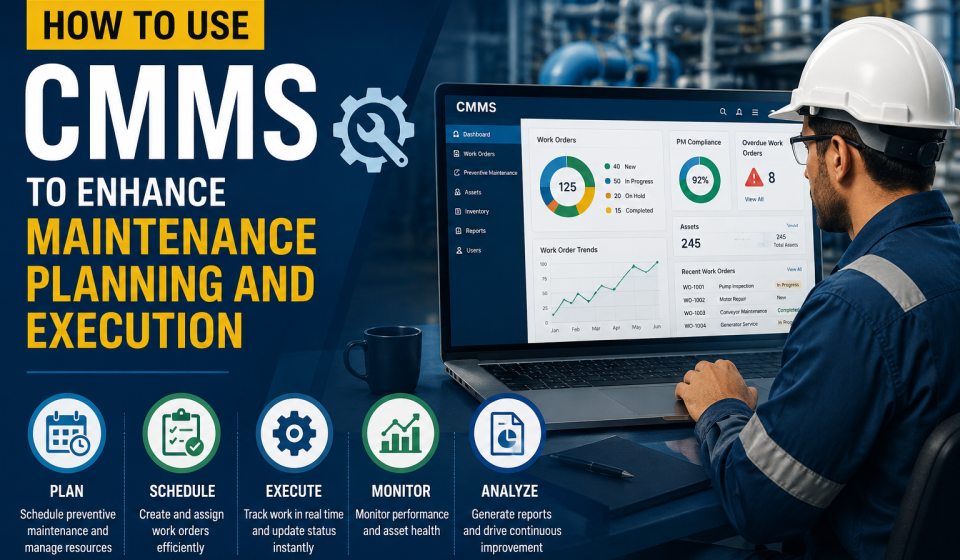

Reliable equipment, controlled costs and fewer disruptions are possible when organizations manage maintenance planning and execution effectively. Companies that use manual records are often subject to incomplete data, forgotten tasks plus poor use of resources – these challenges make it difficult for teams to reach their goals and maintain performance.
A computerized maintenance management software (CMMS) is a tool that organizes maintenance through centralized data and automated workflows – this system is helpful for planning but also execution because it allows teams to work with more information and efficiency.
Maintenance Planning Processes
Successful planning is dependent on data that is correct and easy to find. A maintenance management software is a single location for asset records, history, inspections as well as schedules. Managers are then able to create plans based on factual equipment performance rather than guesses.
Detailed records allow organizations to see patterns that influence what assets will need in the future. It is possible for managers to see which machines need frequent care and which ones are reliable with less work – this knowledge is useful for preparing tasks with more certainty.
Preventive Maintenance Scheduling
Preventive maintenance is a basic part of a maintenance strategy. Maintenance software is a tool for scheduling because it creates tasks automatically based on time, hours of use or other set rules – this function reduces the chance of missed inspections.
Regular preventive care is a way to lower equipment failure and avoid emergency repairs. Assets are in better condition when tasks are finished on time. The maintenance environment is more predictable when disruptions are rare.
Work Order Coordination
Work orders are tools for organizing tasks or ensuring they are finished correctly. A CMMS is a system for creating, assigning and monitoring these orders. It is helpful for teams when they need to understand which tasks are most important.
Clear coordination is a method to lower confusion and increase accountability. Technicians are able to see instructions next to asset data on the system. Supervisors are able to see work as it happens, which allows them to fix problems before they change the schedule.
Resource Allocation
Planning is more than just scheduling – Organizations are responsible for ensuring that staff, tools and parts are available. A CMMS is helpful for seeing what is required, which makes it easier to assign resources.
Maintenance teams are able to avoid delays from schedule conflicts when resources are managed well. Managers are able to balance the work of technicians so that important tasks are finished – this leads to a process that is smooth and uses resources well.
Asset Information Management
Information that is correct supports both planning plus execution. A CMMS is a record of each asset, including its history, service needs and warranty details. Technicians are more effective when this data is available to them.
Asset data is also useful for making choices about repairs or replacements. When teams understand the history of a machine, they are able to make choices that improve reliability and stop unnecessary work.
Inventory Control
Execution is often dependent on having parts available – A CMMS is a way to manage inventory – tracking parts, stock levels but also how parts are used – this visibility makes it less likely that a shortage will stop maintenance work.
Controlled inventory is also a way to manage costs – Organizations are able to keep enough stock without spending too much money. When parts are ready, work is able to continue as planned, which reduces the time equipment is not working.
Communication And Collaboration
Maintenance tasks involve technicians, supervisors and other staff. Good communication is necessary to keep plans on schedule. A CMMS is a platform where users are able to see and update information.
Everyone is aware of priorities as well as task status when communication is improved. Updates that happen immediately lower misunderstandings. Better teamwork is a way to ensure execution is fast and responsive to changes.
Performance Monitoring
Organizations are able to improve – measuring how maintenance is performed. A CMMS is a source of reports on metrics like completion rates, downtime and costs – these tools show if planning is successful.
Monitoring is a way for leaders to see if their efforts are working. Organizations are able to make changes to improve efficiency when they see trends in the data. Improvements based on data are helpful for long term progress.
Mobile Access And Field Operations
Technicians often work in large buildings or different locations. Many CMMS platforms are available on mobile devices, which allows staff to see work orders or update records from where they are working.
Mobile tools are a way to lower paperwork delays and increase productivity. Records are more accurate when technicians finish documentation immediately after the work – this feature allows maintenance to be more efficient across the entire company.
Conclusion
A CMMS is a set of tools for managing maintenance through centralized data, scheduling and resource management – these features are helpful for creating an operation that is organized. As companies try to make equipment more reliable, maintenance software is a significant part of reaching those goals.