
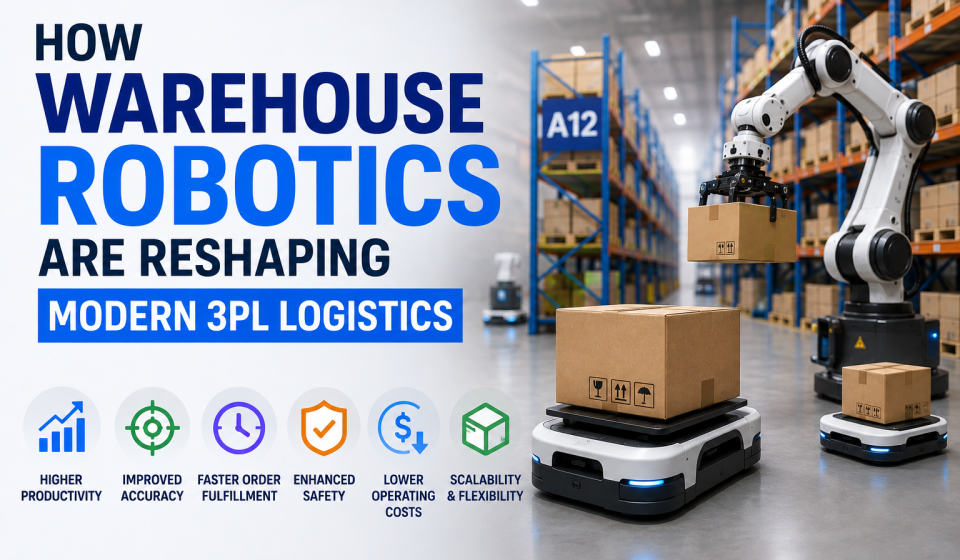

Warehouse robotics are changing 3PL logistics – increasing speed, accuracy and operational efficiency in distribution centers. Logistics providers use automated solutions to manage inventory plus fulfill orders as customer expectations increase – these robotic systems are a necessary part of warehouse operations because they manage large order volumes and provide consistent performance – this technology allows 3PL providers to offer reliable services in competitive markets.
Improving Warehouse Efficiency Through Automation
Robotic equipment completes repetitive tasks quickly but also reduces physical labor for employees. Automated guided vehicles, robotic picking systems and sorting machines move products between facility areas with high speed as well as precision. Machines manage routine activities so that warehouse teams can focus on complex responsibilities. Automation creates consistent workflows for 3PL operations during periods of high demand.
Space utilization improves when robotics support organized inventory movement. Robotic storage and retrieval systems collect products from compact areas, which increases storage capacity within existing facilities – this capability is useful for logistics providers that manage multiple clients or categories. Businesses that work with 3PL Toronto providers benefit from robotics that improve storage management and order processing.
Enhancing Order Accuracy And Customer Service
Robotics lower errors during picking, packing next to shipping. Manual operations sometimes result in incorrect shipments or misplaced inventory because of human mistakes. Robotic systems use sensors and software to identify products plus follow programmed instructions – these systems help 3PL companies provide accurate orders and dependable service.
Fulfillment speed is a significant advantage of robotic technology. Speed is a primary factor in logistics because consumers but also businesses require short delivery timelines. Robotics streamline movement to help distribution centers process orders quickly. 3PL providers offer better visibility and responsive service when they combine these systems with inventory management platforms as well as tracking tools.
Supporting Data Driven Warehouse Operations
Warehouse robotics connect with digital systems to collect and analyze operational data – this technology provides information about inventory movement, equipment performance or workflow efficiency. Warehouse managers use this data to identify delays and improve decision making. 3PL companies create flexible logistics strategies through the combination of robotics next to data analytics.
Artificial intelligence expands the capabilities of modern warehouses. AI systems analyze patterns and predict demand changes to adjust processes based on current conditions. Warehouses are more adaptable during seasonal increases or volume changes because of this technology. Robotics help 3PL operations become efficient plus prepared for future requirements as technology advances.
Expanding The Role Of Employees In Automated Warehouses
Employees have new opportunities to work with technology as robotics automates physical tasks. Workers monitor equipment, manage systems, perform maintenance and improve processes. Robotics supports employees – reducing repetitive work but also improving safety. Teams develop new skills that are relevant to modern logistics operations.
Planning and training are necessary for successful robotics adoption. Businesses evaluate warehouse requirements before they implement automated systems to ensure the solutions meet operational goals. A planned approach allows companies to gain value from robotics without disruptions. Careful implementation is essential for success as more organizations invest in automation.
Improving Supply Chain Flexibility With Robotics
Robotics helps 3PL companies create flexible supply chain operations. Robotic systems support high order volumes during busy periods without requiring major changes to warehouse processes. Logistics providers respond to market shifts as well as seasonal peaks quickly while maintaining service levels.
Scalability is easier to achieve as businesses expand distribution networks. Warehouses increase capacity – adding or upgrading automated systems instead of relying only on more labor. 3PL providers support multiple clients with different needs while maintaining efficient workflows. Robotic technology provides the adaptability required to manage complex logistics challenges.
Conclusion
Warehouse robotics change 3PL logistics – improving efficiency, accuracy and adaptability. Automated systems manage demands or support employees to create reliable operations. Logistics providers rely on automation to improve service quality and remain competitive as technology develops. The future of warehousing involves the combination of human expertise next to robotic solutions to build fast and efficient supply chains.