

How Tripo’s AI 3D Model Generator Accelerates 3D Asset Creation for Designers and Developers

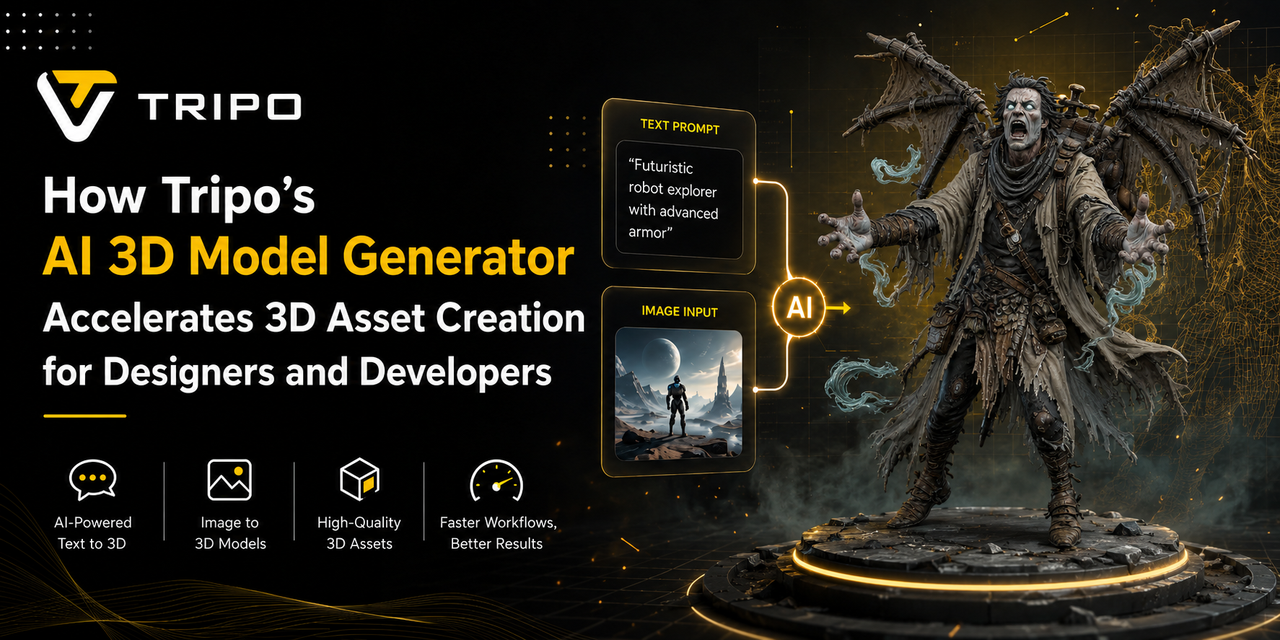
The constantly-changing, fast-paced digital environment is creating a greater demand for high-quality 3D assets. From video games to animated movies, as well as virtual reality applications (VR) and e-commerce/internet-based businesses, 3D assets are essential elements in modern-day digital asset production. The traditional way of creating 3D assets is also very resource- and time-intensive; therefore, a significant challenge to designers and developers is to produce enough high-quality assets to meet the demand at a time when the fast-paced nature of the digital world continues to change.
Artificial Intelligence (AI) has emerged as a practical way to ease this challenge. AI-powered tools can streamline 3D asset creation by turning text prompts and reference images into 3D models, automating texturing, optimizing models for different use cases, and supporting export-ready workflows. By reducing manual steps and simplifying complex processes, these tools help designers and developers create high-quality 3D assets faster and more efficiently.
What is Tripo?
Tripo is an AI 3D model generator designed to help creators turn text prompts and reference images into usable 3D models faster. It simplifies the traditional modeling process by enabling users to create, refine, texture, and export 3D assets with the help of AI-powered automation.
Tripo can support both idea-based and visual-based workflows. Designers can describe an object using written descriptions or visually with an image, and Tripo uses both of these as input to create a structured 3D model in a matter of minutes.
Tripo’s ability to consolidate several different stages of production into one environment is what makes it most effective. The model generation, texturing and optimization of 3D models are all done in one place without the need for multiple tools to complete the same job.
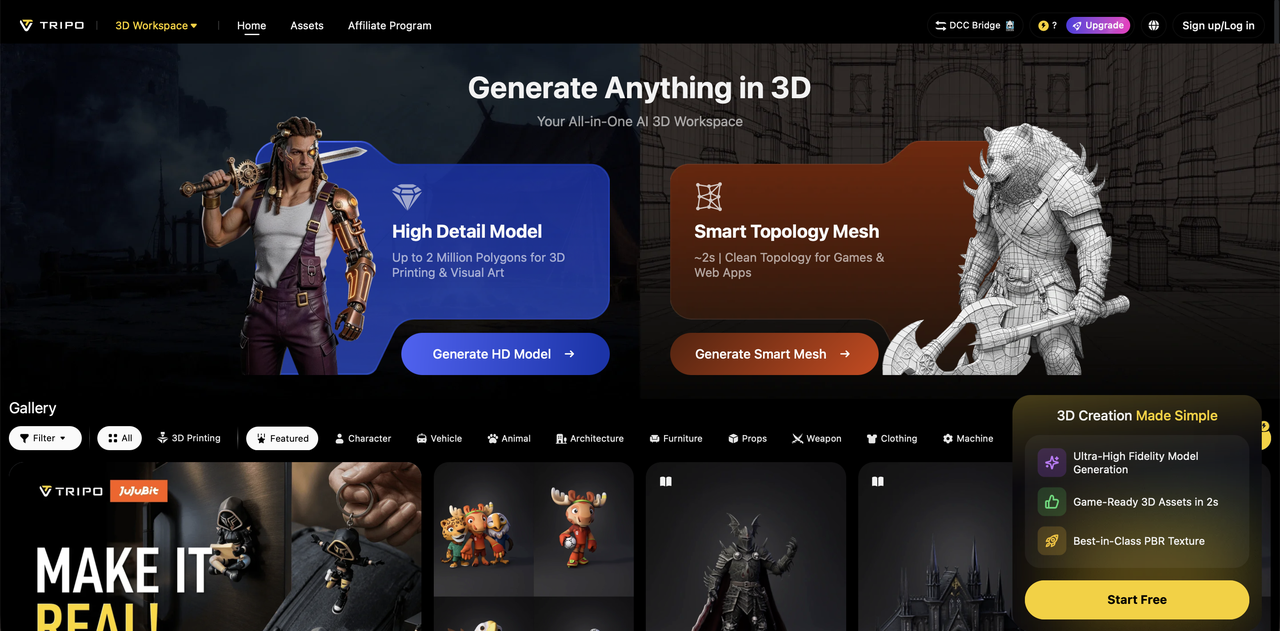
Why Tripo Is a Powerful AI 3D Model Generator
Tripo’s strength is its ability to combine speed and quality without forcing creators to compromise. Traditional 3D workflows typically use many hours of work to create high-quality 3D images, but Tripo has been designed to reduce this amount of time while keeping strong visual fidelity.
Another major advantage of Tripo is that it is accessible. Many aspiring creators are discouraged from entering 3D because of the steep learning curve that comes with the traditional 3D tools. Tripo will eliminate this barrier by providing an easy-to-use interface and automated processes so that anyone can create high-quality 3D models.
In addition, Tripo-generated models can be exported and used in common 3D production pipelines, including Blender, Unity, and Unreal Engine, making it easier for designers and developers to integrate AI-generated assets into their existing workflows.
Main Workflow / Use Case
Tripo’s workflow is designed to simplify and speed up the 3D asset creation process. A typical workflow can be broken down into five key steps:
-
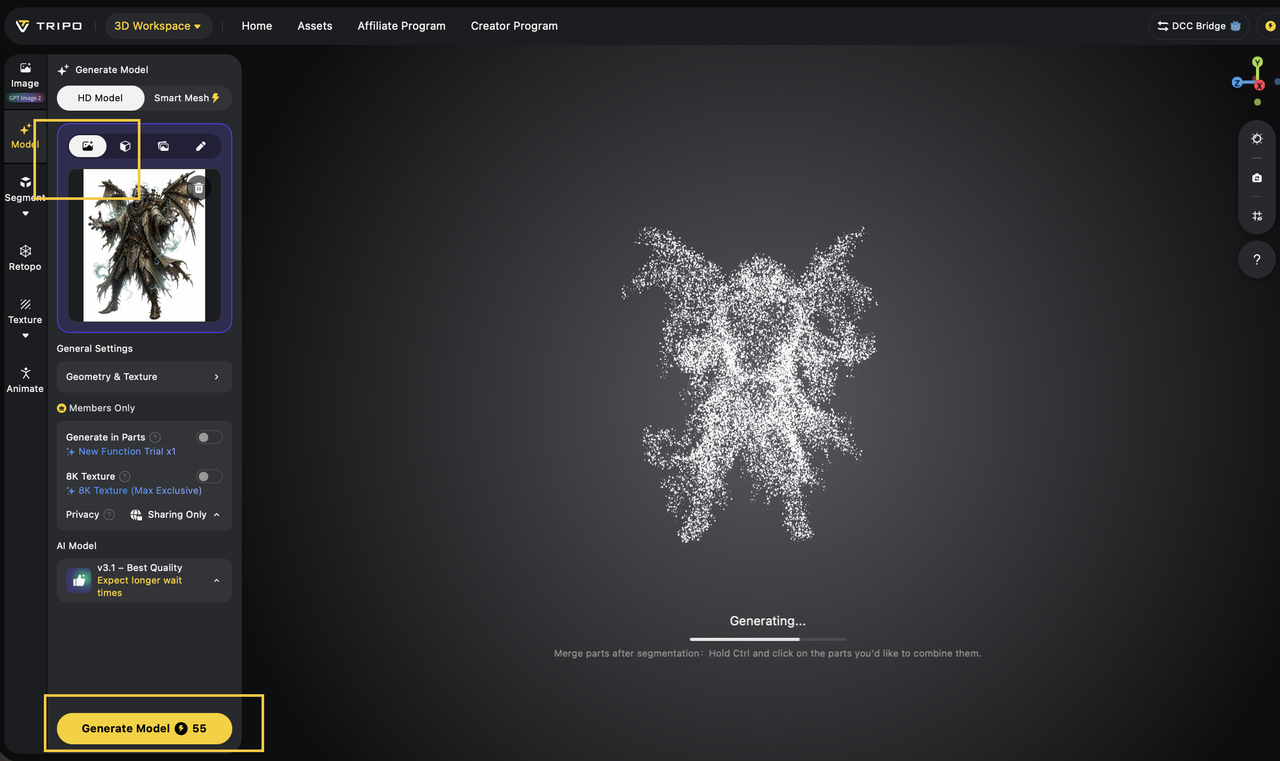
Upload a Reference Image The process starts with a visual reference, such as a character sketch, product image, or concept art. The creator can upload the image to provide a clear visual direction for the asset.
-
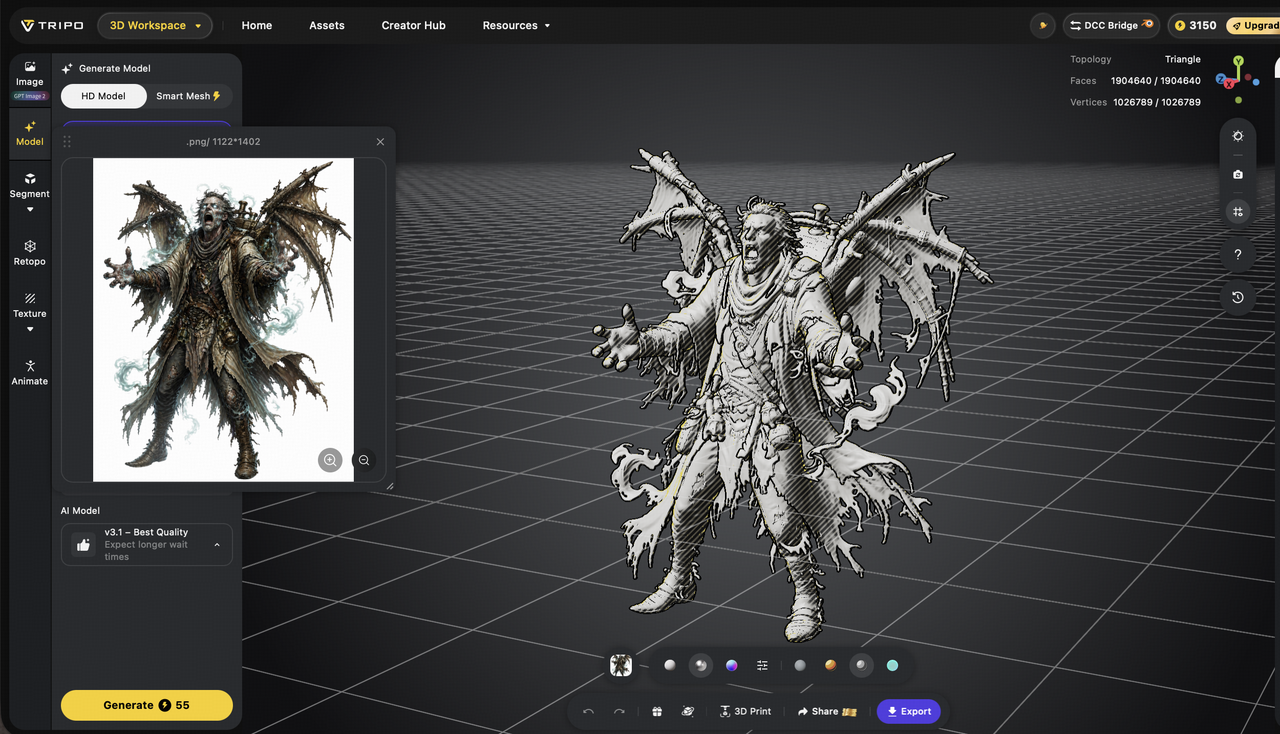
Generate a Base 3D Model Using Tripo’s Image to 3D Model, the reference image can be transformed into a base 3D model. This provides creators with a starting point that can be further refined for their specific requirements.
-
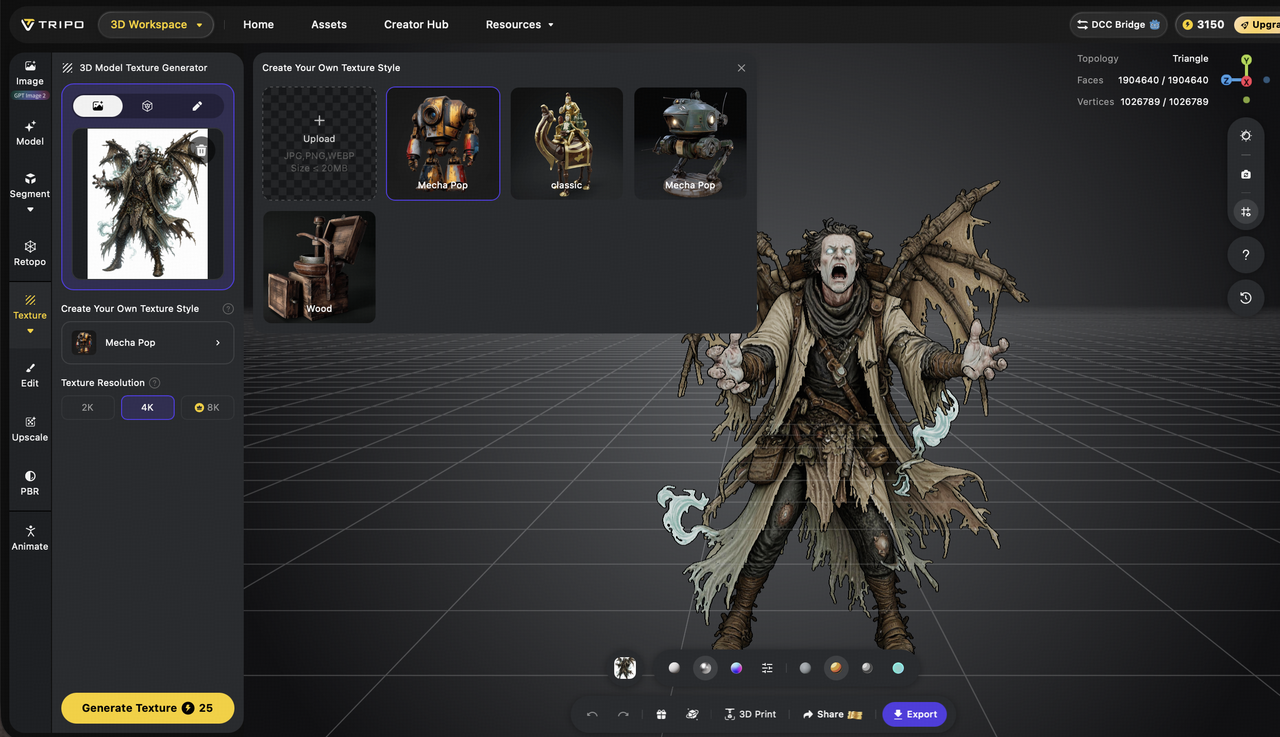
Refine the Texture Once the model is generated, creators can use AI Texturing to improve its appearance. Materials, surface details, and textures can be refined to create a more polished asset.
-
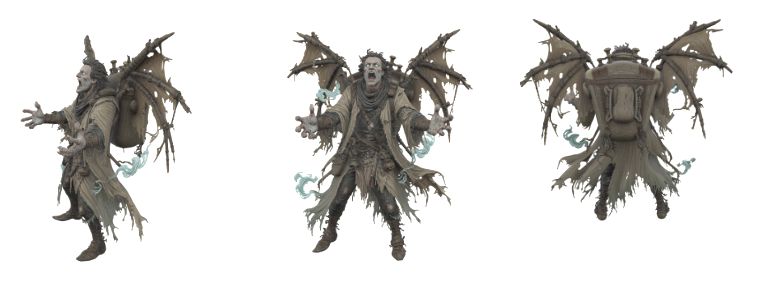
Optimize the Asset for Its Use Case The model can then be prepared according to its intended application. High-detail assets may be suitable for marketing visuals or cinematic content, while lower-poly versions are often better suited for real-time applications such as games.
-
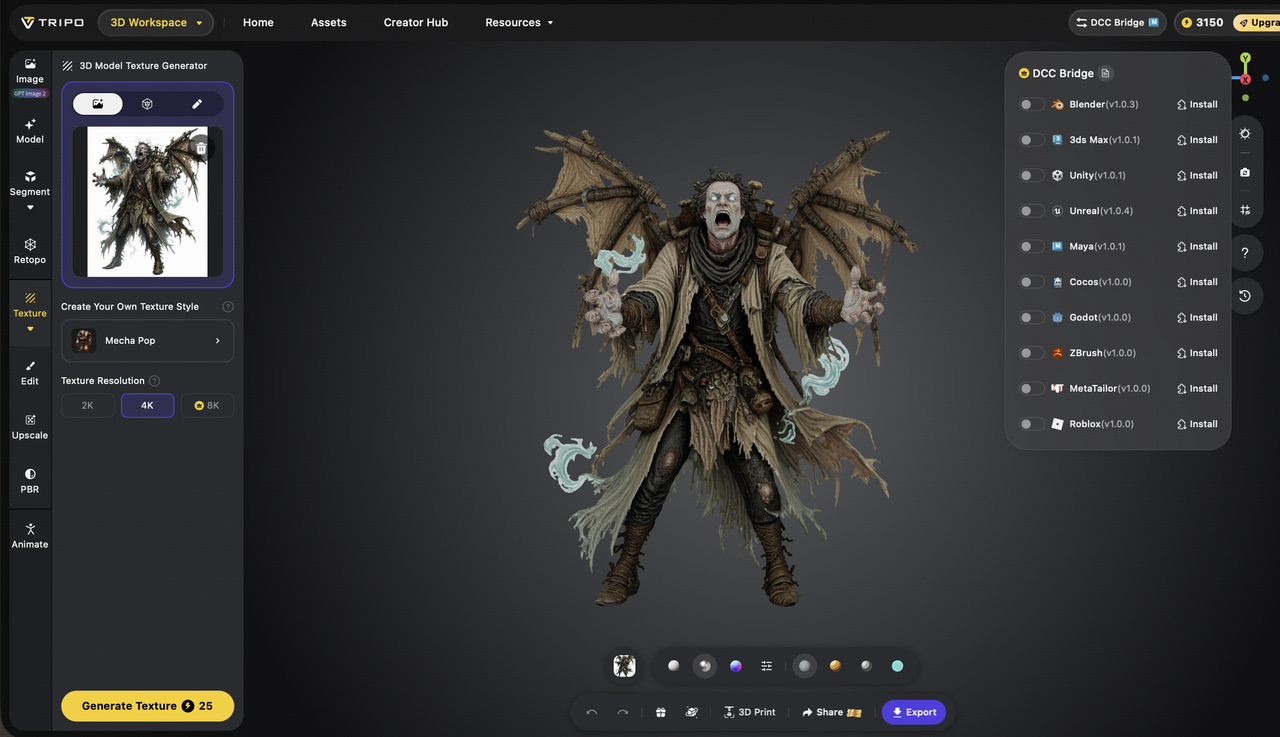
Export to a Development Environment Finally, the completed asset can be exported for use in common 3D production workflows, including environments such as Unity and Unreal Engine. This allows developers to incorporate the generated asset into their existing projects more efficiently.
Secondary Workflow / Use Case
In addition to being a good tool for workflows, Tripo is also very useful in a prototyping environment where a designer can quickly create numerous variations of an asset by using Text to 3D Model to simply change the prompt.
This is an extremely effective method in the early stages of a project because instead of spending a lot of time making only one version of the model, the team can produce many versions quickly to experiment with different ideas. Therefore, it enhances the experimentation process and allows the team to quickly and efficiently discover which design direction they want to pursue.
The process allows for iterative design as well. A small change in input can cause a new output, therefore enabling an artist to refine their design in steps and create new versions without having to start over again each time.
Benefits for Designers and Developers
AI Tools Influence Efficiency and Creativity
AI tools dramatically change how designers and developers work in terms of productivity and creativity. By automating many of the routine and often difficult tasks associated with designing and developing products or services, designers and developers can now spend much more time thinking about and creating the new innovative solutions to problems.
The biggest difference AI tools have made is to reduce the amount of time it takes to create products or services. Tasks that previously took hours or days to finish can now often be accomplished in just minutes. This not only speeds up individual designers’ and developers’ workflows but also results in faster overall project timelines.
Another major advantage of AI tools is that they provide users with less dependency on someone with specialized skill sets. In the past, it took many years of training to become a 3D modeler, so many people had no way to get involved in creating 3D models; however, with the use of AI tools, more people can now be involved in the design and development of products or services.
Key advantages include:
-
Faster asset creation and iteration
-
Lower technical barriers for entry
-
Improved efficiency in team workflows
Real-World Applications
Because of their efficiency and adaptability, companies in many different industries are excited about the adoption of 3D tools powered by AI. In video games, these tools make it possible to develop large quantities of characters, props and environments. The animation studio uses them, as do other studios to shorten the time it takes to produce animations without sacrificing quality.
When converting product images to interactive 3D models, e-commerce businesses are using AI-generated assets to increase consumer engagement and visualization of the products. Companies producing AR and VR applications also use AI-generated 3D assets to generate large numbers of assets quickly so they can create immersive experiences.
Similarly, AI-generated 3D models are being leveraged for accelerated prototyping and production by industrial design companies and manufacturers utilizing 3D printers.
Intelligent Segmentation helps users separate a 3D model into individual parts for easier editing and customization. This makes it simpler to refine specific components, adjust materials, and prepare models for rigging or optimization.
The Future of AI in 3D Creation
In the future as technology advances so will AI’s role in the world of designing, creating, and producing 3D products. With enhanced levels of realism, more control over output, and greater connectivity between tech and creativity, AI will increasingly contribute to collaborative workflows and allow for the establishment of strong team relationships between the different elements involved in the production process. By having an enhanced collaborative workflow, the division that exists between concept and implementation will begin to dissolve and become less of a hindrance to creativity.
CTA
If you are looking to speed up your 3D asset creation process while maintaining high-quality output, now is the time to adopt AI-powered tools.
Explore Tripo’s AI 3D Model Generator and take your design and development workflow to the next level.